


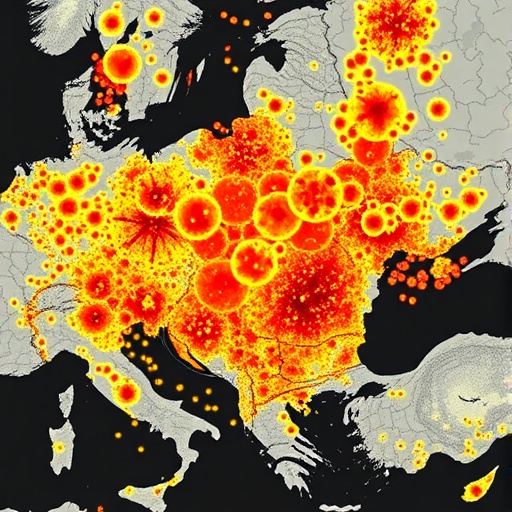
Scientists working under wartime conditions have produced the first systematic genomic map of non-tuberculous mycobacteria (NTM) in Ukraine, revealing a diverse bacterial population dominated by two species and uncovering evidence of a putative novel species never before described. The two-year prospective observational cohort study, conducted in the Zaporizhzhia and Kharkiv regions between December 2022 and February 2024, also found that treatments being given to patients frequently diverged from international recommendations, underscoring an urgent need for national guidelines in a country already carrying one of the world’s heaviest tuberculosis burdens. The research was published in BMC Infectious Diseases.
NTM are ubiquitous environmental organisms found in soil and water, and unlike their notorious relative Mycobacterium tuberculosis, they were long considered largely harmless. In recent decades, however, they have been increasingly recognized worldwide as significant causes of chronic pulmonary disease, particularly in individuals with underlying structural lung disorders such as chronic obstructive pulmonary disease (COPD) or bronchiectasis, and among those who are immunosuppressed. Diagnosis is notoriously difficult, because these organisms can colonize the airways without causing disease, and distinguishing true infection from transient presence requires meeting strict clinical, radiographic, and microbiological criteria. In Eastern Europe, data on the epidemiology and clinical management of NTM infections have remained strikingly scarce, and in Ukraine the organisms are often underdiagnosed or misclassified as tuberculosis.
The study, a collaboration between Ukrainian clinical teams and German researchers at the Research Center Borstel – Leibniz Lung Center, was carried out in regions located close to active combat zones. The research team, coordinated in part from Kharkiv National Medical University, enrolled patients at clinics in Zaporizhzhia and the Kharkiv region despite shelling and bombardment, transporting samples to Kharkiv for DNA extraction and then coordinating shipment to Germany for whole genome sequencing. Members of the Ukrainian team, the authors note, continued enrolling patients, entering data, and shipping specimens under extraordinarily difficult and dangerous conditions throughout the full-scale war that began in February 2022.
Between December 2022 and February 2024, a total of 19,529 clinical specimens from approximately 8,200 patients suspected of having mycobacterial disease were submitted for mycobacterial culture. isolates identified as NTM were analyzed with line probe assays in Kharkiv, and retrospectively with whole genome sequencing (WGS) in Germany. The genomic analysis focused on 100 NTM isolates from 99 patients. WGS is a powerful tool for this kind of work because it can simultaneously resolve the species identity of an isolate, chart its genetic relationships to other strains, and predict resistance to antibiotics by scanning the genome for known resistance-conferring mutations — all from a single dataset.
The taxonomic results were striking. The 100 isolates comprised 21 known species and one putative novel species, meaning the researchers may have encountered an organism new to science. Mycobacterium kansasii was the most frequently isolated species, accounting for 43 percent of isolates, followed by Mycobacterium avium at 16 percent. This dominance of M. kansasii is notable, as in many other regions M. avium and the rapidly growing M. abscessus tend to head the list of pulmonary NTM pathogens. M. kansasii is a slow-growing organism classically associated with chronic cavitary lung disease in patients with pre-existing damage, and it is generally considered more treatable than M. avium or M. abscessus, which carry substantial macrolide resistance burdens.
To assess whether patients might be catching these infections from one another or from common environmental sources, the team performed core genome multi-locus sequence typing (cgMLST)-based cluster analysis, incorporating 4,200 publicly available NTM genome datasets for context. Clusters of closely related isolates were defined using a threshold of 10 allelic differences across the core genome — a conservative criterion that flags isolates as potential recent transmission events. Among 41 M. kansasii isolates, six geographically restricted clusters were detected, each comprising only two to four isolates, suggesting small local groupings rather than any large-scale outbreak. In contrast, five of the 13 M. avium isolates, or 39 percent, formed a single cluster that also contained isolates from another country — a pattern consistent with the widespread dispersal of successful environmental strains rather than person-to-person transmission. Among M. abscessus isolates, no cluster contained more than one Ukrainian isolate, but four of the five belonged to known globally dominant circulating clones — aggressive lineages that have spread worldwide and are particularly associated with chronic lung infection and formidable drug resistance.
The clinical picture that emerged was one of significant patient vulnerability. All patients in the cohort presented with pulmonary symptoms and radiographic abnormalities in the lungs, but strict application of the American Thoracic Society (ATS) diagnostic criteria was not possible due to diagnostic constraints in the Ukrainian setting — the criteria typically require multiple positive cultures, characteristic imaging, and exclusion of other diagnoses, alongside follow-up over time. Common comorbidities among the patients included COPD in 20 individuals, anaemia in 12, HIV infection in six, and tuberculosis in four. This profile mirrors that seen in NTM-endemic settings elsewhere, where damaged lungs and compromised immunity provide the gateway for environmental mycobacteria to establish persistent infection.
Perhaps the most sobering finding concerns treatment. While antibiotic therapy was initiated for all patients, the treatment regimens often diverged from international recommendations issued by bodies such as the ATS, the European Respiratory Society, and the Infectious Diseases Society of America. NTM therapy is among the most demanding in infectious disease medicine: it typically involves multi-drug regimens lasting many months or years, with drug choices guided precisely by the species identified — M. kansasii, for instance, generally responds well to rifampin-based therapy, whereas M. avium disease demands macrolide-based combinations and M. abscessus often requires intravenous agents with limited chances of durable cure. Inappropriate or suboptimal regimens risk selecting for resistance, exposing patients to toxicity without benefit, and prolonging infectiousness. The authors argue that the findings directly demonstrate the need to strengthen diagnostic capacity and establish national guidelines for NTM disease confirmation and management in Ukraine, to ensure accurate diagnosis and rational antimicrobial use.
From a broader perspective, the absence of genomic evidence for large-scale outbreaks is reassuring. It suggests that NTM disease in Ukraine, as elsewhere, arises largely from independent environmental exposures rather than person-to-person spread — a point of ongoing scientific debate, since some studies have hinted at possible transmission of M. abscessus between patients with cystic fibrosis in other settings. The geographically restricted nature of the M. kansasii clusters hints at localized environmental reservoirs or limited local transmission, while the international M. avium cluster reflects the global circulation of ubiquitous strains. Placing Ukrainian isolates within a global genomic context of 4,200 public datasets also provides a baseline against which any future shifts in the local NTM population can be measured.
The study carries significance well beyond Ukraine’s borders. It demonstrates that state-of-the-art molecular epidemiology — whole genome sequencing, cgMLST, and genomic resistance prediction — can be deployed even in an active conflict zone when international partnerships and laboratory networks function effectively. It also fills a glaring data gap: Eastern Europe’s NTM epidemiology has been essentially invisible in the global literature, even as diagnostic culture capacity built for tuberculosis control provides a ready platform for NTM detection. As NTM disease rates rise worldwide with aging populations and increasing numbers of people living with structural lung disease, understanding regional species distributions and resistance patterns becomes critical for guiding therapy.
The research was funded by the National Institute of Allergy and Infectious Diseases/US Civilian Research & Development Foundation, CRDF Global, and the Ministry of Health of Ukraine, and was approved by the Ethics Committee of Kharkiv National Medical University, with informed consent obtained from all participants. The work, led by Margo Diricks of the Research Center Borstel and co-led by Nils Wetzstein, Stefan Niemann, and Dmytro Butov as equal senior contributors, represents a testament to scientific persistence: a first genomic portrait of a neglected pathogen group, painted in a country under siege, that may help shape diagnostic and therapeutic standards for Ukrainian patients for years to come. For the 99 patients whose isolates were sequenced, the findings promise more than epidemiology — they offer the prospect of treatments guided by the actual identity and predicted drug resistance profile of the organisms infecting them, rather than regimens built on guesswork in the shadow of war.
Cite Scienmag News
Ophelia Keating. (September 8, 2026). Tracking non-tuberculous mycobacteria in Ukrainian patients from 2022 to 2024. Scienmag. https://scienmag.com/tracking-non-tuberculous-mycobacteria-in-ukrainian-patients-from-2022-to-2024/
Ophelia Keating. "Tracking non-tuberculous mycobacteria in Ukrainian patients from 2022 to 2024." Scienmag, 8 September 2026, https://scienmag.com/tracking-non-tuberculous-mycobacteria-in-ukrainian-patients-from-2022-to-2024/. Accessed 8 September 2026.
Ophelia Keating. "Tracking non-tuberculous mycobacteria in Ukrainian patients from 2022 to 2024." Scienmag. September 8, 2026. https://scienmag.com/tracking-non-tuberculous-mycobacteria-in-ukrainian-patients-from-2022-to-2024/


