


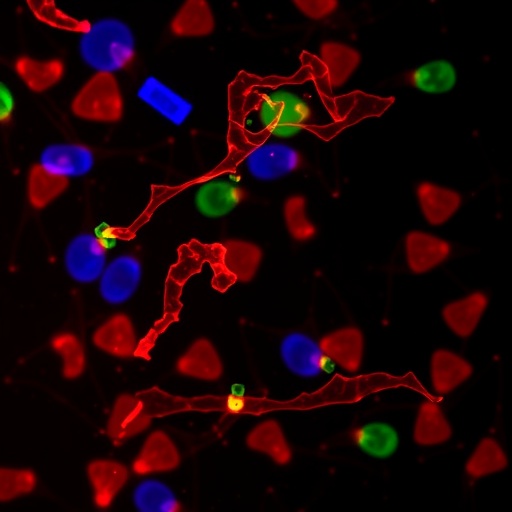
Colorectal cancer remains one of the deadliest malignancies worldwide, and while chemotherapy with drugs such as capecitabine has extended survival for countless patients, the phenomenon of acquired drug resistance continues to undermine treatment success. Now, a research team from Marmara University in Istanbul has reported that fisetin, a naturally occurring plant flavonoid found in strawberries, apples, and onions, can alter the expression of specific microRNAs linked to chemotherapy resistance in capecitabine-resistant colorectal cancer cells. The study, published in the journal Biochemical Genetics, offers a molecular window into how a dietary compound might one day help sensitize stubborn tumors to standard therapy.
The research, led by Zehra Kanlı under the supervision of Hülya Cabadak, focused on a laboratory model of drug resistance that has long frustrated oncologists. Capecitabine, an oral prodrug that is converted in the body to 5-fluorouracil, is a cornerstone of colorectal cancer treatment, interfering with DNA synthesis in rapidly dividing cells. Yet over time, cancer cells frequently develop the ability to survive in its presence, rendering the drug ineffective and leaving patients with dwindling options. Understanding the molecular machinery behind this resistance is therefore a major priority in cancer research, and microRNAs have emerged as central players in that machinery.
MicroRNAs are short, non-coding RNA molecules, typically twenty to twenty-two nucleotides in length, that do not encode proteins themselves. Instead, they act as fine-tuners of gene expression. By binding to complementary sequences in messenger RNA transcripts, microRNAs promote the degradation of those transcripts or block their translation into protein. A single microRNA can regulate hundreds of target genes, which gives these small molecules enormous regulatory power over cellular processes including proliferation, apoptosis, invasion, and drug response. In cancer, disturbances in microRNA expression patterns can push cells toward uncontrolled growth or, critically for this study, toward survival in the face of chemotherapy.
To identify which microRNAs might be involved in capecitabine resistance, the researchers turned to a publicly available gene expression dataset, GSE30894, and performed differential expression analysis comparing drug-sensitive and drug-resistant colorectal cancer cells. From this bioinformatic screen, five candidate microRNAs stood out: miR-21, miR-181a, miR-203, miR-101, and miR-381. Each of these has a documented history in cancer biology. MiR-21, often described as an oncomiR, promotes tumor growth and therapy resistance in numerous cancers by suppressing pro-apoptotic targets such as PDCD4. MiR-181a has been associated with poor prognosis in colorectal cancer and with drug resistance in melanoma, where the miR-181/TFAM pathway was identified as a driver of resistance. MiR-203 and miR-101 have generally been characterized as tumor suppressors, with miR-101 targeting oncogenes such as EZH2, while miR-381, located in the imprinted 14q32 locus, suppresses proliferation and invasion in several tumor types by targeting genes including Twist1 and FGFR2.
With the five candidates in hand, the team quantified their expression using reverse transcription quantitative polymerase chain reaction, or RT-qPCR, in two cell lines: parental HT29 colorectal cancer cells and a capecitabine-resistant derivative designated CR/HT29. The experiments were conducted under basal conditions and after twenty-four hours of exposure to capecitabine at a concentration of 40 micromolar, fisetin at 120 micromolar, or the combination of both agents. The researchers also examined nuclear morphology using DAPI staining, a fluorescent dye that binds DNA and reveals the chromatin condensation and nuclear fragmentation characteristic of apoptotic cell death.
The baseline comparisons between the two cell lines revealed a strikingly reprogrammed microRNA landscape in the resistant cells. Compared with parental HT29 cells, the capecitabine-resistant CR/HT29 cells showed lower expression of miR-381, miR-21, miR-203, and miR-101, along with a trend toward higher expression of miR-181a. While the reduction of miR-21 in resistant cells might appear counterintuitive given its reputation as an oncomiR, the authors emphasize that microRNAs display context-dependent behavior, acting as oncogenes in some settings and tumor suppressors in others. The overall pattern suggests that acquired resistance in this model involves a broad reorganization of post-transcriptional gene regulation rather than a simple one-microRNA switch.
When the cells were treated, the most compelling findings emerged around fisetin-containing regimens. In both parental and resistant cells, fisetin reduced miR-21 expression, whether administered alone or combined with capecitabine. Given the well-documented role of miR-21 in promoting chemoresistance across ovarian, pancreatic, breast, prostate, and colon cancers, its suppression by a dietary flavonoid is a noteworthy observation. In the resistant cells specifically, fisetin significantly decreased miR-181a expression compared with fisetin-treated parental cells, suggesting that the compound exerts some of its effects preferentially in the context of established resistance. Fisetin and the fisetin-capecitabine combination also altered the levels of miR-203 and miR-101, with more pronounced suppression observed in the parental HT29 cells than in the resistant derivative.
These molecular changes were not merely biochemical curiosities. The DAPI staining revealed marked morphological alterations in the resistant cells following treatment, consistent with the induction of apoptotic nuclear changes. In other words, the shifts in microRNA expression coincided with visible signs that the cells were being pushed toward death, particularly under the fisetin-containing regimens. This connects the current findings to the team’s earlier work, published in 2024 in Naunyn-Schmiedeberg’s Archives of Pharmacology, which demonstrated that fisetin and capecitabine induce changes in apoptosis pathways in capecitabine-resistant colorectal cancer cell lines. The new study extends that story upstream of the apoptotic machinery, implicating regulatory microRNAs as intermediaries in the chemosensitizing effect.
Fisetin itself has attracted growing scientific interest in recent years. As a member of the flavonoid family of plant polyphenols, it exhibits antioxidant, anti-inflammatory, and anti-tumor properties in preclinical models. Studies in mice have shown that nanoemulsion formulations of fisetin improve its bioavailability and antitumor activity, and researchers have identified geraldol as an active metabolite of the compound. Its mechanisms of action are pleiotropic, spanning inhibition of PI3K/AKT/mTOR signaling, induction of apoptosis and autophagy, and, as the present study adds, modulation of microRNA expression. The Marmara University team suggests that this microRNA-modulating capacity underlies fisetin’s potential role as a chemosensitizing adjuvant, a compound administered alongside chemotherapy to restore the vulnerability of resistant tumors.
The researchers are careful to frame their conclusions appropriately. This is an in vitro study conducted in cell culture, and the concentrations used, 40 micromolar capecitabine and 120 micromolar fisetin over twenty-four hours, are laboratory conditions that do not directly translate to clinical dosing. Fisetin’s poor oral bioavailability remains a known hurdle for clinical translation, which is why formulation strategies such as lipid nanoparticles and nanoemulsions are being actively explored. Furthermore, microRNA behavior is highly context-dependent, and results obtained in the HT29 cell line and its resistant derivative may not generalize to all colorectal cancers or to the tumor microenvironment in living patients. The authors describe their work as providing an in vitro foundation for future in vivo studies, the necessary next step before any clinical consideration.
Even with those caveats, the significance of the findings lies in the specificity of the molecular target set. Rather than treating resistance as an undifferentiated black box, the study identifies a defined panel of chemoresistance-associated microRNAs, selected through unbiased differential expression analysis, and demonstrates that a natural compound can shift their expression in resistant cells. If future research confirms that these microRNA changes drive functional re-sensitization to capecitabine, the five-molecule signature identified here could serve as a biomarker panel for monitoring fisetin’s adjuvant effects, and perhaps as a therapeutic target set in its own right. The study was supported by the Marmara University Scientific Research Projects Commission and contributes to a broader international effort to overcome drug resistance through the emerging field of non-coding RNA therapeutics.
For the millions of patients diagnosed with colorectal cancer each year, the promise of turning an ordinary dietary molecule into a resistance-breaking companion for chemotherapy remains distant but increasingly plausible. Studies like this one, which map the molecular consequences of flavonoid exposure with modern genomic and quantitative tools, are the incremental steps that transform such promise into testable clinical hypotheses.
Cite Scienmag News
Nathaniel Bowman. (September 7, 2026). Fisetin Alters Chemoresistance-Linked microRNAs in Capecitabine-Resistant Colorectal Cancer Cells. Scienmag. https://scienmag.com/fisetin-alters-chemoresistance-linked-micrornas-in-capecitabine-resistant-colorectal-cancer-cells/
Nathaniel Bowman. "Fisetin Alters Chemoresistance-Linked microRNAs in Capecitabine-Resistant Colorectal Cancer Cells." Scienmag, 7 September 2026, https://scienmag.com/fisetin-alters-chemoresistance-linked-micrornas-in-capecitabine-resistant-colorectal-cancer-cells/. Accessed 7 September 2026.
Nathaniel Bowman. "Fisetin Alters Chemoresistance-Linked microRNAs in Capecitabine-Resistant Colorectal Cancer Cells." Scienmag. September 7, 2026. https://scienmag.com/fisetin-alters-chemoresistance-linked-micrornas-in-capecitabine-resistant-colorectal-cancer-cells/


