


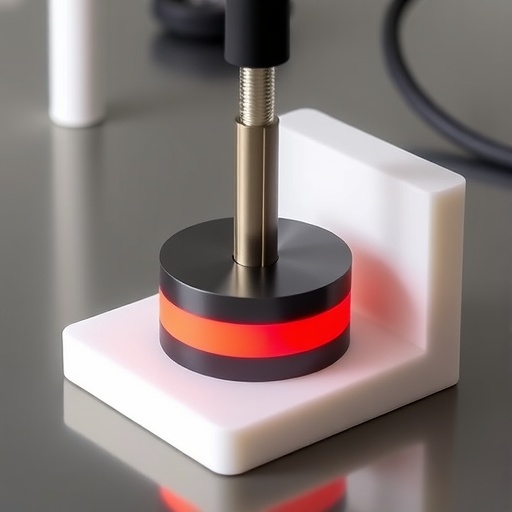
Researchers in France have unveiled an open-source, 3D-printed instrument that combines precise temperature control and magnetic stirring in a single compact unit, offering laboratories a low-cost alternative to bulky circulation thermostats andcryostat systems. The device, described in the journal HardwareX, was developed by Vincent Dutreuil and José Paulo Pinheiro of the LIEC laboratory, “Laboratoire interdisciplinaire des environnements continentaux UMR 7360 CNRS – Université de Lorraine,” and can be built for approximately 350 euros per unit, excluding chemical probes. All design files, electronic schematics and software have been released under a CC BY-NC-SA 4.0 license through a Zenodo repository, making the entire instrument freely replicable by any laboratory with access to a consumer-grade 3D printer and basic electronics skills.
The problem the device addresses is a familiar one in analytical and electroanalytical chemistry. Liquid samples, whether aqueous or organic, typically require temperature control within a range of about −10° to 80°C for reliable measurement. The conventional solution is a circulation thermostat, in which a pump moves a heat transfer fluid through a jacketed cell surrounding the sample. These systems work, but they are bulky, slow to respond because of the large thermal mass of the circulating liquid, and fundamentally incompatible with experiments that also require the sample to be stirred from below. Electrochemical cells present a particular dilemma: they need stirring to homogenize the solution after reagent addition, yet commercial thermoelectric cell holders are square or tubular and cannot accommodate cylindrical or conical cell geometries from the side. The result, the authors note, is that essentially no commercial thermoelectric temperature control devices exist for standard electrochemical cells.
The French team’s solution rests on two original design features. First, the instrument integrates thermoregulation and agitation in the same housing, with a three-level architecture: magnetic stirring in the lower section, a cell holder with the thermoelectric module in the middle, and a cell cover on top that leaves the upper part free to accommodate pH probes, conductivity sensors, electrochemical electrodes, or liquid dispensers for titrants. Second, and most technically interesting, is the thermal guide that couples the thermoelectric module to the cell. Rather than machining a metal part, the researchers 3D-printed this component using a copper-doped polylactic acid (PLA) filament. Ordinary printing plastics such as PLA, PETG, or ABS conduct heat poorly, but metal-powder-loaded filaments now available for consumer printers offer sufficient thermal conductivity for the task. The printed guide has a flat face that interfaces with the Peltier module and a curved, cell-specific face that presses against the conical or cylindrical wall of the sample vessel, eliminating air gaps that would otherwise cripple heat transfer. Because the guide is printed rather than machined, it can be reshaped in CAD software to fit any custom cell geometry at no additional cost.
The physics underlying the temperature control is the Peltier effect, the generation or absorption of heat at the junction of dissimilar conductors when electrical current flows through it. Reversing the current reverses the heat flow, allowing a single solid-state module to both heat and cool. The researchers selected a GM250-161-12-40 thermoelectric generator module, driven by an L298N H-bridge under pulse-width modulation (PWM) control from an Arduino Uno microcontroller. Two PT1000 resistance temperature detectors monitor the sample and the ambient room temperature, each read through an Adafruit MAX31865 amplifier chip communicating with the Arduino over the Serial Peripheral Interface (SPI) protocol. The 15-bit resolution of the MAX31865 digital converter corresponds to an accuracy of roughly 0.03°C, which defines the practical measurement floor of the system.
Regulation itself is handled by a proportional–integral–derivative (PID) algorithm running on the Arduino, with separate PID controllers for heating and cooling modes. A state machine manages transitions between the two modes of the Peltier element, and users can tune all PID parameters through a simple terminal interface to match the thermal inertia of their particular setup. The designers paid close attention to insulation as well: the cell support consists of two printed halves, one being the conductive thermal guide and the other a non-conducting clamp, with the intervening space packed with polyethylene foam sticks to isolate the cell from ambient thermal fluctuations. The stirrer module is deliberately simple — a fan spinning two stacked neodymium magnets rotates a magnetic stir bar inside the cell — and can be used as a standalone stirrer with its own printed lid.
Performance figures from the validation tests are impressive for a device built largely from printed plastic and hobbyist electronics. With an 80 ml water sample, the instrument reaches its setpoint temperature within about 60 minutes, depending on the gap between starting and target temperatures. In an overnight stability test at a setpoint of 20°C, as the room temperature drifted downward through the night, the sample held between 19.95°C and 20.06°C — a regulation window of ±0.06°C with a standard deviation of just 0.017°C and a mean of 19.99°C. The system also demonstrated a maximum cooling capacity of 8°C below ambient; the authors recommend limiting use to temperature differences within about ±7°C of room temperature to stay within reliable operating bounds. The warm-up behavior revealed a characteristic PWM signature: a maximum-output heating phase followed by a damping phase of intermittent cooling before fine regulation begins, a strategy that prevents overshoot when heating toward a setpoint near ambient temperature.
The cost breakdown is part of the device’s appeal. The single most expensive component is the 114-euro thermoelectric module, followed by the copper-doped PLA filament at 48.90 euros and the Arduino Uno at 24 euros. Everything else — H-bridge, MOSFET, sensor amplifiers, fans, fasteners, wiring, and sockets — comes from standard electronics suppliers at modest prices. The bill of materials published with the paper lists every part with unit costs and sourcing, and the electronics are documented in Fritzing diagrams that walk builders through each wiring step. All printed parts can be produced on consumer machines; the team used a Creality K1 Max with tough PLA for the structural components and an Artillery X1 with a 0.4 mm steel nozzle for the copper-doped thermal guide, printed at 100% infill to maximize conductivity.
The scientific context makes clear why this matters beyond cost savings. Temperature control is essential for measurement quality in both macroscopic and microfluidic analytical systems, and thermoelectric devices have long been favored for small volumes where circulation thermostats respond too slowly. Commercial Peltier-based cell holders exist for spectroscopy — Shimadzu and Quantum Northwest among the established suppliers — but electroanalytical applications have remained largely unserved. A 2014 study described one of the few thermostated electrochemical flow cells in the literature, underscoring the gap. The difficulty, as the French team explains, is that bulk electrochemical cells and titration vessels need bottom stirring, which rules out mounting a thermoelectric element beneath a flat-bottomed container. Side-mounting, in turn, demands a curved thermal interface that no commercial product provides. The 3D-printed copper-doped guide resolves this conflict elegantly.
The authors see the instrument as a stepping stone toward something more ambitious. Their longer-term objective is to integrate it into a fully automated electroanalytical measuring and titration station, complete with potentiostatic, pH, and ion-selective electrodes, voltammetric capability for trace metal analysis, automated liquid handling with pumps and burettes, and autonomous data logging. The compact footprint also opens the door to field deployment: with an autonomous power source, the system could perform temperature-controlled measurements outside the laboratory, a prospect relevant to the environmental research applications that motivated the work, which was supported by the CNRS-INSU innovative instrumentation program.
For now, the release of complete, verified design files under an open license means that teaching laboratories, small research groups, and labs in resource-limited settings can build a capable thermoregulated stirrer for a fraction of the cost of commercial cryostat-plus-stirrer setups. The authors also point the way to future improvements: higher-power Peltier modules could shorten settling times, though at the cost of battery-friendliness, and new polymer–metal composite filaments now emerging on the market promise better heat transfer through the printed guide. A more sophisticated PID scheme capable of reversing current through the H-bridge would improve tracking of setpoints close to ambient temperature. As custom-shaped electrochemical cells become increasingly common in research, the ability to print a matching thermal interface on demand — rather than commissioning a machined metal part — may prove to be the design’s most quietly transformative feature.
Cite Scienmag News
Denise Maddox. (September 4, 2026). Scientists create 3D-printed device for heating and magnetic stirring. Scienmag. https://scienmag.com/scientists-create-3d-printed-device-for-heating-and-magnetic-stirring/
Denise Maddox. "Scientists create 3D-printed device for heating and magnetic stirring." Scienmag, 4 September 2026, https://scienmag.com/scientists-create-3d-printed-device-for-heating-and-magnetic-stirring/. Accessed 4 September 2026.
Denise Maddox. "Scientists create 3D-printed device for heating and magnetic stirring." Scienmag. September 4, 2026. https://scienmag.com/scientists-create-3d-printed-device-for-heating-and-magnetic-stirring/


