


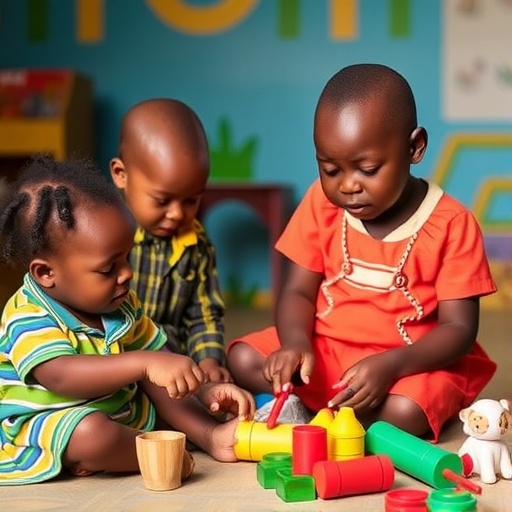
In a finding that could reshape how the world’s youngest learners are taught, a team of Kenyan researchers has documented, in rare detail, what helps and what hinders play-based learning in preschool classrooms and family homes. The study, conducted across three demographically distinct counties, reveals a striking paradox: while parents and teachers alike broadly recognize that play builds the cognitive, social, and emotional foundations of a child’s development, its full potential is being throttled by teacher shortages, inadequate training, a scarcity of play materials, and entrenched cultural beliefs about how boys and girls should behave.
The research, published in the International Journal of Child Care and Education Policy by a team from the African Population and Health Research Center (APHRC) in Nairobi, comes at a critical moment for Kenya’s education system. The country is rolling out a competency-based curriculum (CBC) designed to move instruction away from rote memorization toward practical skills and holistic development, and play is meant to sit at the heart of that transformation. According to the study’s authors, the success of the CBC depends heavily on the effectiveness of its instructional approaches, and play-based learning is one of the most significant among them. Yet until now, evidence on what actually enables or obstructs play in Kenyan preschools has been scarce, leaving policymakers to design interventions in a vacuum.
The study’s theoretical backbone is drawn from Jean Piaget’s constructivist theory of cognitive development, which holds that children actively build understanding by exploring their environments rather than passively receiving information. Under this framework, children are often described as “little scientists” who, through play experiences, connect, construct, and absorb knowledge. The knowledge assembled through these experiences, in turn, strengthens the cognitive, socioemotional, and behavioral capacities that children need throughout their lives. What the Kenyan study adds to that century-old theory is a granular, ground-level account of why the machinery of play-based learning sometimes grinds to a halt in real classrooms and living rooms.
To gather that evidence, the researchers turned to a cross-sectional qualitative design embedded within a larger initiative funded through the Global Partnership for Education Knowledge and Innovation Exchange, a joint endeavor with the International Development Research Centre of Canada and supported by the LEGO Foundation. The team purposively sampled 30 preschools across Kajiado, Kiambu, and Nairobi counties, deliberately choosing sites that would capture Kenya’s diversity. Kajiado offered a window into rural, largely pastoralist communities where play is perceived to build resilience in children. Kiambu, straddling rural and peri-urban life, allowed the researchers to probe mixed parental beliefs about play. Nairobi City County, with its dense informal settlements and scarce outdoor space, exposed the structural limits that urban poverty imposes on children’s play.
In total, the study captured the voices of 119 parents, 92 preschool teachers, and six Early Childhood Development and Education officials. Fourteen focus group discussions were held with parents and six with teachers, each convening eight to nine respondents in community halls and school rooms across the three counties. The interviews were facilitated by 18 trained field interviewers who underwent a full week of preparation, including a pilot exercise at a non-study site where test-retest methods were used to verify the reliability of the questions. Six key informant interviews with county education officials, some conducted in person and others by telephone, rounded out the dataset. Interviews continued until thematic saturation was reached, meaning no new information emerged from additional conversations. All transcripts were recorded, transcribed verbatim, and analyzed through a five-stage thematic process of familiarization, defining themes, coding, charting, and interpretation, with approximately ten percent of transcripts double-coded to ensure consistency. Ethical approval came from the Amref Health Africa Ethics and Scientific Review Committee, with additional research permits from Kenya’s National Commission for Science, Technology, and Innovation.
The findings on facilitators are, in many respects, a testament to the quiet power of collaboration. Parents consistently identified support from schools, the availability of play materials, and parent-teacher partnerships as the critical enablers of learning through play. In rural Kajiado, mothers described a pragmatic division of labor in which schools would install fixed play equipment such as swings and expanded playgrounds, while parents contributed handmade materials like skipping ropes. Fathers in Nairobi and Kiambu highlighted a different but equally compelling benefit: play as a talent-discovery mechanism. One father explained that a child who is slow in class might reveal an aptitude for football while playing with a parent, information that could steer the child’s educational trajectory. Others pointed to improvised activities as windows into vocational potential, describing how a child who collects batteries and attempts to fix them should be encouraged toward electrical work.
Teachers, for their part, emphasized improvisation as both a necessity and a pedagogical asset. Rather than purchasing expensive materials, educators described transforming torn socks into balls and repurposing discarded rugs, an approach that simultaneously addresses resource scarcity and bolsters children’s creativity. The role of parents in supplying materials, from car tires to household odds and ends, emerged repeatedly as a lifeline for under-resourced schools. County governments also received credit, with one father recounting how a governor launched a program providing each school with a small grant specifically earmarked for play materials. Policy officials interviewed for the study pointed to complementary levers: improved school leadership and management, continuous monitoring of learning outcomes, and sustained, refresher-style training that builds teacher confidence. One official noted that training sessions had transformed teachers’ practice, moving them from lecturing in classrooms toward facilitating learning through play, a shift the official described as making children learn well.
But the barriers documented by the study are formidable, and many of them cluster around children with disabilities. Teachers candidly admitted to lacking the knowledge and skills to manage children with severe disabilities in their classrooms, and some parents were reluctant to disclose their children’s conditions for fear of community discrimination. One teacher recounted asking a mother to bring her child for assessment, only to be told the child had no problems, an interaction the teacher described as a dead end. The study also found a near-total absence of adapted play-based learning materials designed for children with disabilities, compounding the exclusion of the very children who might benefit most from play-based intervention.
Material scarcity extended well beyond adaptive equipment. Mothers described children queuing to use a single hula hoop and modeling materials priced beyond the reach of many families, with even the cheapest plasticine costing roughly two US dollars. Overcrowding emerged as a parallel crisis: with enrollment rising, some schools have so few classrooms that preschoolers are forced to learn under trees while their rooms are shared with the primary section. Teacher shortages mirrored the space shortage, with some pre-primary classes containing enormous numbers of children supervised by just two teachers. Many teachers, particularly those outside the training loop, had never received formal instruction in play-based pedagogy at all, leaving them uncertain about what learning through play even means.
Perhaps the most culturally revealing findings concern the social norms surrounding play. Fathers reported that some parents instruct teachers to keep their boys from playing with girls, or vice versa, and that classroom seating arrangements often reflect the same gendered separation, reinforced by religious and customary beliefs. Meanwhile, the shift to the competency-based curriculum has generated confusion rather than enthusiasm among some parents, who no longer see written homework coming home and respond by inventing worksheets for their children, unaware that observation-based tasks, such as watching a parent wash clothes, are themselves the new homework. The researchers note that this anxiety stems from inadequate parental awareness, underscoring their call for structured parent education as a core component of curriculum reform.
The study’s implications reach beyond Kenya’s borders. The findings align with a growing international literature, including a 2023 British survey of 1,919 parents on adventurous play and a scoping review of play-based learning across sub-Saharan Africa, both of which identified adult beliefs, limited caregiver skills, and safety concerns as primary barriers. They also echo research from Turkey and South Africa showing that teacher self-efficacy and physical infrastructure are decisive variables in whether play becomes a genuine instructional strategy or remains an aspiration. What sets the Kenyan study apart is its triangulation of three stakeholder groups, parents, teachers, and policymakers, within a single qualitative framework, offering a systems-level view of the problem.
The authors close with a pointed call to action. Effective implementation of play-based learning, they argue, does more than raise test scores; it builds the physical, mental, and socioemotional foundation on which all later learning rests. Achieving that in Kenya will require sustained collaboration between teachers and parents, deliberate investment in teacher training, engagement strategies that address cultural misconceptions, and locally manufactured play materials that include children with disabilities. The researchers also flag a critical gap for future inquiry: the role of play in reducing social exclusion among children and caregivers with disabilities, an area they note remains dangerously understudied. For a country betting its educational future on the competency-based curriculum, the message of this research is unambiguous: play is not a luxury to be squeezed in between lessons. It is the lesson.
Cite Scienmag News
Courtney Benton. (September 4, 2026). Learning Through Play in Kenyan Preschools: What Helps and What Hinders. Scienmag. https://scienmag.com/learning-through-play-in-kenyan-preschools-what-helps-and-what-hinders/
Courtney Benton. "Learning Through Play in Kenyan Preschools: What Helps and What Hinders." Scienmag, 4 September 2026, https://scienmag.com/learning-through-play-in-kenyan-preschools-what-helps-and-what-hinders/. Accessed 4 September 2026.
Courtney Benton. "Learning Through Play in Kenyan Preschools: What Helps and What Hinders." Scienmag. September 4, 2026. https://scienmag.com/learning-through-play-in-kenyan-preschools-what-helps-and-what-hinders/


