


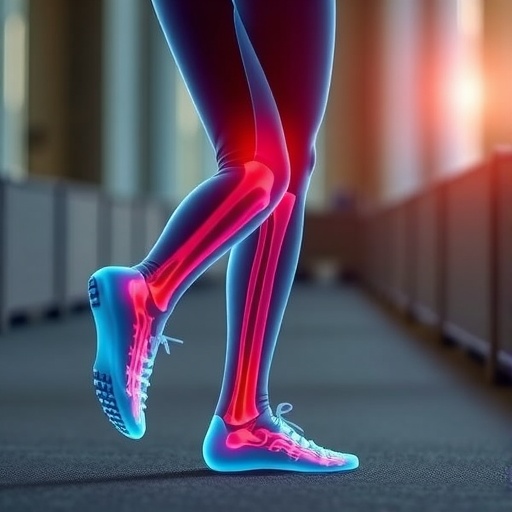
Every step, hop, and jump you take sends a mechanical message to your skeleton, and for millions of postmenopausal women at risk of osteoporosis, getting that message right could mean the difference between resilient bones and debilitating fractures. Now, a new study published in the journal Archives of Osteoporosis suggests that the humble wrist-worn accelerometer—already sitting on millions of wrists in the form of fitness trackers and smartwatches—can do something scientists long doubted: reliably estimate whether an exercise is delivering enough mechanical punch to actually stimulate bone growth. The research, led by Gonzalo Reverte-Pagola and colleagues including senior author Borja Sañudo, validated wrist accelerometry against the gold standard of biomechanics laboratory measurement, the force platform, and found that wearable data can reflect the impact loading that matters for bone health. Published on 3 September 2026, the open-access study could pave the way for bone-strengthening exercise to be monitored not just in laboratories, but in living rooms, gyms, and parks around the world.
The scientific backdrop to this work is a decades-old principle known as the mechanostat theory, which holds that bone tissue adapts its strength in response to the mechanical loads placed upon it. According to this framework, mechanical loading must surpass a minimum intensity threshold before osteogenic adaptation—the recruitment of bone-forming cells and the remodeling of skeletal tissue—is triggered. Loads below that threshold may maintain bone, but they do little to build it. This is precisely why high-impact activities such as jumping, hopping, and sprinting are often recommended for bone health, particularly in postmenopausal women, who lose the protective effects of estrogen and face accelerated bone mineral loss. Yet the clinical reality has been frustrating: while the theory is clear, the practice is not. Clinicians have had no practical tool to quantify, in everyday settings, whether a patient’s exercise routine is actually delivering an osteogenic dose.
The traditional solution to this measurement problem is the force platform—a stiff plate embedded in laboratory floors that records ground reaction forces, the forces exerted by the ground on the body during movement, with exquisite precision. From these force recordings, researchers can calculate vertical acceleration of the body and determine the peak mechanical loads experienced during activities such as jumps. Force plates, however, are expensive, immovable, and demand controlled conditions, making them useless for tracking the week-to-week exercise behavior of real patients living real lives. Wearable accelerometers, by contrast, are cheap, portable, and increasingly ubiquitous, but their validity for estimating osteogenic loading—the specific measure of whether an impact is strong enough to stimulate bone—has remained uncertain. Previous research offered hints of promise, but rigorous validation against force-platform data in the very population that needs it most, postmenopausal women, was lacking.
To close that gap, the research team enrolled thirty-eight postmenopausal women in a study designed around a deceptively simple question: can a sensor on the wrist tell you what a force plate under your feet knows? Of the enrolled participants, thirty-seven women contributed valid data, producing a total of 125 maximal countermovement jumps recorded simultaneously by both a force platform and a wrist-worn accelerometer. The countermovement jump—a rapid downward dip followed by an explosive upward leap—is a classic movement in biomechanics research and a potent source of high-impact loading, generating forces at takeoff and landing that can far exceed body weight. Because each jump was captured by both devices at the same instant, the researchers could directly compare what the laboratory instrument measured against what the wearable sensed.
The technical heart of the study lies in how the two devices’ signals were translated into comparable quantities. From the force-platform recordings, the researchers derived peak vertical acceleration of the body, a key indicator of the mechanical stress transmitted through the skeleton at the most intense moments of the jump. From the wrist accelerometer, they extracted peak acceleration along the vector magnitude—the combined magnitude of acceleration across all three spatial axes, which captures the intensity of motion regardless of the wrist’s orientation. The team’s primary statistical model then predicted the platform-derived peak vertical acceleration using two predictors: the peak wrist vector-magnitude acceleration and body mass. Including body mass is scientifically important, because the same wrist acceleration in a heavier individual corresponds to a substantially greater absolute impact force, and thus a different skeletal stimulus.
To ensure that their conclusions were statistically sound rather than inflated by repeated measurements from the same individuals, the researchers employed linear regression with participant-clustered robust standard errors—a technique that accounts for the fact that multiple jumps from the same woman are not independent observations. This kind of methodological rigor matters enormously in validation studies, where ignoring the clustered structure of the data can make a wearable device appear far more accurate than it truly is. With this framework in place, the team assessed not only how precisely the model could estimate the continuous value of impact loading, but also whether it could perform a coarser but clinically meaningful task: sorting jumps into four distinct osteogenic classification categories, which group impacts by the intensity of the skeletal stimulus they deliver.
The results, according to the study’s summary, support a cautious but significant conclusion: wearable data reliably reflect impact loading during maximal jumps. The wrist-worn accelerometer, combined with knowledge of the wearer’s body mass, can support approximate estimation of the platform-derived impact loading and, importantly, a coarse four-class classification of whether a jump falls into a range likely to be osteogenically meaningful. In practical terms, the device may not yet replace a force plate for precision measurement, but it can distinguish between jumps that are likely to be too gentle to stimulate bone and those that cross into thresholds associated with skeletal adaptation. For a field in which the dose of exercise has been essentially invisible outside the laboratory, even approximate, category-level measurement represents a genuine advance.
The implications extend well beyond the biomechanics laboratory. Exercise prescriptions for bone health have long been hampered by an unmeasurable dose problem: clinicians can tell patients to “do impact exercise,” but neither party can verify whether the activity performed—its intensity, frequency, and cumulative load—actually reaches the osteogenic threshold. A validated wrist-based metric changes that calculus. It opens the door to real-world monitoring of bone-stimulating exercise, allowing clinicians to track adherence and intensity over weeks and months, and allowing researchers to design trials in which the mechanical dose of exercise is quantified rather than assumed. For the growing population of postmenopausal women seeking to protect their skeletons without medication, wearable-guided impact training could eventually become as routine as step counting is today.
The authors are careful to frame the findings as a foundation rather than a finished product. The study involved a single session of maximal countermovement jumps in a controlled setting, with thirty-seven participants—a sample sufficient for validation but modest in scope. Wrist placement, while convenient and aligned with consumer device conventions, may capture movement differently than sensors placed at the hip or ankle, and the specific relationships observed here may not generalize identically to other impact activities such as running, hopping, or daily-life stumbles. The study’s own language emphasizes “approximate estimation” and “coarse classification,” an honest acknowledgment that the wearable signal is a proxy, not a perfect replica, of the force-platform gold standard. Longitudinal studies linking wearable-measured impact doses to actual changes in bone mineral density remain the essential next step.
Even with those caveats, the study arrives at a moment of growing enthusiasm for exercise as frontline osteoporosis prevention, and its message is strikingly optimistic. The bones of postmenopausal women, this research reminds us, are not passive structures awaiting decline; they are living tissues that respond to mechanical challenge, provided that challenge is intense enough and delivered regularly enough. The obstacle has never been a lack of effective exercises—jumping and similar high-impact movements are freely available to nearly everyone—but a lack of measurement, and measurement is the lifeblood of behavioral change. If the accelerometer on your wrist can now tell you that your morning jump routine is, or is not, reaching the threshold your skeleton needs, then one of the most stubborn gaps between exercise science and everyday clinical practice has just become measurably smaller. For a condition that affects hundreds of millions of people worldwide, that small wrist-mounted signal could prove to be a very big deal.
Cite Scienmag News
Ophelia Keating. (September 4, 2026). Wearable sensors quantify impact loading to guide osteoporosis prevention. Scienmag. https://scienmag.com/wearable-sensors-quantify-impact-loading-to-guide-osteoporosis-prevention/
Ophelia Keating. "Wearable sensors quantify impact loading to guide osteoporosis prevention." Scienmag, 4 September 2026, https://scienmag.com/wearable-sensors-quantify-impact-loading-to-guide-osteoporosis-prevention/. Accessed 4 September 2026.
Ophelia Keating. "Wearable sensors quantify impact loading to guide osteoporosis prevention." Scienmag. September 4, 2026. https://scienmag.com/wearable-sensors-quantify-impact-loading-to-guide-osteoporosis-prevention/


