


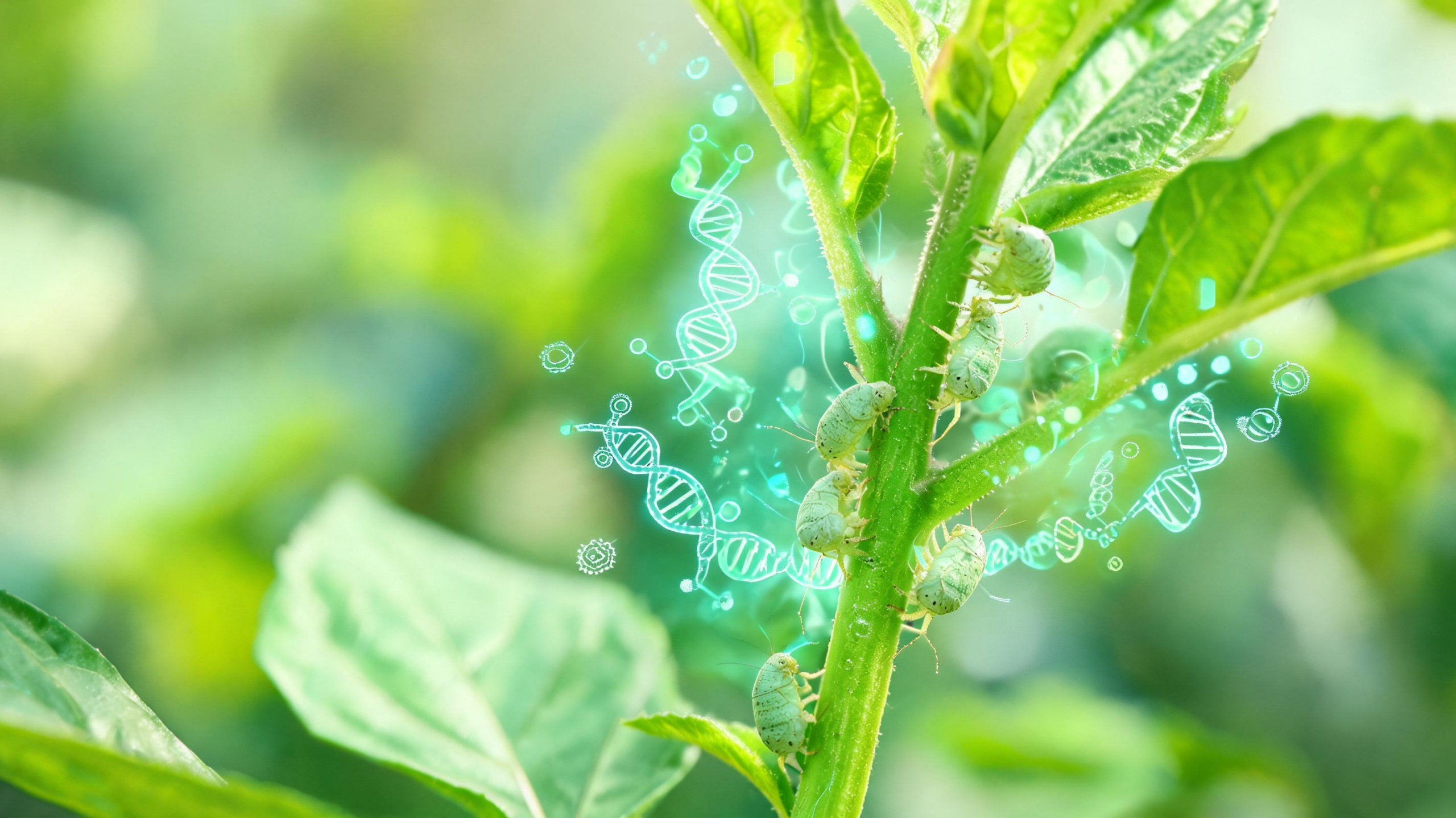
Aphids may be tiny, but they are among the most destructive agricultural pests on the planet. Feeding exclusively on phloem sap through piercing-sucking mouthparts, they drain nutrients from a wide range of economically important crops, alter host physiology, promote sooty mold growth that impairs photosynthesis, and act as efficient vectors for numerous plant viruses. A comprehensive review published in the journal Stress Biology now brings together decades of research on how plants perceive, signal, and fight back against these sap-sucking invaders, with a particular focus on the transcription factors that sit at the heart of the plant’s defensive machinery.
The review, authored by Vishal Patil, Rizwana Rehsawla, and Apurba K. Barman, synthesizes the molecular and transcriptional regulation of plant defense responses to aphid infestation. Its central message is that plant immunity against aphids is not a single reaction but a multilayered, highly coordinated network involving phytohormones, calcium signaling, mitogen-activated protein kinases, reactive oxygen species, and a vast cast of transcription factors that translate these signals into gene expression programs. Understanding this architecture, the authors argue, provides a framework for breeding, genome editing, and elicitor-based strategies that could yield durable, sustainable aphid resistance in crops.
At the first line of defense stand physical barriers: trichomes, glandular hairs, and the cuticular wax layer, all of which reduce aphid movement, penetration efficiency, and settling. Once stylets successfully penetrate plant tissue, the plant initiates pattern-triggered immunity, or PTI. Cell membrane-localized pattern-recognition receptors detect herbivore-associated molecular patterns and damage-associated molecular patterns generated during probing. Although aphids lack the classical elicitors found in chewing insects, such as beta-glucosidase and fatty acid amides, several aphid-associated molecules do trigger PTI-like responses. The green peach aphid, Myzus persicae, carries a salivary elicitor protein of 3 to 10 kilodaltons that activates defense genes in Arabidopsis, and its whole-body extract activates BAK1-mediated PTI, including upregulation of the camalexin biosynthetic gene PAD3. Remarkably, GroEL, a chaperonin derived from the aphid’s endosymbiotic bacterium Buchnera aphidicola, is delivered into host plants during feeding and acts as a molecular pattern that induces BAK1-dependent signaling and reduces aphid fecundity.
Aphids counter with an arsenal of salivary effectors delivered through watery saliva, while gelling saliva forms a protective stylet sheath. Some effectors suppress plant immunity and produce effector-triggered susceptibility: MpC002, PIntO1 (Mp1), and PIntO2 enhance M. persicae colonization on specific hosts, while Mp55 and GroEL suppress glucosinolate, callose, and reactive oxygen species responses to promote aphid reproduction. The macrophage migration inhibitory factor MIF1 and the effector Sm9723 from the Indian grain aphid inhibit defense gene expression, callose deposition, and hypersensitive cell death, making them potential RNAi targets. Yet the arms race cuts both ways. Cathepsin B3 from M. persicae triggers ROS accumulation via an EDR1-like kinase, limiting phloem feeding, and the effector Mp10 induces defenses and reduces aphid fecundity. When intracellular nucleotide-binding leucine-rich repeat receptors, or NLRs, detect these effectors, a stronger effector-triggered immunity ensues. Classic examples include the tomato Mi gene conferring resistance against the potato aphid, the melon VAT gene encoding a CC-NBS-LRR protein with dual resistance to Aphis gossypii and aphid-transmitted viruses, the wheat NLR gene Adnr1 with its integrated WRKY domain, and the recently discovered noncanonical sorghum resistance proteins RMES1A and RMES1B, which interact with the aphid effector MsEF1 to trigger ROS bursts.
Beyond local responses, plants mount systemic defenses. Systemic acquired resistance, or SAR, involves mobile signals including salicylic acid, methyl salicylate, jasmonic acid, pipecolic acid, N-hydroxy pipecolic acid, azelaic acid, and reactive oxygen waves that prime distal tissues for faster, stronger responses to subsequent attacks. Exogenous salicylic acid application strengthens defense enzymes and phenolic compounds in wheat, reducing grain aphid fecundity and survival, while methyl salicylate exposure in barley reduces Rhopalosiphum padi settling and feeding. In parallel, induced systemic resistance is triggered by plant growth-promoting microbes. Bacillus amyloliquefaciens primes broad beans against the pea aphid, Bacillus subtilis 26D protects wheat against greenbug and bird cherry-oat aphid, Bacillus velezensis YC7010 activates PAD4-mediated defense in Arabidopsis, and Beauveria bassiana elicits resistance in tomato. Microbial protein elicitors such as PeaT1, PeBL1, Hrip1, and PeBA1 suppress cabbage aphids by activating jasmonic acid, salicylic acid, and ethylene signaling. Intriguingly, not all microbial effects are beneficial: Pseudomonas fluorescens can enhance green peach aphid performance in Arabidopsis by suppressing abscisic acid signaling, illustrating induced systemic susceptibility.
Phytohormones orchestrate the entire defensive response. Salicylic acid is a central regulator of aphid resistance, orchestrating pathogenesis-related gene expression, reactive oxygen species, secondary metabolite production, and volatile emission. Russian wheat aphid infestation selectively elevates salicylic acid and peroxidase activity in resistant wheat; Mi-1-mediated defense in tomato depends on salicylic acid and MAPK cascades; and sorghum PAL genes are induced by sugarcane aphid infestation to enhance salicylic acid-dependent resistance. Jasmonic acid, traditionally associated with chewing herbivores, also contributes significantly to aphid resistance by regulating secondary metabolites, proteinase inhibitors, and antioxidant defenses. In resistant soybean, jasmonic acid-isoleucine accumulates in response to avirulent aphids but is suppressed by virulent ones, while in sorghum, jasmonic acid plays a dichotomous role, initially deterring sugarcane aphid settling but later promoting feeding and proliferation. Ethylene often acts in conjunction with jasmonic acid to fine-tune antixenotic responses, though it can be manipulated: cucumber mosaic virus infection in pepper increases ethylene production, which actually attracts aphid vectors. Abscisic acid emerges as a double-edged sword, supporting tolerance through water relations modulation but also exploited by soybean aphids to suppress salicylic and jasmonic acid defenses.
The true integrators of this signaling web are transcription factors, which bind cis-regulatory DNA elements within complex gene regulatory networks. The WRKY family stands out as a major regulatory hub. In Arabidopsis, sixteen WRKY genes are rapidly induced by cabbage aphid feeding, with WRKY75 showing the strongest upregulation. WRKY70 and WRKY72 are essential for Mi-1-mediated defense in tomato and Arabidopsis, CmWRKY48 overexpression in chrysanthemum reduces aphid growth, and tobacco NtWRKY28 enhances resistance by activating phenylpropanoid and lignin biosynthesis. Genome-wide association studies in sorghum identified SbWRKY86 as a major locus for sugarcane aphid resistance. Aphids fight back: the wheat aphid salivary protein SmCSP4 interacts with TaWRKY76 to modulate salicylic acid accumulation, and Arabidopsis WRKY22 suppresses salicylic and jasmonic acid defenses to promote aphid performance, demonstrating that WRKYs can act as both positive and negative regulators.
MYB transcription factors, defined by their conserved helix-turn-helix DNA-binding domain, likewise integrate metabolic and defense pathways. In wheat, TaMYB19, TaMYB29, and TaMYB44 activate phloem-based defenses by inducing callose synthases and phloem lectins, while cotton GhMYB18 enhances resistance to Aphis gossypii by activating salicylic acid and flavonoid pathways. In chrysanthemum, CmMYB19 and CmMYB15 activate lignin-biosynthetic genes to restrict aphid multiplication, and CRISPR/Cas9 knockouts of the MYB genes BjA06.GL1 and BjB02.GL1 in Brassica juncea produce glabrous, aphid-susceptible leaves. NAC transcription factors integrate jasmonic acid, salicylic acid, ethylene, and abscisic acid signals with cell wall modification and reactive oxygen homeostasis, contributing to resistance in medicago, melon, soybean, sorghum, and maize. AP2/ERF factors link ethylene signaling to defense, with tomato Pti5 mediating ethylene-independent antibiotic defense against the potato aphid in synergy with Mi-1.2, and bHLH factors, including the cotton MYC2-like GhMYC1374, regulate flavonoid and gossypol biosynthesis to confer aphid resistance.
Underpinning all of this is an elaborate chemical arsenal of plant secondary metabolites. Alkaloids, terpenoids, saponins, pyrethrins, glucosinolates, phenols, flavonoids, lectins, lignin, and tannins act through direct toxicity, antifeedant activity, and repellence, while herbivore-induced plant volatiles such as (E)-beta-farnesene recruit predators and parasitoids, from ladybird beetles to the parasitoid Aphidius ervi. Specialized proteins, including phloem lectins and protease inhibitors, disrupt aphid digestive physiology. The wild peach relative Prunus davidiana even produces betulin via the cytochrome P450 gene PpCYP716A1, an aphid-specific toxin that spares beneficial insects. Translating this knowledge into practice, the review highlights modern breeding tools: wild germplasm introgression, QTL mapping and genome-wide association studies that have located resistance loci such as ApRVII in pea and SbWRKY86 in sorghum, CRISPR-mediated knockout of the sugar transporter VST1 in watermelon, and transgenic cotton expressing fungal lectins that reduced aphid populations by roughly sixty-nine percent. Epigenetic mechanisms, including DNA methylation changes induced by aphid feeding, may further contribute to defense priming and stress memory.
The authors caution that plant defense is inherently constrained by growth-defense trade-offs, mediated by shared regulatory hubs, and that constitutive transcription factor expression risks pleiotropic effects on growth and yield. Fine-tuning the spatial, temporal, or inducible expression of these regulators, through promoter engineering, genome editing, RNAi, virus-induced gene silencing, and marker-assisted selection, will be critical to decoupling defense activation from yield penalties. As multi-omics approaches continue to illuminate the molecular choreography of plant-aphid interactions, from signal perception at the stylet puncture to systemic transcriptional reprogramming, the prospect of crop varieties that combine robust aphid resistance with stable yields moves steadily closer, offering agriculture a path away from chemical insecticide dependence and toward genuinely sustainable pest management.
Subject of Research: Molecular and transcriptional regulation of plant defense responses to aphid infestation
Article Title: Molecular and transcriptional regulation of plant defense responses to aphid infestation
Article References: Patil, V., Rehsawla, R., & Barman, A. K. (2026). Molecular and transcriptional regulation of plant defense responses to aphid infestation. Stress Biology, 6(1), Article 62. https://doi.org/10.1007/s44154-026-00336-y
Image Credits: AI Generated
DOI: 10.1007/s44154-026-00336-y
Keywords: aphids, plant immunity, transcription factors, salicylic acid, jasmonic acid, salivary effectors, PTI, ETI, systemic acquired resistance, secondary metabolites, crop resistance, genome editing
Cite Scienmag News
Kristina Jarvis. (September 3, 2026). How Plants Fight Back: The Molecular Arms Race Against Aphids. Scienmag. https://scienmag.com/how-plants-fight-back-the-molecular-arms-race-against-aphids/
Kristina Jarvis. "How Plants Fight Back: The Molecular Arms Race Against Aphids." Scienmag, 3 September 2026, https://scienmag.com/how-plants-fight-back-the-molecular-arms-race-against-aphids/. Accessed 5 October 2026.
Kristina Jarvis. "How Plants Fight Back: The Molecular Arms Race Against Aphids." Scienmag. September 3, 2026. https://scienmag.com/how-plants-fight-back-the-molecular-arms-race-against-aphids/


