


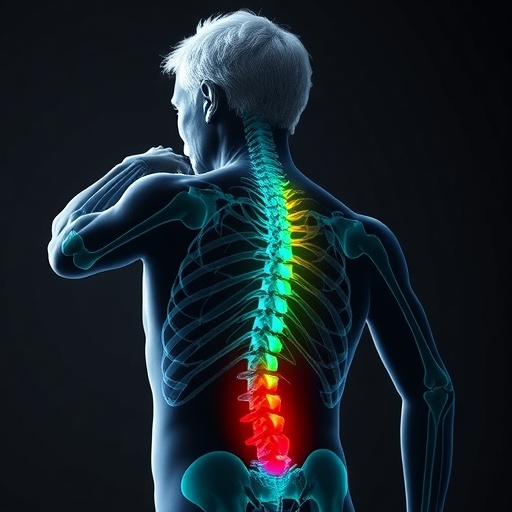
For millions of older adults, chronic low back pain is far more than a nagging ache — it is often the first step on a slow slide toward lost independence. Now a research team in China has built an artificial intelligence model that can forecast, while patients are still in the hospital, which of them will stay active, which will improve, and which will sink into severe, lasting disability. Writing in the open-access journal BMC Geriatrics, scientists at Nanchang University and its First Affiliated Hospital in Jiangxi Province describe an explainable machine learning system that mapped four distinct patterns of functional decline among hospitalized older patients with chronic low back pain and then predicted, with discrimination approaching 0.9 on the field’s standard scale, which pattern each individual patient was most likely to follow. The work, published on 29 August 2026, offers clinicians something they have never really had for this population: a data-driven early-warning system for one of the most common and disabling conditions of aging.
Chronic low back pain is among the leading causes of disability worldwide, and its grip tightens with age. In older patients, persistent spinal pain rarely travels alone; it interacts with muscle weakness, depression, reduced physical activity and frailty to erode the ability to walk, dress, bathe and live independently. Yet clinicians have long lacked a way to answer the question that matters most at the bedside: not whether disability is possible, but which course it will take in this particular patient. Traditional studies tend to average outcomes across whole groups, smoothing away the fact that some patients stabilize at a mild level of impairment, some recover, some stagnate, and some deteriorate relentlessly. That averaging has real costs. Rehabilitation resources are finite, and without a way to distinguish trajectories at admission, care is often allocated by intuition rather than by risk. The Nanchang team set out to close that gap by treating disability not as a single outcome but as a set of possible journeys.
The study took the form of a prospective cohort, meaning the researchers enrolled hospitalized older patients diagnosed with chronic low back pain and followed them forward in time rather than looking backward through records. At the outset, the team collected a deliberately practical set of variables — general patient characteristics, measures of functional disability, pain intensity, physical activity, depression and frailty — the kind of information a well-run ward already gathers or could gather without exotic technology. Ethical oversight came from the Medical Ethics Committee of the First Affiliated Hospital of Nanchang University, and all participants provided written informed consent after the study’s objectives, procedures and potential benefits were explained in detail. The research was funded by China’s National Key Clinical Specialty Discipline Construction Program. Corresponding author Jianmei Wei led the work with first author Xiaoang Zhang and colleagues spanning the hospital’s departments of pain medicine and medical social work together with the School of Nursing of Jiangxi Medical College — a breadth that reflects the multidisciplinary nature of the problem, since back pain in old age is simultaneously a biomedical, psychological and social condition.
The first analytical move was statistical rather than computational: a growth mixture model, a technique designed to find hidden subpopulations within longitudinal data. Where conventional regression estimates one average curve for everyone, a growth mixture model assumes that the observed population is actually a blend of unobserved groups — latent classes — each with its own trajectory of change over time. The algorithm simultaneously estimates the shape of each trajectory and the probability that each patient belongs to it, using model-fit criteria to decide how many classes the data genuinely support. Applied to the repeated measurements of functional disability in this cohort, the procedure resolved the sample into four distinct trajectories. The result is a more honest portrait of recovery: instead of one blurry average line, four clear patterns emerged, each representing a different fate for an aging spine and the person attached to it.
The four trajectories tell a clinically legible story. Patients in the first group, labeled persistent mild, began with modest functional limitation and essentially stayed there. The second group, moderate and improving, started with more substantial disability but regained function over the observation period — the outcome every rehabilitation program hopes to engineer. The third group, moderate and stable, experienced moderate impairment that neither worsened nor lifted. The fourth and most alarming group, persistent severe, carried heavy disability from the start and did not improve, representing the patients at greatest risk of long-term dependency and its cascading medical and economic costs. The very existence of this severe class as a distinct group is itself informative: it suggests that some hospitalized older back-pain patients do not gradually drift into severe disability — they arrive there and remain — implying that the window for effective intervention may close early and that flagging such patients at admission is urgent.
With the trajectory labels in hand, the researchers turned to machine learning. They built and compared ten explainable models, tasking each with predicting which of the four trajectories a patient would follow using the baseline variables recorded at admission. The strongest performer was LightGBM, a gradient-boosted decision tree framework widely used for tabular data. Gradient boosting works by chaining together hundreds of shallow decision trees, with each new tree trained to correct the residual errors of its predecessors; the final prediction is a weighted combination of all the trees’ outputs. LightGBM accelerates the process with histogram-based splitting, which bins continuous features into discrete buckets before searching for optimal cut points, and with leaf-wise tree growth, which expands whichever branch reduces error most rather than growing trees strictly level by level. The upshot is a model that captures nonlinear interactions — the way depression may amplify the disabling effect of pain, for example — while remaining fast enough to train on clinical datasets, and whose reasoning can be inspected rather than hidden.
In the validation set, LightGBM distinguished among the trajectories with an area under the receiver operating characteristic curve of 0.895 (95 percent confidence interval: 0.855–0.941). The AUC, as this metric is known, measures discrimination — the probability that a randomly chosen patient following one trajectory is ranked as higher risk than a randomly chosen patient following another, with 0.5 equivalent to a coin flip and 1.0 to perfect separation. The team also reported a Brier score of 0.114 (95 percent confidence interval: 0.098–0.137), which penalizes both wrong classifications and overconfident ones, along with calibration statistics — a slope of 1.832 (95 percent confidence interval: 1.625–2.021) and an intercept of 0.522 (95 percent confidence interval: 0.317–0.795). Calibration asks a subtler question than discrimination: when the model says a patient has a 70 percent chance of following the severe trajectory, does that outcome actually occur roughly 70 percent of the time? The deviations from the ideal slope of 1 and intercept of 0 signal that the probability estimates, while usefully ranked, are not yet perfectly scaled — one of the reasons the authors themselves stress that recalibration is needed before any real-world use.
To convert raw probabilities into decisions, the researchers derived exploratory classification thresholds using the Youden index, a classic diagnostic metric defined as sensitivity plus specificity minus one. For each trajectory, the Youden index identifies the probability cutoff at which the model best balances catching true cases against raising false alarms. The resulting thresholds were 0.407 for the persistent mild trajectory, 0.308 for moderate and improving, 0.320 for moderate and stable, and — notably low — 0.209 for the persistent severe trajectory. That asymmetry is deliberate and clinically sensible: when the potential outcome is severe, lasting disability, it is worth flagging patients at comparatively modest predicted probabilities, accepting more false positives in exchange for fewer missed cases. In practice, a threshold-based pathway of this kind could sort newly admitted patients into risk tiers, directing intensive, multidisciplinary rehabilitation toward those flagged for the severe trajectory while reserving lighter-touch monitoring for those predicted to remain mild or to improve on their own.
The broader promise of the work lies in its marriage of prediction with interpretability. Machine learning has repeatedly stumbled in medicine when clinicians are asked to trust opaque systems, and a black box that merely outputs a label invites both skepticism and misuse. By anchoring the model in variables already collected on ordinary wards — pain levels, mood, activity and frailty among them — and by framing its output as four named trajectories rather than an abstract score, the researchers have built a tool designed to be questioned and understood rather than blindly obeyed. The trajectory-based risk stratification pathway they outline could, in principle, change the rhythm of care: triggering early involvement of pain specialists and geriatric teams, tailoring the intensity of physiotherapy, alerting families, and informing discharge planning during the hospital stay itself — the very moment when decisions about rehabilitation are made. With populations aging rapidly in China and across the world, even modest gains in preserving independence could translate into enormous returns in quality of life and healthcare spending.
The authors are candid that the model is not yet ready for the clinic. This was an internal validation: the model was developed and tested within the same dataset, an approach whose performance estimates tend to run optimistic. Before any bedside deployment, the model must be validated externally — tested on entirely separate cohorts, ideally from other hospitals and regions — and recalibrated so that its probabilities match local reality. The researchers also call for impact analyses to demonstrate that using the model actually improves patient outcomes, not merely the accuracy of predictions, and the exploratory thresholds, derived by statistical optimization rather than clinical consensus, would need confirmation before being hard-wired into triage protocols. Even so, the study marks a meaningful shift in thinking: from treating disability in older back-pain patients as an undifferentiated mass to recognizing it as a set of foreseeable journeys — and from reacting to decline after it happens to anticipating it while there is still time to change course.
Cite Scienmag News
Blake Davidson. (August 30, 2026). Explainable AI forecasts disability trajectories in hospitalized older chronic back pain patients. Scienmag. https://scienmag.com/explainable-ai-forecasts-disability-trajectories-in-hospitalized-older-chronic-back-pain-patients/
Blake Davidson. "Explainable AI forecasts disability trajectories in hospitalized older chronic back pain patients." Scienmag, 30 August 2026, https://scienmag.com/explainable-ai-forecasts-disability-trajectories-in-hospitalized-older-chronic-back-pain-patients/. Accessed 30 August 2026.
Blake Davidson. "Explainable AI forecasts disability trajectories in hospitalized older chronic back pain patients." Scienmag. August 30, 2026. https://scienmag.com/explainable-ai-forecasts-disability-trajectories-in-hospitalized-older-chronic-back-pain-patients/


