


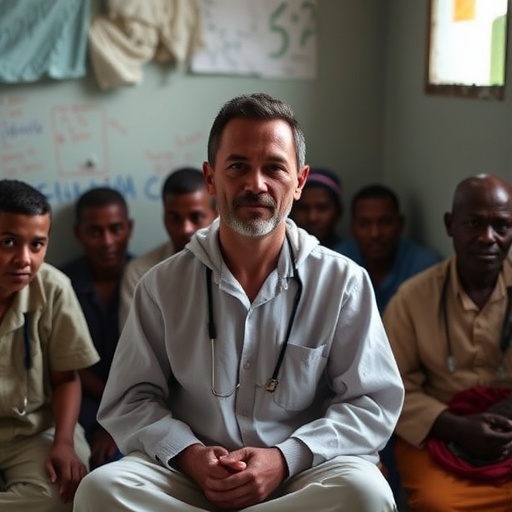
Tuberculosis has quietly reclaimed a title no pathogen should want: the world’s deadliest infectious disease. According to the World Health Organization, 10.8 million people fell ill with Mycobacterium tuberculosis in 2023 and 1.25 million died — roughly 3,400 deaths every day, overwhelmingly among adults in the prime of life and overwhelmingly in low- and middle-income countries. Against that backdrop, a team led by Kevin C. Horton, Andreas Schwalb and Michael J. Harker has published one of the most ambitious economic evaluations of tuberculosis control to date, appearing in the journal Nature Health. Rather than asking whether a single drug, diagnostic or vaccine works, the analysis steps back to interrogate the entire portfolio of tuberculosis interventions at once: which combinations avert the most deaths and transmissions, and what each averted death actually costs? In a field where annual budgets fall billions of dollars short of need, those numbers are not academic. They are the arithmetic of triage.
The epidemiology that makes tuberculosis so stubborn begins with the bacterium’s peculiar life history. Unlike respiratory viruses that sweep through populations in weeks, M. tuberculosis divides slowly — roughly once per day rather than every few hours — and can persist for decades inside granulomas, the organized clusters of immune cells the body walls around it. An estimated one person in four alive today carries latent tuberculosis infection. Most will never fall ill: the lifetime risk of progressing to active disease hovers around 5 to 10 percent, concentrated in the first years after infection and among people whose immunity falters through HIV, diabetes, malnutrition, smoking or aging. That silent reservoir of roughly two billion infected people is the epidemic’s engine. Curing the nearly eleven million who develop symptoms each year cannot, by itself, extinguish transmission, because every active case that goes undiagnosed seeds fresh infections for months before it is found.
Diagnostics are a central reason the epidemic persists. The workhorse test across much of the world, sputum smear microscopy, is more than a century old and misses a substantial share of true cases, particularly in children, in people living with HIV and in anyone with few bacilli in their sputum. The modern alternative, automated nucleic-acid amplification tests such as Xpert MTB/RIF Ultra, can confirm infection and simultaneously flag resistance to rifampicin — the key molecular sentinel of multidrug resistance — in roughly ninety minutes. Yet these platforms remain far from universal, and many patients are still diagnosed clinically, late, or not at all. Every missed case sustains onward airborne transmission: one untreated person with active pulmonary tuberculosis can infect a dozen or more close contacts before anyone intervenes. Transmission models consistently identify closing the case-detection gap as one of the most powerful levers available, because every averted case breaks a chain that would otherwise multiply.
Treatment, for its part, still rests on a backbone first validated in the 1970s and 1980s: two months of four first-line drugs — isoniazid, rifampicin, pyrazinamide and ethambutol — followed by four further months of isoniazid and rifampicin, a course clinicians abbreviate as 2HRZE. Cure rates exceed 85 percent when the regimen is completed, but completion is the crux; six months of daily pills invite interruption, and interrupted treatment breeds resistance. To shrink the latent reservoir, programs deploy tuberculosis preventive treatment, or TPT, in shorter, better-tolerated regimens such as three months of weekly rifapentine plus isoniazid (3HP), three months of daily rifampicin–isoniazid (3HR), or a single month of daily rifapentine–isoniazid (1HP). Depending on regimen and adherence, these cut the risk of progressing to active disease by 60 to 90 percent. The only licensed vaccine, BCG, protects infants against the deadliest childhood forms but performs inconsistently against adult pulmonary disease; the M72/AS01E candidate, about 50 percent effective in a phase 2b trial, is now in pivotal phase 3 testing.
What distinguishes the new analysis from a conventional clinical trial or meta-analysis is its economic architecture. The team combines modeled intervention effects on mortality, incidence and transmission with country-level epidemiology and real-world costing data, then translates the results into the common currency of health economics: the incremental cost-effectiveness ratio, or ICER. An ICER is simply the difference in net cost between an intervention and the next-best alternative, divided by the difference in health produced, usually counted in disability-adjusted life years, or DALYs, averted — a composite of years of life lost to premature death and years lived with disability. Ratios far below a country’s willingness-to-pay threshold, often benchmarked at one to three times gross domestic product per capita, mark an intervention as excellent value for money. The framework allows the researchers to compare, say, scaled-up molecular testing in one nation against community-based preventive treatment in another on a single coherent scale, and to stress-test how conclusions shift when drug prices, coverage levels or delivery costs change.
That reckoning could not arrive at a more consequential moment. Tuberculosis programs received about US$5.7 billion in 2023 — less than a quarter of the US$22 billion per year that international targets call for by 2027 — while research funding hovers near US$1 billion against a declared need of US$5 billion. When budgets fall that far short, every allocation is a choice between lives, and economic evaluation exists precisely to discipline that choice. Historical analyses of the classic DOTS strategy — directly observed treatment, short course — reported costs as low as a few dollars to a few hundred dollars per DALY averted in high-burden countries, placing tuberculosis care among the most cost-effective interventions in all of global health. The new study extends that logic across the modern toolbox, capturing interventions that cost more per patient treated but purchase larger epidemiological dividends by interrupting transmission. Cost-effectiveness, however, is not the same as affordability: an intervention can deliver superb value per DALY averted and still exceed what a ministry can mobilize in a single fiscal year, which is why budget-impact analysis must run alongside cost-effectiveness in national planning.
The analysis also speaks to an old strategic tension between prevention and cure. Because most active cases arise from reactivation of long-standing latent infections, scaling up TPT among household contacts of diagnosed patients and among people living with HIV attacks the epidemic at its source — even though a person receiving preventive therapy is far less likely to be ill today than a symptomatic patient. Contact investigation, the painstaking labor of tracing and testing everyone who shares air with a confirmed case, remains strikingly underused in many high-burden settings despite being inexpensive and repeatedly proven. The mathematics of transmission compounds the case: with an airborne pathogen whose generation time is measured in months, investments that block infection today pay their full epidemiological dividend years later. Short electoral and budget cycles systematically underfund precisely such delayed-return interventions, which is why long-horizon modeling carries genuine political weight.
Drug resistance sharpens the argument further. An estimated 400,000 people develop multidrug-resistant or rifampicin-resistant tuberculosis each year, and fewer than half are diagnosed and enrolled on effective therapy. A decade ago, treating resistant disease meant up to two years of care that included painful injections of drugs capable of destroying patients’ hearing, at total costs that could reach tens of thousands of dollars. The landscape has since been transformed by all-oral regimens, above all BPaLM — bedaquiline, pretomanid, linezolid and moxifloxacin — endorsed by the World Health Organization in 2022, which compresses therapy to about six months. Generic competition and pooled procurement have collapsed prices, so a complete BPaLM course can now be procured for a few hundred dollars. Shorter, cheaper, better-tolerated regimens do more than improve survival; they lift completion rates, shorten the period patients remain infectious, and redraw the cost-effectiveness calculations of entire national programs.
The policy stakes are stark. Under the End TB Strategy, the world pledged to cut tuberculosis deaths by 90 percent and incidence by 80 percent between 2015 and 2030, with 2025 interim milestones calling for a 50 percent drop in incidence — a milestone already missed, since incidence fell only about eight percent over the first decade. The COVID-19 pandemic deepened the setback by disrupting diagnosis and treatment for years. A United Nations high-level meeting in 2023 restated sweeping targets, including reaching 90 percent of people in need with prevention and care services, but declarations do not disburse budgets. What analyses like this one supply is a menu: interventions ranked by cost per death averted and per case prevented, adaptable to countries with different incomes and epidemic profiles, which ministries of health and the Global Fund can consult when deciding where the next marginal dollar buys the most health.
None of this erases the uncertainties ahead — the eventual price and availability of a better vaccine, the slow creep of resistance to linezolid, the fragility of supply chains for rifapentine and pretomanid. But the study’s essential contribution is to convert a familiar moral argument — that it is intolerable for a curable disease, known to medicine since Robert Koch identified the bacillus in 1882, to kill more than a million people annually — into fiscal arithmetic that finance ministries can act on. Tuberculosis does not persist because medicine lacks tools; it persists because the tools are underfunded, unevenly deployed and mismatched to the communities that need them most. Quantifying exactly what each intervention buys, and exactly what it costs, makes the case for scale-up difficult to ignore. For a disease that travels on the air and feeds on poverty, the most radical intervention available may simply be spending money where the evidence says it saves the most lives.
Cite Scienmag News
Ophelia Keating. (August 30, 2026). Tuberculosis interventions deliver major global impact at affordable cost. Scienmag. https://scienmag.com/tuberculosis-interventions-deliver-major-global-impact-at-affordable-cost/
Ophelia Keating. "Tuberculosis interventions deliver major global impact at affordable cost." Scienmag, 30 August 2026, https://scienmag.com/tuberculosis-interventions-deliver-major-global-impact-at-affordable-cost/. Accessed 30 August 2026.
Ophelia Keating. "Tuberculosis interventions deliver major global impact at affordable cost." Scienmag. August 30, 2026. https://scienmag.com/tuberculosis-interventions-deliver-major-global-impact-at-affordable-cost/


