


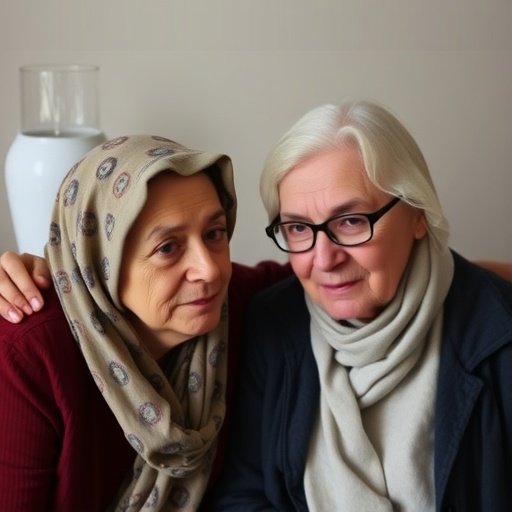
In the hush that follows retirement, when the workplace empties, the children scatter and the daily rhythm of obligation dissolves, a quiet hazard can take root: the creeping conviction that the world no longer has a place for you. Psychologists have a name for this state—psychological alienation—and for older adults it may be one of the least visible and least measured threats to late-life wellbeing. Now a research team at Amman Arab University in Jordan has built a psychometric instrument designed specifically to detect it in old age. The tool, called the Psychological Alienation Scale for Older Adults, or PASOA, was developed and validated across two independent samples totaling more than 1,300 Jordanians aged 65 to 82, and published on 28 August 2026 in the journal Current Psychology. Its creators present PASOA as a scale built and validated in light of the Jordanian cultural context—an arena where older adults’ inner lives have too often been charted with instruments designed for other people, other ages and other worlds.
Alienation is one of the oldest ideas in social thought and one of the newest problems in gerontology. Karl Marx invoked the term to describe the worker’s estrangement from the products of labor; by the mid-twentieth century, sociologists had recast it as a measurable feature of the modern condition. In a landmark 1959 analysis in the American Sociological Review, Melvin Seeman decomposed alienation into distinct strands—powerlessness, meaninglessness, normlessness, isolation and self-estrangement—each capturing a different way a person can feel cut off from the social world. Subsequent work by Dean in 1961 and by Neal and Rettig in 1967 confirmed that alienation is genuinely multidimensional rather than a single undifferentiated feeling. Crucially, alienation is not the same as loneliness. Loneliness is the distressing gap between the relationships you want and the relationships you have; alienation reaches further, into the sense that life itself has lost meaning, that outcomes no longer obey your efforts and that the surrounding society has become foreign territory.
For all its pedigree, the construct has been measured almost exclusively among the young. Validated alienation scales exist for adolescents—such as the instruments examined by Rayce and colleagues in 2018—and for university students and workers, a lineage stretching back to Robert Blauner’s 1964 studies of industrial labor. Older adults, paradoxically the group with perhaps the greatest exposure to role loss, shrinking networks and eroded social standing, have had to make do with tools designed for other life stages. The omission matters in Jordan, where the national strategy for older persons and its 2018–2022 implementation plan, assessed by the United Nations Economic and Social Commission for Western Asia, acknowledged the growing needs of an aging population, and where a 2024 report by the United Nations Population Fund examined the rights and wellbeing of older Jordanians. Scales built on Western, working-age samples can misread Arab older adults: the idioms of estrangement, family obligation and community belonging do not translate cleanly across cultures.
The new study set out to close that gap from the ground up. Ferial Alhaj Mahmoud and Mervat Hussein Mervat, both of the College of Educational and Psychological Sciences at Amman Arab University in Amman, constructed PASOA expressly for the Jordanian context, organizing items around the construct as it is experienced in later life rather than borrowed wholesale from adolescent or occupational questionnaires. The researchers then recruited older adults from four Jordanian cities, spanning the ages of 65 to 82, and structured data collection into two independent samples so the scale’s architecture could be discovered in one group and tested in another. This two-sample design has become the contemporary gold standard in scale development, because it guards against the cardinal sin of psychometrics: validating a questionnaire on the very data used to invent it. The exploratory phase would listen to what the data said; the confirmatory phase would then check whether the emerging structure survived contact with entirely fresh respondents.
The first sample numbered 713 participants—332 men and 381 women—and their responses were fed into an exploratory factor analysis, the statistical microscope of psychometrics. EFA takes a cloud of questionnaire items, examines the pattern of correlations among them, and asks whether a smaller number of hidden dimensions can explain why certain items rise and fall together. The study’s methodological citations span the classical factor-analytic canon, from Henry Kaiser’s 1970 test of sampling adequacy to Horn’s parallel analysis, the resampling procedure now recommended for deciding how many factors to retain instead of trusting arbitrary rules of thumb. Five coherent factors emerged, and together they accounted for more than 83 percent of the total variance in responses. That figure is strikingly high: in social-science measurement, a solution explaining 50 to 60 percent of variance is often considered respectable, so a five-factor structure capturing more than 83 percent signals that the items cluster with unusual discipline around their underlying dimensions.
Each factor carries its own reliability coefficient, expressed as Cronbach’s alpha—a statistic that ranges from zero to one and reflects how consistently a set of items measures the same thing, with values above 0.70 conventionally deemed acceptable. All five PASOA dimensions cleared that bar comfortably. Meaninglessness, the sense that life has lost its point, returned an alpha of 0.871, the scale’s strongest subscale, echoing research indicating that purpose in late life is sustained through relationships and the coherence of one’s life story. Feeling of Worthlessness followed at 0.868, capturing the erosion of self-value that can accompany lost roles. Egocentrism, at 0.845, is the study’s most provocative dimension, resonating with findings that interpersonal judgment becomes more self-referenced with age; alienation, in this framing, turns attention inward. Feeling of Isolation, at 0.815, measures the felt gulf between the self and others, while Powerlessness, at 0.840, registers the loss of control that gerontological studies link to frailty and diminished wellbeing.
Discovery, however, is not proof. For that, the researchers turned to a second, independent sample of 631 older adults—216 men and 415 women—and subjected the five-factor model to confirmatory factor analysis. Where EFA lets the data speak, CFA imposes a predetermined structure and asks how well it fits: the analysis estimates how strongly each item should load onto its assigned factor, then compares the correlations the model implies with the correlations actually observed. Fit is judged with indices such as the comparative fit index, the root mean square error of approximation and the standardized root mean square residual, each sensitive to different kinds of model misspecification, as methodologists including Savalei and Shi and colleagues have documented. The authors report that the fit indices fell within an acceptable range, verifying that PASOA is indeed a five-factor scale in a fresh sample. Methodologists caution against worshipping rigid cutoffs—a warning crystallized in Marsh, Hau and Wen’s influential 2004 critique of overgeneralized fit thresholds—but the replication across independent samples is the substantive point.
The scale’s internal consistency held across both waves: the Cronbach’s alpha values indicated acceptable reliability for the instrument, placing PASOA among properly behaving psychological measures. The deeper question is why a dedicated alienation scale is needed at all, when geriatric practice already deploys depression screens such as the Yesavage geriatric depression scale and loneliness measures descended from the revised UCLA Loneliness Scale. The answer lies in construct distinctness. An older person can be surrounded by attentive relatives yet feel that nothing they do matters and that the society around them has become illegible; such a person might pass a loneliness screen and register below a depression cutoff while still carrying the biopsychosocial burden that alienation researchers have documented. Past studies have tied alienation to poorer self-reported health, and recent work published in Innovation in Aging reported an association between social isolation and incident dementia among older adults. An instrument that isolates alienation itself gives clinicians a signal that depression and loneliness scales cannot supply.
The practical payoff is threefold. Clinicians and geriatric teams gain a validated yardstick for a state that patients rarely volunteer in words. Community programs and policymakers gain a way to test whether interventions—day centers, intergenerational projects, counseling services—actually reduce estrangement rather than merely increase contact. And researchers gain a culturally calibrated tool for a region where psychological measurement has historically imported its instruments wholesale. The cultural point is not decorative. Cross-cultural work on loneliness has shown that feeling like the odd one out depends on how far a person sits from local social norms, which means an alienation score computed with a questionnaire tuned to another culture can be quietly wrong. By anchoring the construct in the Jordanian context, the authors argue, PASOA offers a measurement foundation for the wider Arab world’s aging societies—populations whose family structures are urbanizing, whose filial expectations are shifting and whose older members are living longer than any generation before them.
The study is not the last word. Both samples were recruited in Jordan, and the authors themselves frame the work as a step that invites future research rather than a verdict; cross-cultural validation, longitudinal tracking and comparisons with other late-life constructs remain open tasks. Self-report scales also inherit the limits of introspection, particularly in respondents who may regard admissions of estrangement as socially costly. Still, the methodological scaffolding is solid: two large samples, an exploratory-then-confirmatory design, respectable reliability coefficients and a variance-explained figure most scale developers would envy. Participation was voluntary, informed consent was obtained online before data collection, the researchers received no external funding, and the study data are available from the corresponding author on reasonable request. As life expectancy climbs across the globe, the invisible distance between older adults and their societies is becoming a public-health variable in its own right. Instruments like PASOA matter for a simple reason: no society can begin to close a gap it has never learned to measure.
Cite Scienmag News
Glenn Wilkins. (August 30, 2026). Researchers develop and validate psychological alienation scale for Jordan’s older adults. Scienmag. https://scienmag.com/researchers-develop-and-validate-psychological-alienation-scale-for-jordans-older-adults/
Glenn Wilkins. "Researchers develop and validate psychological alienation scale for Jordan’s older adults." Scienmag, 30 August 2026, https://scienmag.com/researchers-develop-and-validate-psychological-alienation-scale-for-jordans-older-adults/. Accessed 30 August 2026.
Glenn Wilkins. "Researchers develop and validate psychological alienation scale for Jordan’s older adults." Scienmag. August 30, 2026. https://scienmag.com/researchers-develop-and-validate-psychological-alienation-scale-for-jordans-older-adults/


