


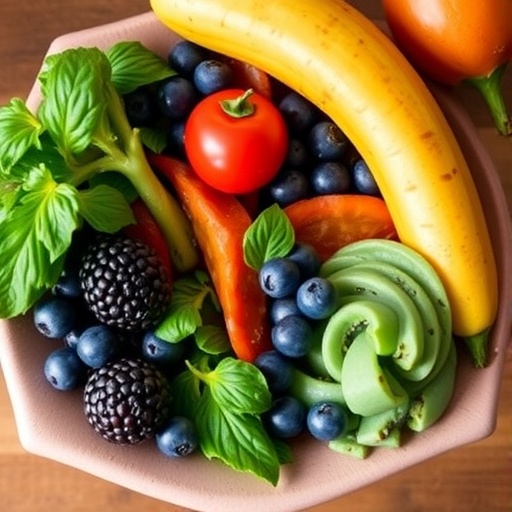
Women who fill their plates with colorful fruits, leafy vegetables, legumes, nuts, whole grains, olive oil and tea may be doing far more than supporting their hearts and metabolisms—according to a new study, they may also be slowing the biological clock ticking inside their ovaries. The research, a case-control study conducted at infertility clinics affiliated with Isfahan University of Medical Sciences in Iran and published in the journal Health Science Reports, found that women with the highest intake of phytochemical-rich foods had 27 percent lower odds of diminished ovarian reserve (DOR) than women whose diets contained the fewest plant-derived bioactive compounds. Crucially, the association survived after the researchers statistically adjusted for physical activity, total energy intake, body mass index and fat mass, hinting that the plant compounds themselves—not simply a generally healthier lifestyle—may be driving the effect. The authors believe it is the first study anywhere to examine whether a phytochemical-rich dietary pattern, measured as a single index, is linked to the status of the ovarian follicle pool in women of reproductive age.
Ovarian reserve refers to the number and quality of the follicles—tiny fluid-filled sacs, each sheltering an immature egg—that remain in a woman’s ovaries. The reserve inevitably shrinks with age, but the pace of decline varies enormously between women of exactly the same age, a variability that has long suggested factors beyond the calendar are at work, including genetics, gynecological conditions such as endometriosis and prior ovarian surgery, environmental exposures like endocrine-disrupting chemicals, psychological stress, and diet. Clinicians track the reserve with two leading biomarkers: anti-Müllerian hormone (AMH), a protein secreted by the granulosa cells of small growing follicles, and the antral follicle count (AFC), a tally of visible follicles obtained by transvaginal ultrasound. In this study, DOR was diagnosed when AMH measured 0.7 nanograms per milliliter or less and/or the follicle count fell to four or fewer. The condition matters because it forecasts fertility potential, how vigorously the ovaries will respond to hormonal stimulation during assisted reproduction, how many fertile years remain, and the likely age at menopause—making any modifiable factor that could slow its onset enormously valuable.
The team recruited 370 women aged 18 to 45 with body mass indices between 20 and 35 kilograms per square meter, reporting the observational study according to the STROBE guidelines. Of these, 120 women had been diagnosed with DOR by two gynecologists, while 250 age- and BMI-matched controls had normal ovarian reserve; the final sample exceeded the 273 participants originally estimated as necessary because the power calculations, built on an anticipated odds ratio of 0.50, were deliberately conservative. To keep other causes of ovarian decline out of the picture, women with a history of ovarian surgery, endometriosis, radiotherapy, chemotherapy, hormonal treatment, or special diets within the previous three months were excluded, as were those with endocrine or metabolic conditions. Participants showing prolonged menstrual irregularity or vasomotor symptoms such as hot flashes and night sweats were also ruled out, so that perimenopause and premature ovarian insufficiency would not be mistaken for DOR. Ovarian reserve markers were measured under standardized conditions: serum AMH by enzyme-linked immunosorbent assay, and antral follicle counts by transvaginal ultrasound on the third day of a spontaneous menstrual cycle.
Dietary intake was captured with a validated, 80-item semi-quantitative food frequency questionnaire administered in face-to-face interviews by trained nutritionists, with portion sizes converted to grams using standard household measures. From those data the researchers computed the dietary phytochemical index (DPI), a tool first proposed in 2004 that expresses the percentage of a person’s total daily calories derived from foods naturally dense in phytochemicals—the non-nutritive bioactive compounds, including polyphenols, carotenoids, phytosterols and organosulfur substances, that plants synthesize largely to defend themselves against environmental stress. Fruits, vegetables, legumes, whole grains, nuts, soy products, seeds and olive oil counted toward the index; natural fruit juices were grouped with fruit, and vegetable juices and tomato-based sauces were classified as vegetables for their substantial phytochemical content. Low-phytochemical foods such as potatoes, pickled vegetables and vegetable powders were deliberately excluded. Participants were then sorted into quartiles. Notably, in this cohort even the top quartile drew less than a third of daily calories—roughly 28 to 29 percent—from phytochemical-rich foods, underscoring how far most modern diets sit from genuinely plant-centered eating.
The baseline contrasts confirmed the clinical gulf between the groups. Women with DOR carried about two kilograms more fat mass on average (38.47 versus 36.47 kilograms, measured by bioelectrical impedance), had larger waist circumferences (102.23 versus 91.70 centimeters) and higher waist-to-hip ratios (0.90 versus 0.86), and their ovaries told the starker story: an antral follicle count averaging 2.34 versus 9.59, and AMH levels averaging 0.56 versus 4.11 nanograms per milliliter. Against that backdrop, the diet signal emerged. In the crude analysis, women in the top DPI quartile had 21 percent lower odds of DOR than those in the bottom quartile (odds ratio 0.79; 95 percent confidence interval 0.55–0.93; p-trend = 0.010). Adjusting for physical activity and energy intake left the association intact (odds ratio 0.80; 95 percent CI 0.54–0.95; p-trend = 0.033). And in the fully adjusted model, which added body mass index and fat mass, the effect sharpened further: women in the highest quartile had 27 percent lower odds of DOR (odds ratio 0.73; 95 percent CI 0.42–0.97; p-trend = 0.02).
The diets behind the high scores were not subtle. Women in the top quartile of the case group ate, on average, 589 grams of fruit and 648 grams of vegetables per day, alongside significantly more legumes, nuts, whole grains, olives, soy, tea and spices than the bottom quartile; they also consumed more total energy, protein, carbohydrate and fat overall, which highlights that the index tracks the proportion of calories from plant foods rather than the sheer amount eaten. Among the controls, an intriguing secondary signal appeared: antral follicle counts differed significantly across DPI quartiles, with the highest counts in the second quartile rather than the first, hinting that the relationship between phytochemical intake and follicle numbers may not be strictly linear in women with healthy reserves. Equally notable was what the analysis did not find: among women already diagnosed with DOR, DPI scores showed no significant association with AMH or AFC. The authors interpret this cautiously, suggesting that phytochemical-rich diets may help prevent or slow the decline of ovarian reserve rather than restore it once depletion is already advanced.
Mechanistically, the finding dovetails with a large literature on how plant compounds shape the ovarian environment. Oxidative stress—an imbalance between reactive oxygen species and the body’s antioxidant defenses—is considered a central driver of ovarian aging, capable of disrupting oocyte development, follicular progression, luteal-phase regulation and early placental development. Phytochemicals counter this threat on several fronts. Compounds such as resveratrol, quercetin, genistein, kaempferol and daidzein dampen inflammation by suppressing pro-inflammatory cytokines including interleukin-6, interleukin-1 beta and tumor necrosis factor-alpha, acting through two master signaling pathways: nuclear factor kappa B (NF-κB) and mitogen-activated protein kinase (MAPK). They also scavenge reactive oxygen and nitrogen species directly, chelate pro-oxidant metal ions, and boost the cell’s own antioxidant arsenal—catalase, glutathione peroxidase and superoxide dismutase. Beyond these actions, experimental and clinical studies indicate that some phytochemicals, notably phytoestrogens and flavonoids, modulate reproductive hormones such as luteinizing hormone, follicle-stimulating hormone, prolactin, estrogen and progesterone, and animal research has shown that certain phytochemicals raise AMH levels and preserve follicular function—plausibly protecting the very reserve the new study links to diet.
The result also slots into a wider nutritional map of fertility. Adherence to the Mediterranean diet, rich in olive oil, vegetables, fruit, nuts, legumes, fish and whole grains, has been associated with better IVF success rates and higher pregnancy chances in assisted reproduction, effects attributed to its anti-inflammatory and endocrine-modulating properties. Work on the dietary phytochemical index in other contexts has yielded inverse associations with polycystic ovary syndrome—one 2024 case-control study found higher DPI adherence linked to more favorable metabolic and hormonal profiles in women with PCOS—and a scoping review of 18 clinical trials reported that phytochemical-rich diets and supplements improve hormonal and metabolic markers in that condition. The index has also been inversely tied to metabolic syndrome, obesity, cancer risk and the progression of chronic kidney disease, while low fruit intake has been connected to longer time-to-pregnancy and elevated infertility risk. What distinguishes the Iranian study is its target: not fertility outcomes in general, but the underlying biological substrate—the follicle pool itself.
The researchers are explicit about the limits of their design. Because the study was retrospective and observational, it cannot establish causation; unmeasured factors such as psychological stress, environmental toxins, genetic background and endocrine disorders may still confound the association. The DPI has technical blind spots as well: computed from the caloric share of phytochemical-rich foods, it undercounts non-caloric but phytochemically dense items such as green tea, black tea and spices, and it cannot identify which specific types of phytochemicals are actually consumed. The lack of a region-specific food composition database for plant nutrients further restricts precision, since phytochemical profiles vary substantially across geographies. Finally, because participants were recruited from fertility clinics rather than the general community, the findings may not extrapolate to healthy women at large, and the recruitment strategy itself may have introduced selection bias.
Even with those caveats, the study adds a potentially powerful, inexpensive lever to the conversation about reproductive health. Unlike genetic predisposition or prior ovarian surgery, diet is modifiable, and the DPI offers clinicians a simple, low-cost way to quantify how plant-forward a patient’s eating pattern truly is—a metric the authors argue could be applied in clinical practice despite its limitations. The team calls for prospective cohort studies and randomized trials to confirm the association, and for mechanistic research that directly measures inflammatory and oxidative stress biomarkers to clarify how dietary phytochemicals act on the ovary. For now, the message is a familiar one with a new twist: the same plant-rich plate long recommended for the heart, the metabolism and cancer prevention may also be quietly defending the ovarian follicle pool. For women weighing their future fertility, shifting even a modest share of daily calories toward fruits, vegetables, legumes, nuts, whole grains and olive oil appears to be a change worth making—ideally years before the first conversation with a fertility specialist.
Cite Scienmag News
Daisy Hatcher. (August 30, 2026). Diet Rich in Phytochemicals May Help Protect Ovarian Reserve, Study Finds. Scienmag. https://scienmag.com/diet-rich-in-phytochemicals-may-help-protect-ovarian-reserve-study-finds/
Daisy Hatcher. "Diet Rich in Phytochemicals May Help Protect Ovarian Reserve, Study Finds." Scienmag, 30 August 2026, https://scienmag.com/diet-rich-in-phytochemicals-may-help-protect-ovarian-reserve-study-finds/. Accessed 30 August 2026.
Daisy Hatcher. "Diet Rich in Phytochemicals May Help Protect Ovarian Reserve, Study Finds." Scienmag. August 30, 2026. https://scienmag.com/diet-rich-in-phytochemicals-may-help-protect-ovarian-reserve-study-finds/

