


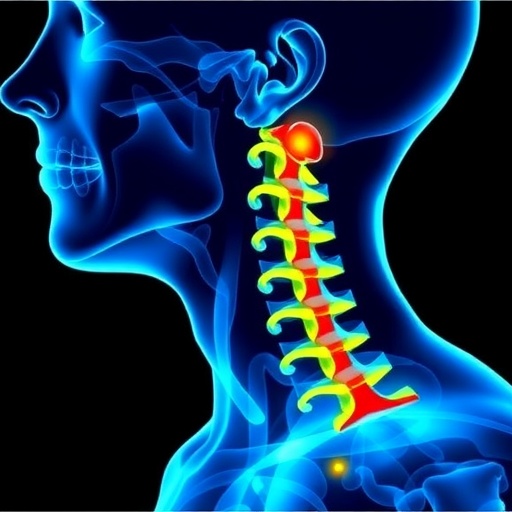
A routine measure from head and neck cancer surgery may hold an unexpected clue about how well a patient responds to immunotherapy. In a study of people whose head and neck squamous cell carcinoma returned after surgery, researchers found that patients who had more lymph nodes removed from the neck responded less often to immune checkpoint inhibitors and survived for shorter periods than those with a lower lymph node yield. The finding suggests that the anatomy left behind after cancer surgery could influence the performance of drugs designed to awaken the immune system against tumors.
The study, published in Cancer Immunology, Immunotherapy, examined 120 patients with recurrent head and neck squamous cell carcinoma, or HNSCC, who received immune checkpoint inhibitors after their original tumors had been surgically removed. The researchers focused on lymph node yield, the number of lymph nodes identified and removed during a neck dissection. This number is commonly used as an indicator of the extent and quality of lymph-node surgery, because examining more nodes can improve the detection of cancer that has spread beyond the primary tumor. But lymph nodes are not merely passive filters. They are also important immune-organizing sites, and removing large portions of this network could have consequences that persist long after the operation.
Among the 120 patients, 31 had undergone a unilateral neck dissection, 82 had undergone bilateral surgery, and seven had not undergone a neck dissection. The median number of removed lymph nodes was 26, while the average was 29.9. The range was remarkably broad, extending from zero to 145 nodes. To assess whether lymph node yield was associated with later treatment, the researchers divided patients into lower- and higher-yield groups and compared their responses to immune checkpoint inhibitors, as well as their progression-free and overall survival. They also examined two established or potentially relevant biological measures: the neutrophil-to-lymphocyte ratio, or NLR, in the blood, and expression of the immune-regulating protein PD-L1 in tumor tissue.
The contrast in treatment response was striking. The objective response rate—the proportion of patients whose tumors shrank by a predefined amount—was 42.9 percent in the low-lymph-node-yield group, compared with 16.9 percent in the high-yield group. The difference was statistically significant, with a reported P value of 0.003. In cancer studies, a low P value does not prove that one factor directly causes another, but it indicates that a difference this large would be relatively unlikely to arise from random variation alone under the statistical model used. The result therefore raises the possibility that extensive removal of cervical lymphatic tissue could be linked to weaker immune reactivation when recurrent disease is treated with checkpoint-blocking drugs.
The survival results pointed in the same direction. Patients in the high-yield group had a median progression-free survival of just 1.3 months, compared with 5.9 months among patients in the low-yield group. Progression-free survival measures the time before a cancer grows, spreads or otherwise meets criteria for treatment failure. Median overall survival was 9.7 months in the high-yield group and 21.1 months in the low-yield group. The difference in progression-free survival was highly significant, with P less than 0.001, while the overall-survival comparison produced a P value of 0.007. These figures do not mean that every patient with extensive surgery will fare poorly, but they reveal a population-level association that could be clinically important if confirmed in larger studies.
The biological explanation is plausible, although it remains unproven. Cervical lymph nodes are among the locations where immune cells encounter tumor-derived material and receive signals that help activate T cells. This process, known as T-cell priming, involves antigen-presenting cells displaying fragments of abnormal proteins to T cells, alongside co-stimulatory and inflammatory signals that determine whether the response becomes effective. Immune checkpoint inhibitors work by blocking inhibitory pathways—most notably the interaction between PD-1 on T cells and PD-L1 on tumor or immune cells. By releasing these molecular brakes, the drugs can restore activity in T cells that are present but functionally exhausted. If surgery removes a substantial portion of the tissue involved in antigen presentation and immune-cell coordination, the later treatment may have a less favorable environment in which to operate.
That interpretation should not be confused with the idea that neck dissection is harmful or unnecessary. Surgery remains a central treatment for many patients with HNSCC, and removing involved lymph nodes can be essential for controlling disease and staging the cancer accurately. A high lymph node yield may also reflect factors other than the operation itself, including the extent of the original disease, the type of surgery performed, the experience of the surgical team, the number of anatomical levels dissected and the thoroughness of pathological examination. Patients who undergo more extensive surgery may have had biologically more aggressive or anatomically widespread tumors from the outset. Although the researchers adjusted for multiple variables in their analysis, a retrospective study cannot eliminate every source of confounding.
The study also highlighted the importance of systemic inflammation. In multivariable analysis, both high lymph node yield and high NLR independently predicted poorer survival. NLR is calculated by dividing the number of circulating neutrophils by the number of lymphocytes in a blood sample. A higher ratio can reflect inflammation, immune suppression or both: neutrophils may support tumor-promoting processes, while a relative shortage of lymphocytes may indicate a weaker capacity for anti-tumor immune surveillance. Among patients whose tumors were PD-L1-positive, those with high NLR had worse survival than those with low NLR. The result suggests that the immune status of the patient, not just the molecular characteristics of the tumor, may shape the outcome of checkpoint blockade.
PD-L1 expression itself did not independently predict survival in the multivariable analysis, even though it is widely used to help guide immunotherapy decisions in recurrent or metastatic HNSCC. Of the 80 patients whose tumors were tested, 69 had a combined positive score of at least 1. The combined positive score estimates PD-L1 staining across tumor cells and immune cells relative to the total number of viable tumor cells, rather than measuring tumor-cell staining alone. Its failure to emerge as an independent predictor in this dataset does not invalidate PD-L1 testing; instead, it underscores the limits of relying on a single biomarker. Tumor biology, systemic inflammation, previous treatment, immune-cell access and the condition of lymphatic tissues may all contribute to whether an immune checkpoint inhibitor succeeds.
The authors argue that lymph node yield deserves further investigation as a potential biomarker for immunotherapy outcomes after surgical treatment of HNSCC. If future prospective studies reproduce the association, the number of removed nodes could become part of a broader risk model used to interpret recurrence and plan treatment. Such a model might combine surgical history with NLR, PD-L1 status, tumor stage, viral or molecular features and other measures of the tumor immune microenvironment. However, the current findings should be regarded as hypothesis-generating rather than as a reason to change surgical practice. The study was based on a relatively small group of patients treated after recurrence, and the analysis shows correlation rather than causation. Its significance lies in drawing attention to an overlooked possibility: cancer surgery may alter not only the physical map of disease, but also the immune landscape that determines whether the next generation of treatments can work.
Cite Scienmag News
Rowan B. (August 29, 2026). Neck Node Yield Influences Immunotherapy Outcomes After Recurrent Head and Neck Cancer. Scienmag. https://scienmag.com/neck-node-yield-influences-immunotherapy-outcomes-after-recurrent-head-and-neck-cancer/
Rowan B. "Neck Node Yield Influences Immunotherapy Outcomes After Recurrent Head and Neck Cancer." Scienmag, 29 August 2026, https://scienmag.com/neck-node-yield-influences-immunotherapy-outcomes-after-recurrent-head-and-neck-cancer/. Accessed 29 August 2026.
Rowan B. "Neck Node Yield Influences Immunotherapy Outcomes After Recurrent Head and Neck Cancer." Scienmag. August 29, 2026. https://scienmag.com/neck-node-yield-influences-immunotherapy-outcomes-after-recurrent-head-and-neck-cancer/


