


Crimean–Congo hemorrhagic fever virus has long presented a particularly difficult challenge for infectious-disease researchers: it is widespread across regions of Africa, the Middle East, Asia and southeastern Europe, yet the tools needed to prevent and treat infection remain limited. A study reported in npj Viruses now draws attention to one of the virus’s lesser-known proteins, called GP38, identifying the molecule from the M18-China isolate as a source of unusually broad immunological recognition. The finding does not amount to a vaccine or treatment on its own, but it places GP38 more prominently on the map of possible targets for next-generation diagnostics, antibody therapies and vaccine design.
Crimean–Congo hemorrhagic fever virus, or CCHFV, belongs to the order Bunyavirales and is transmitted primarily by infected ticks, especially ticks of the genus Hyalomma. People can also become infected through contact with the blood or tissues of viremic animals, and human-to-human transmission can occur when bodily fluids from an infected person reach another individual. Clinical outcomes vary widely. Some infections cause mild or nonspecific illness, while severe disease can progress rapidly, with bleeding, circulatory collapse, liver dysfunction and multiorgan failure. The virus’s broad geographic distribution and ability to move between wildlife, livestock, ticks and people make it a persistent public-health concern.
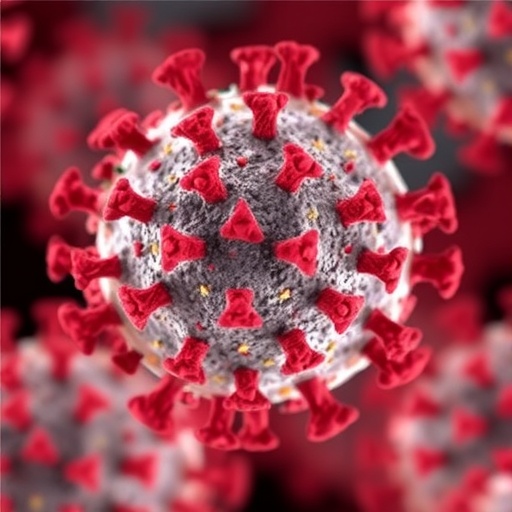
The viral surface is dominated by a glycoprotein complex that helps CCHFV enter host cells and is exposed to the immune system. Like many enveloped viruses, CCHFV produces proteins that must perform several tasks at once: assemble into new viral particles, interact with host-cell membranes and evade or withstand immune attack. GP38 is produced from the virus’s glycoprotein precursor and is distinct from the better-known entry proteins that form the mature viral surface machinery. That distinction matters because immune responses directed against one part of a viral protein complex may not recognize another part, and because some viral proteins can be conserved across strains even when exposed regions change.
The paper by Wang, Monticelli, Berrigan and colleagues focuses on GP38 from the M18-China isolate and reports that this protein “confers broad immunological breadth.” In practical terms, the study’s title indicates that GP38 can generate or support immune recognition extending across a wide range of viral antigenic features or virus variants. The supplied publication information does not provide the study’s experimental sample sizes, animal models, antibody sequences, structural data or neutralization measurements, so those details cannot be used to quantify the effect. What can be concluded from the reported finding is that the investigators have identified an immune-relevant property in a protein that has received less attention than the virus’s principal entry glycoproteins.
That result is important because viral evolution can undermine highly narrow immune defenses. Antibodies often recognize three-dimensional shapes on the surface of proteins, known as epitopes. If mutations alter those shapes, an antibody may bind less effectively or fail to bind altogether. A target with broader conservation, or one that presents multiple shared epitopes, may offer a better foundation for countermeasures intended to work against genetically diverse viral lineages. Broad recognition does not automatically mean broad protection: an antibody can bind to a protein without blocking infection, and an immune response can be detectable without being strong enough to prevent disease. The crucial next question is therefore whether GP38-directed responses interfere with viral replication, reduce disease severity or improve survival in appropriate experimental systems.
The discovery also has potential significance for diagnostics. Many tests for viral disease detect either the virus’s genetic material or antibodies produced by an infected person. Molecular tests can be highly specific but may require specialized equipment and must be performed while viral RNA is still present at detectable levels. Serological tests, by contrast, can reveal prior exposure through antibodies against viral proteins, but their performance depends on the selected antigen. A protein that is recognized across diverse CCHFV isolates could help researchers develop assays less vulnerable to strain-specific differences. At the same time, broad binding can create a technical challenge: a diagnostic antigen must distinguish genuine CCHFV exposure from cross-reactive responses to related viruses. GP38’s value for testing will therefore depend on how specifically it is recognized and how consistently it performs in samples from people with confirmed infection.
For vaccine research, the appeal of GP38 lies in the possibility of adding a new component to an immune-targeting strategy. Most vaccine development against enveloped viruses emphasizes surface proteins involved directly in entry because antibodies that block those proteins can prevent infection at the earliest stage. Yet a successful vaccine may need to stimulate several layers of immunity, including antibodies against multiple viral proteins and T cells that identify infected cells. Incorporating an antigen such as GP38 could broaden the range of immune responses generated by vaccination, particularly if the protein contains conserved regions shared among viral lineages. Whether it can do so safely and effectively remains an open question. Researchers would need to establish the protein’s structure, its accessibility during natural infection, the quality of the antibodies it induces and its performance when combined with other CCHFV antigens.
The study may also encourage a closer look at how CCHFV’s accessory and structural proteins interact with the immune system. Viral proteins that are not the dominant entry factors are sometimes overlooked because they do not present an obvious target for neutralizing antibodies. However, they may still contain conserved molecular surfaces, influence how viral particles are assembled or shape the immune response in ways that affect disease. Understanding GP38 could therefore contribute to a more complete map of the virus rather than simply producing a single candidate antigen. Such basic knowledge is valuable for a pathogen whose biology remains less thoroughly characterized than that of viruses such as influenza, HIV or SARS-CoV-2.
Important hurdles remain before the reported property can translate into a medical countermeasure. CCHFV research requires high-containment facilities because the virus can cause severe human disease and can spread through contact with infectious material. That limits the number of laboratories able to perform live-virus experiments and slows the progression from molecular observation to preclinical validation. Researchers must also account for the virus’s genetic diversity, differences in immune responses among individuals and the difficulty of conducting clinical trials for a sporadic disease that appears in geographically scattered outbreaks. The M18-China isolate provides a valuable reference point, but a broadly useful intervention would need to be tested against additional isolates and evaluated in systems that reflect the complexity of human infection.
For now, the central message is one of opportunity rather than immediate clinical impact. GP38 from the M18-China isolate has been reported as a protein with broad immunological relevance, expanding the list of CCHFV components that may be useful for understanding immunity and designing countermeasures. The finding could help shift attention toward a more inclusive view of viral antigens, in which less prominent proteins complement the major entry machinery. Further work will determine whether GP38-directed immunity merely recognizes the virus or can actually control it. If subsequent studies demonstrate cross-strain protection, reliable diagnostic performance or therapeutic antibody activity, this small viral protein could become an important piece of the global effort to prepare for Crimean–Congo hemorrhagic fever.
Cite Scienmag News
Cedric L. (August 29, 2026). M18-China Crimean-Congo Hemorrhagic Fever Virus GP38 Protein Shows Broad Immune Recognition. Scienmag. https://scienmag.com/m18-china-crimean-congo-hemorrhagic-fever-virus-gp38-protein-shows-broad-immune-recognition/
Cedric L. "M18-China Crimean-Congo Hemorrhagic Fever Virus GP38 Protein Shows Broad Immune Recognition." Scienmag, 29 August 2026, https://scienmag.com/m18-china-crimean-congo-hemorrhagic-fever-virus-gp38-protein-shows-broad-immune-recognition/. Accessed 29 August 2026.
Cedric L. "M18-China Crimean-Congo Hemorrhagic Fever Virus GP38 Protein Shows Broad Immune Recognition." Scienmag. August 29, 2026. https://scienmag.com/m18-china-crimean-congo-hemorrhagic-fever-virus-gp38-protein-shows-broad-immune-recognition/


