


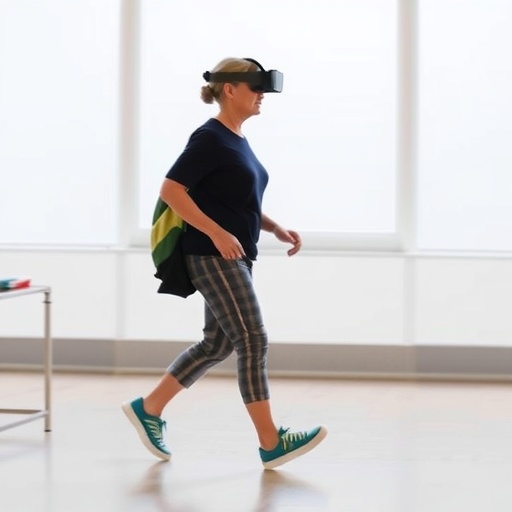
Parkinson’s disease can turn an ordinary walk across a room into an unpredictable neurological challenge. A person may shuffle, hesitate before taking the first step, lose postural stability or experience tremors that fluctuate from one moment to the next. For families, that uncertainty often creates a second, less visible burden: caregivers must remain constantly alert for signs that a routine movement could become a fall. A new research platform aims to shift some of that responsibility from continuous human observation to a network of wearable sensors, computer vision and real-time feedback. In a pilot study, the system classified gait patterns in people with Parkinson’s disease with a mean accuracy of 88 percent and responded to detected deviations in approximately 210 milliseconds. The researchers describe the technology as a home-monitoring tool rather than a replacement for clinical care, but its combination of motion sensing and remote supervision could offer a new way to track symptoms between appointments, when conventional assessments often miss the variability of daily life.
The system was designed around a central weakness in Parkinson’s care: clinical evaluations are usually episodic. A patient’s movement may be assessed during a scheduled visit, often in a controlled environment and over a limited period. Yet Parkinsonian symptoms can change with medication timing, fatigue, stress, surroundings and the demands of a particular task. A short examination may therefore provide only a snapshot of motor function. The proposed platform instead attempts to gather continuous or repeated measurements in a home setting. Its multimodal architecture combines inertial measurement units, commonly known as IMUs, with flex sensors and a vision-based pose-estimation algorithm. Each sensing method captures a different aspect of movement. IMUs measure acceleration and angular velocity, allowing the system to estimate body motion and orientation, while flex sensors detect bending changes in body-mounted components. The camera-based system analyzes the positions of anatomical landmarks, creating a digital representation of posture and gait without relying on a single physical sensor.
The value of combining these signals lies in sensor fusion. Every measurement technology has limitations: wearable sensors can drift, shift position or capture only the motion of the body part to which they are attached, while computer vision can be affected by lighting, camera placement, clothing or partial occlusion. When independent streams of data are interpreted together, the system can compare patterns rather than rely on one potentially noisy measurement. In principle, an IMU can identify changes in acceleration associated with a tremor or irregular step, a flex sensor can register altered joint movement, and pose estimation can reveal changes in the relative positions of the trunk and limbs. Algorithms can then transform these raw data into features related to gait dysfunction, such as changes in step timing, limb trajectories, postural alignment or movement consistency. The researchers’ goal is not simply to record whether someone is walking, but to identify deviations that may indicate clinically meaningful motor impairment.
When the system detects movement outside predefined thresholds, it can deliver feedback through three channels: haptic, visual and auditory. Haptic feedback uses a vibration or other tactile signal, visual feedback can appear through a connected display, and auditory feedback may provide a sound or spoken cue. Such signals are intended to help a user respond immediately to an emerging movement problem. In Parkinson’s disease, external cues can sometimes support the initiation or regulation of movement, particularly when gait becomes hesitant or steps become abnormally short. The platform’s feedback response time—about 210 milliseconds in the reported pilot—suggests that alerts were generated rapidly enough to be relevant during motion. However, a fast technical response does not by itself demonstrate that a cue prevents a fall, improves walking over the long term or works equally well for every symptom. Those questions require larger studies that measure functional outcomes directly.
The researchers tested the system in six people with Parkinson’s disease classified at Hoehn and Yahr stages 2 to 3, along with one healthy control. The Hoehn and Yahr scale is a clinical staging system used to describe the progression of Parkinson’s-related disability, with stages 2 and 3 generally representing bilateral motor involvement and increasing balance impairment, although the precise experience varies between individuals. Across the Parkinson’s participants, the gait-classification system achieved a mean accuracy of 88.0 percent. That result is promising as an early demonstration, but it should be interpreted cautiously because the sample was extremely small. A study involving six patients cannot establish how performance will vary across ages, body types, disease durations, medication states or more advanced stages. Nor can it reliably estimate the rate of false alarms or missed events in everyday environments. The healthy control provides a comparison point, but it does not substitute for a diverse control group or a separate validation cohort.
To connect the technological measurements with established clinical practice, the investigators compared sensor-derived outputs with Part III of the Movement Disorder Society-Unified Parkinson’s Disease Rating Scale, or MDS-UPDRS. This section evaluates motor symptoms through a standardized clinical examination and is widely used to characterize Parkinsonian impairment. Agreement between digital measurements and clinical scores is important because a technically sophisticated system is useful only if its outputs can be interpreted by clinicians. A wearable platform might detect changes with remarkable precision yet remain difficult to apply if its metrics do not correspond to recognized aspects of disease severity. The reported alignment supports the potential clinical interpretability of the platform, but it does not prove that the system can replace an MDS-UPDRS assessment. Instead, the technology may eventually complement examination-based ratings by supplying longitudinal information: how movement changes across a day, how symptoms respond to treatment and whether a patient’s function differs between the clinic and home.
Remote monitoring is also aimed at the psychological effects of Parkinson’s disease on caregivers. Family members may need to watch for freezing episodes, instability, tremors or changes in mobility, particularly when a patient is alone or moving through a hazardous space. That vigilance can become chronic, contributing to stress, anxiety and reduced quality of life. By synchronizing data wirelessly, the platform is intended to allow caregivers and clinicians to review information without maintaining constant physical supervision. In a future version, a caregiver might receive an alert when a pattern crosses a clinically defined threshold, while a clinician could inspect trends rather than depend entirely on recollection during an appointment. Such an arrangement could provide reassurance and help prioritize interventions. Yet the study did not formally measure caregiver stress, anxiety or quality of life, so claims that the system improves mental health remain hypothetical. The authors explicitly frame caregiver benefit as a future research question requiring validated outcome measures.
The platform also raises practical and ethical issues that will shape whether it can move beyond a pilot. Continuous monitoring generates sensitive health data, and systems that transmit information wirelessly must protect confidentiality, control access and clearly communicate what an alert means. A false alarm could increase anxiety, while a missed event could create unwarranted confidence. Camera-based monitoring introduces additional questions about privacy in the home, even when the software analyzes body landmarks rather than storing conventional video. Usability is equally important: sensors must be comfortable, durable and easy to position correctly, and feedback must help rather than distract the person wearing them. The current study was conducted with institutional ethics approval, written informed consent and anonymous, confidential data handling. Its authors reported no external funding and no competing interests. These safeguards provide an important foundation, but real-world deployment would require testing over longer periods and in the varied conditions of ordinary homes.
The findings therefore represent an early signal, not a finished medical device or proof of reduced caregiver burden. The next phase should involve larger and more diverse participant groups, repeated measurements over weeks or months, and comparisons across medication cycles and symptom states. Researchers will also need to test whether real-time cues improve meaningful outcomes such as walking speed, freezing episodes, near-falls, falls, confidence and independence. For caregivers, studies should assess whether remote supervision actually reduces monitoring time and emotional strain rather than simply adding another stream of alerts to manage. If those questions are answered positively, multimodal monitoring could help make Parkinson’s care more continuous and personalized. The broader promise is to convert movement that is difficult to observe into quantitative data that can guide timely support—while preserving the clinical judgment and human relationships at the center of neurological care.
Cite Scienmag News
Clara W. (August 28, 2026). Wearable Vision System Tracks Parkinson’s Gait, Providing Real-Time Mobility Feedback for Caregivers. Scienmag. https://scienmag.com/wearable-vision-system-tracks-parkinsons-gait-providing-real-time-mobility-feedback-for-caregivers/
Clara W. "Wearable Vision System Tracks Parkinson’s Gait, Providing Real-Time Mobility Feedback for Caregivers." Scienmag, 28 August 2026, https://scienmag.com/wearable-vision-system-tracks-parkinsons-gait-providing-real-time-mobility-feedback-for-caregivers/. Accessed 28 August 2026.
Clara W. "Wearable Vision System Tracks Parkinson’s Gait, Providing Real-Time Mobility Feedback for Caregivers." Scienmag. August 28, 2026. https://scienmag.com/wearable-vision-system-tracks-parkinsons-gait-providing-real-time-mobility-feedback-for-caregivers/


