

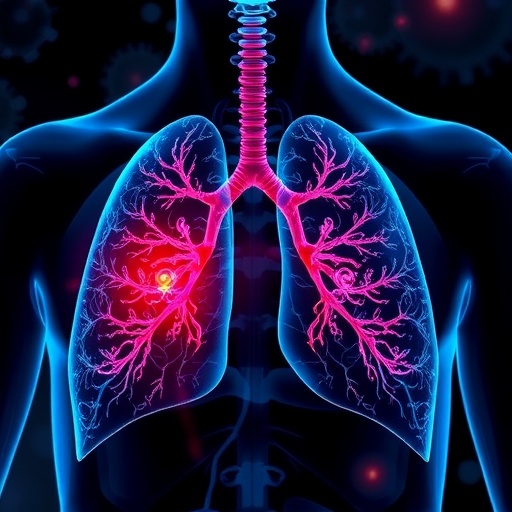
Researchers at Columbia University have identified a previously unknown fibroblast population that appears to help lung tumors evade the immune system by building a protective zone of immunosuppression around the cancer. The cells, marked by unusually high activity of the gene CHL1, recruit regulatory T cells to the tumor boundary, where those immune cells dampen the very responses that might otherwise destroy malignant tissue. The discovery reveals a previously hidden partnership between structural cells in the tumor environment and immune cells that normally protect healthy lungs from excessive inflammation. It also points to a potential therapeutic strategy: interrupt the molecular signals that draw regulatory T cells into the tumor and the cancer may become more visible to the immune system. The findings were reported in Nature Immunology in a study led by Olivia Ringham and Nicholas Arpaia at Columbia University Irving Medical Center.
The research began with a question that has become increasingly important in cancer biology: why do apparently ordinary cells surrounding a tumor so often predict how aggressively the disease will progress? Fibroblasts are connective-tissue cells that help organize and maintain organs, repair injuries, and produce components of the extracellular matrix, the intricate protein scaffold surrounding cells. Inside tumors, however, fibroblasts can be reprogrammed into cancer-associated fibroblasts, or CAFs. Rather than behaving as passive structural support, these cells can remodel tissue, influence blood vessels, alter cancer-cell growth, and regulate immune activity. Much of the detailed work on CAFs has focused on pancreatic cancer, but their roles in lung cancer have been less completely understood. Columbia researchers therefore examined lung-tumor fibroblasts at the level of individual cells, looking for subtle molecular differences that would be hidden in an averaged tissue sample.
To perform that analysis, the team used single-cell transcriptomic profiling, a technique that measures patterns of gene activity in thousands of individual cells. Every cell contains essentially the same DNA, but different cell types activate different subsets of genes, creating distinctive molecular signatures. By sequencing messenger RNA from individual fibroblasts, scientists can determine which genes are switched on and group cells according to their functional programs. This approach is particularly powerful in tumors, where malignant cells, immune cells, blood-vessel cells, and connective-tissue cells coexist in constantly changing states. In the mouse model of lung cancer, the analysis revealed a fibroblast population that had not been recognized in healthy lung tissue. These cells expressed CHL1, a gene not normally associated with fibroblasts in the un diseased organ, providing a molecular marker for tracking the newly defined population.
Further experiments showed that CHL1-positive fibroblasts were not simply bystanders in the tumor microenvironment. They were positioned in a way that enabled them to influence the distribution of regulatory T cells, commonly known as Tregs. Tregs are essential immune regulators. They restrain potentially damaging immune reactions and help prevent the body from attacking its own tissues. In the lungs, this function is especially important because the organ is constantly exposed to airborne particles, microbes, and environmental antigens. Without effective immune braking, each breath could provoke inflammation. Cancer exploits that protective system. When Tregs accumulate near a tumor, they can suppress the activity of cytotoxic T cells and other immune mechanisms capable of recognizing and killing cancer cells. The newly identified fibroblasts therefore appear to convert a normal tissue-protection program into a localized shield for malignant cells.
The molecular connection between the fibroblasts and the Tregs involved a signaling protein called CXCL9. Chemokines such as CXCL9 act like molecular guidance cues, creating signals that influence the movement and positioning of immune cells. The Columbia team found evidence that the CHL1-positive fibroblasts use CXCL9 to recruit regulatory T cells to the edge of lung tumors. That location may be strategically important: the tumor border is where immune cells encounter cancer-associated signals and where the balance between attack and tolerance can determine whether malignant cells are contained or allowed to expand. In the mouse experiments, genetically disrupting components of this signaling system reduced the accumulation of Tregs around tumors. With fewer regulatory cells present, immune activity against the cancer increased and tumor control improved. The results suggest that the fibroblast–CXCL9–Treg pathway is not merely correlated with immune suppression but contributes directly to the tumor’s ability to resist immune elimination.
The discovery also highlights why cancer immunotherapy cannot be understood by studying immune cells alone. Treatments that activate T cells may fail when the surrounding tissue continually instructs those cells to remain inactive. Fibroblasts can provide that instruction through chemokines, matrix proteins, growth factors, and contact-dependent signals. In this case, the cancer-associated fibroblast population appears to create an immunological compartment in which suppressive T cells are concentrated and potentially supported. Blocking the pathway could therefore complement existing therapies by changing the physical and chemical environment around the tumor. The researchers emphasize that the findings do not yet constitute a treatment for patients. The experiments were performed in mouse models and through analyses of human tumor samples, and additional work will be needed to determine whether CXCL9 or CHL1 can be safely targeted without disrupting the immune regulation required for healthy lung function.
Evidence that the same fibroblasts occur in human disease came from tumor specimens and clinical information held in Columbia’s tissue bank. In human lung cancers, tumors containing greater numbers of CHL1-positive fibroblasts showed weaker immune responses and were associated with shorter progression-free survival. Progression-free survival measures how long patients live without their disease worsening, making the association clinically meaningful even though it does not by itself prove causation. The human observations align with the mouse experiments, in which disruption of the relevant signaling pathway reduced Treg accumulation and permitted stronger antitumor immunity. Together, the results suggest that CHL1-positive fibroblasts could serve as a biomarker identifying tumors with a particularly suppressive microenvironment. They might also help researchers select patients for future therapies designed to block Treg recruitment or dismantle the cellular structures that support immune escape.
One of the most intriguing questions is how these cells arise. The CHL1-positive fibroblasts were not detected as a normal fibroblast population in healthy lungs, raising the possibility that they are produced when existing stromal cells are transformed by signals from the developing tumor. Cancer cells, inflammatory molecules, low oxygen levels, and mechanical changes in the tissue can all alter fibroblast behavior. A normal fibroblast exposed to that combination may change its gene expression and acquire a new identity, including the ability to produce chemokines that reshape local immunity. If researchers can identify the signals that trigger this transformation, it may become possible to prevent the protective niche from forming before it is fully established. Such an approach could be different from directly killing tumor cells: instead, it would remove the support system that allows them to remain hidden.
The study adds to a growing picture of lung cancer as an ecosystem rather than a mass of malignant cells acting alone. Tumors survive through interactions with blood vessels, connective tissue, immune populations, and the biochemical environment surrounding them. The newly described fibroblasts demonstrate how a rare or previously overlooked cell state can have an outsized effect by organizing other cells in the tumor neighborhood. Their discovery was made possible by single-cell technology, but the broader challenge is now to translate a molecular signature into a practical intervention. Future studies will need to determine whether CHL1-positive fibroblasts are present across different lung-cancer subtypes, whether their abundance changes during treatment, and whether targeting CXCL9 affects the effectiveness or toxicity of immunotherapy. For now, the work offers a compelling explanation for one route by which lung tumors evade immune attack—and identifies a hidden cellular accomplice that may be vulnerable to precision treatment.
Cite this news
SCIENMAG. (August 28, 2026). Scientists Discover Hidden Cell Type Shielding Lung Cancer. https://scienmag.com/scientists-discover-hidden-cell-type-shielding-lung-cancer/
SCIENMAG. "Scientists Discover Hidden Cell Type Shielding Lung Cancer." Scienmag, 28 August 2026, https://scienmag.com/scientists-discover-hidden-cell-type-shielding-lung-cancer/. Accessed 28 August 2026.
SCIENMAG. "Scientists Discover Hidden Cell Type Shielding Lung Cancer." Scienmag. August 28, 2026. https://scienmag.com/scientists-discover-hidden-cell-type-shielding-lung-cancer/


