


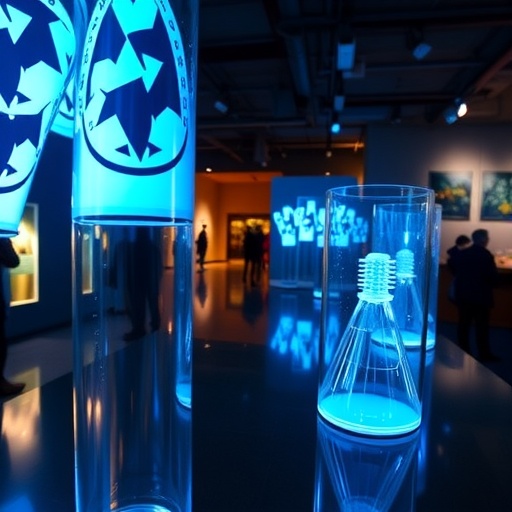
Science Museum Visits Give Teenagers a Measurable Boost in Seeing Themselves as Scientists
A visit to a science museum or planetarium during high school may do more than spark a moment of curiosity. New research suggests that these informal learning experiences are associated with a stronger sense of scientific identity by the end of eleventh grade, even after accounting for students’ prior attitudes toward science, academic preparation, demographic characteristics and school environments. The study, based on a nationally representative U.S. dataset, found that students who visited a science museum or planetarium between ninth and eleventh grade scored about 0.07 standard deviations higher on a measure of science identity than comparable students who did not. The effect was modest, but it remained statistically significant after extensive adjustment for differences between visitors and nonvisitors. The findings offer large-scale evidence that informal science settings can influence how teenagers understand their place in the scientific world, while also exposing stark inequalities in who gets access to those experiences and who benefits most from them.
The study analyzed data from the High School Longitudinal Study of 2009, a federal survey that began with approximately 23,000 ninth-grade students and followed them through high school and beyond. The analysis focused on 7,290 students attending 935 high schools, using information collected in ninth grade and again at the end of eleventh grade. Of the students included, 2,956, or 40.5 percent, reported visiting a science museum or planetarium during the intervening years. The outcome was a standardized science-identity score developed by the National Center for Education Statistics from two questions: whether students saw themselves as “a science person” and whether they believed others saw them that way. The measure captures an important dimension of identity known as recognition—the feeling that science belongs to one’s self-concept and that this identity is acknowledged by other people. It is not the same as a test score or a direct measure of scientific knowledge, but researchers consider it a significant predictor of persistence in STEM education and careers.
Because students are not randomly assigned to visit museums, the researchers used statistical methods designed to reduce the effects of self-selection. Students who visit museums may already be more interested in science, have greater academic confidence or come from families with more resources. Any of those factors could independently increase their science identity. To address this problem, the study first estimated each student’s probability of visiting a museum based on a broad set of ninth-grade characteristics. These included socioeconomic status, gender, race and ethnicity, school location, school-sponsored STEM programs, mathematics achievement, science-class interest, educational aspirations, course-taking, participation in science clubs and the frequency of using the internet for science and technology information. The researchers then applied inverse probability of treatment weighting, which gives greater statistical weight to students whose actual participation differs from what would have been predicted from their background. After weighting, the visitor and nonvisitor groups were closely balanced on all observed characteristics.
The analysis then used a doubly robust estimator, combining the statistical weighting with a regression model that included the same baseline variables. This approach is called “doubly robust” because the estimate remains reliable if either the model predicting museum visits or the model predicting science identity is correctly specified. The researchers also incorporated the survey’s longitudinal weights to account for the study’s complex sampling design and used robust standard errors to reduce the influence of unequal variance and other design effects. Extreme cases with very low or high predicted probabilities of visitation were removed to ensure that the comparison involved students from overlapping opportunity environments. The estimated association between museum visitation and later science identity remained stable as additional groups of variables were introduced. In the fully adjusted model, museum visitors had a coefficient of 0.069, with a standardized effect size of 0.036 and a probability value below 0.001. That translates to roughly seven hundredths of a standard deviation on the identity scale.
The researchers interpret the result through two complementary theories. Science identity theory describes scientific identity as involving competence, performance, interest and recognition. A museum can potentially contribute to all four: interactive exhibits may help students understand scientific ideas, hands-on activities can let them perform scientific practices, self-directed exploration may reinforce interest, and interactions with peers, family members or educators may provide recognition. Situated expectancy-value theory adds a motivational explanation. It proposes that students’ choices depend partly on whether they expect to succeed and whether they value an activity as enjoyable, useful or important to who they are becoming. Unlike a classroom lesson constrained by grades and a fixed curriculum, a museum allows visitors to choose what to examine, how long to stay and how to engage. That autonomy may make scientific activity feel personally meaningful. The study did not directly measure these mechanisms, however, so it cannot establish whether the effect came from exhibit design, social interaction, teacher preparation, role models, family conversations or some combination of factors.
The results also reveal that access to science museums is distributed along a steep socioeconomic gradient. Compared with students in the lowest socioeconomic quintile, students in the third quintile had 1.421 times the odds of visiting, those in the fourth had 1.746 times the odds, and those in the highest had 2.276 times the odds. Among museum visitors, students from the highest socioeconomic group made up 36.4 percent of the sample, compared with 23.8 percent of nonvisitors before statistical adjustment. The gradient likely reflects more than admission prices. Transportation, distance, parents’ work schedules, knowledge of enrichment opportunities and the ability to organize activities all shape whether a museum visit is feasible. Students in suburban schools were also more likely to visit than those in rural schools. The findings suggest that museums may be powerful educational resources, but their benefits are often placed behind economic and geographic barriers. A resource that is nominally open to everyone can remain functionally inaccessible to many families.
Participation patterns by gender and ethnicity produced an especially striking paradox. Female students were more likely than male students to report visiting a science museum or planetarium, with 1.345 times the odds of visitation. Latino students were also more likely to visit than the broader comparison group, while Black students were less likely. Yet female students reported significantly lower science identity than male students, and Latino students also reported lower identity than the overall population. In the fully adjusted outcome model, being female was associated with a science-identity coefficient of −0.092, while the coefficient for Latino students was −0.078. These differences persisted even after accounting for prior identity, achievement, interest and learning experiences. The pattern indicates that exposure alone does not guarantee that students will feel recognized as scientists. Museum environments may not represent diverse scientists sufficiently, may offer unequal opportunities for participation, or may fail to connect an engaging visit with sustained encouragement and support. The same experience can therefore produce different identity gains depending on how students are positioned socially and how others respond to them.
Other factors in the study reinforced the importance of early confidence and sustained engagement. Ninth-grade science identity was the strongest predictor of eleventh-grade identity, with a coefficient of 0.351 in the weighted model. Mathematics achievement and science-class interest were also significant predictors, as were expectations of earning a master’s or doctoral degree. Students who participated in a science club in ninth grade had stronger later science identities, and those who more frequently used the internet for science and technology information were also more likely to identify with science. By contrast, participation in a math or science camp and reading science books or magazines did not reach statistical significance in the fully adjusted model. These differences suggest that the social and active dimensions of science engagement may matter as much as exposure to information. A club, museum or other setting that lets young people discuss ideas, manipulate objects, receive feedback and imagine a future role may affect identity differently from a more solitary encounter with scientific content.
The researchers caution that the results should not be treated as definitive proof that museum visits cause stronger science identities. Although the longitudinal design establishes that visits occurred before the eleventh-grade outcome, unmeasured factors such as parental involvement, intrinsic curiosity, neighborhood proximity to museums and the quality of the visit could still influence both participation and identity. The study measured whether students had made any visit between ninth and eleventh grade, not how often they went, how long they stayed, whether the visit was organized by a school or family, or what kind of museum they attended. The data were collected from 2009 to 2012, before the widespread adoption of many digital and technology-mediated forms of informal STEM learning. The identity measure also captured recognition but not all aspects of competence, performance and interest. Even so, a sensitivity analysis found that an unobserved factor would need to explain at least 3.97 percent of the remaining variation in both visitation and science identity to eliminate the estimated association entirely, using prior science identity as a benchmark. The evidence therefore supports a robust relationship, while leaving the precise causal pathway open.
For schools and museums, the findings point toward a strategy more ambitious than simply increasing attendance. School-organized trips, transportation partnerships, subsidized admission and targeted outreach could help reduce the economic barriers that shape who enters informal science spaces. But equitable access should be paired with equitable design. Museums could feature scientists from a wider range of racial, ethnic and gender backgrounds, provide structured opportunities for students to collaborate and experiment, and train educators to offer affirming feedback that helps visitors see scientific activity as something they can do. Pre-visit preparation and post-visit classroom work may also transform a one-day excursion into a continuing identity-building experience. Future research will need to determine which kinds of visits are most effective, whether benefits differ across student groups and whether stronger science identity eventually translates into STEM majors, persistence in STEM programs or entry into scientific careers. The central message is both encouraging and urgent: science museums can help teenagers imagine themselves as scientists, but the institutions and systems around those visits will determine who gets the opportunity, who feels that invitation is meant for them and whether the spark survives after the exhibits disappear.
Cite Scienmag News
Courtney Benton. (August 27, 2026). How Science Museum Visits Shape High School Students’ Science Identities. Scienmag. https://scienmag.com/how-science-museum-visits-shape-high-school-students-science-identities/
Courtney Benton. "How Science Museum Visits Shape High School Students’ Science Identities." Scienmag, 27 August 2026, https://scienmag.com/how-science-museum-visits-shape-high-school-students-science-identities/. Accessed 3 September 2026.
Courtney Benton. "How Science Museum Visits Shape High School Students’ Science Identities." Scienmag. August 27, 2026. https://scienmag.com/how-science-museum-visits-shape-high-school-students-science-identities/


