

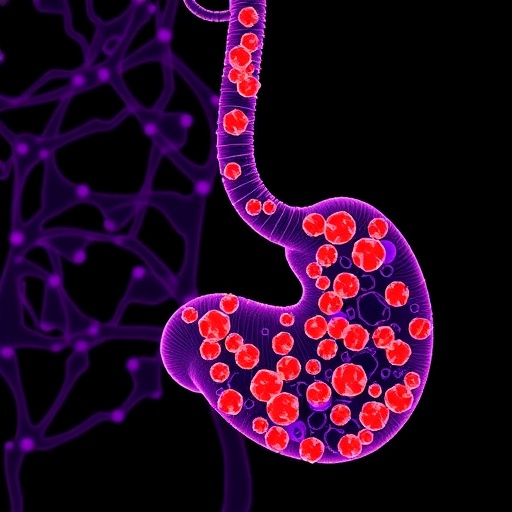
Gastric cancer is increasingly being understood not as a disease driven by malignant cells alone, but as an evolving ecosystem in which tumor cells, connective-tissue cells, immune cells, microbes and metabolic signals cooperate to promote invasion and treatment resistance. A comprehensive review of research from Kumamoto University in Japan brings together findings that span cancer stem cells, DNA methylation, tumor-associated fibroblasts, chronic inflammation, the microbiome, metastasis and clinical outcomes. The work highlights a central challenge in modern oncology: tumors can change their behavior in response to their surroundings, making a single-target treatment strategy unlikely to work for every patient. It also demonstrates how surgeons, despite mounting clinical workloads and a declining number of gastrointestinal specialists in Japan, can use the enormous biological and clinical datasets generated during routine care to uncover new prognostic markers and therapeutic opportunities.
One of the most striking molecular signals described in the review is the loss of methylation in LINE-1, a repetitive DNA element that accounts for roughly 17 percent of the human genome. DNA methylation normally helps regulate genome stability and gene activity by attaching chemical methyl groups to cytosine bases, particularly at CpG sites. Cancer cells often show two apparently opposing epigenetic abnormalities: excessive methylation at promoters of tumor-suppressor genes, which can silence protective pathways, and widespread hypomethylation across the genome, which can destabilize chromosomes. Using bisulfite pyrosequencing, the Kumamoto researchers found that LINE-1 methylation was significantly lower in gastric tumor tissue than in matched normal gastric mucosa. Patients whose tumors had the lowest levels also experienced shorter overall survival. The finding suggests that LINE-1 hypomethylation may be more than a passive molecular signature. By increasing genomic instability, it could create a cellular environment in which additional mutations accumulate more readily, potentially linking environmental exposures, chronic inflammation and tumor progression.
The review also focuses on cancer stem-like cells, a small but influential population capable of self-renewal, tumor initiation, metastasis and resistance to chemotherapy. In gastric and other gastrointestinal cancers, the CD44 variant known as CD44v appears to help these cells survive oxidative stress. CD44v interacts with xCT, a transporter that supports production of reduced glutathione, one of the cell’s major antioxidant molecules. This system helps cancer cells neutralize reactive oxygen species, chemically aggressive molecules generated by metabolism, inflammation and some cancer treatments. When CD44 was removed, xCT disappeared from the cell surface, glutathione defenses weakened and oxidative stress activated the p38 mitogen-activated protein kinase pathway, followed by induction of the cell-cycle inhibitor p21. Tumor growth was suppressed in mouse models. The same redox-adaptation mechanism was connected to precancerous gastric metaplasia and to chronic Helicobacter pylori infection, which can suppress miR-328 and increase CD44 expression. In blood samples from patients with advanced gastric cancer, CD44-high circulating tumor cells also showed greater tumor-forming ability, suggesting that these cells may be both a source of metastasis and a tractable therapeutic target.
A rare inherited syndrome called gastric adenocarcinoma and proximal polyposis of the stomach, or GAPPS, offered another window into how gastric tumors emerge. The syndrome is generally caused by a point mutation in promoter 1B of the APC gene and is inherited in an autosomal dominant pattern. Sequencing of normal mucosa, polyps and carcinomas from seven affected patients revealed a progression in which somatic APC mutations appeared in polyps, while additional KRAS mutations emerged in carcinomas. APC and KRAS mutations repeatedly occurred together in cancer samples and in separate tumor subclones, suggesting that their cooperation may be close to essential for the final malignant transition in GAPPS. This pattern differs from sporadic gastric cancer, in which APC-KRAS co-mutation is uncommon and TP53 mutations are more typical. The researchers propose that KRAS mutations could eventually help identify polyps at high risk of malignant transformation and guide the timing of preventive surgery. Circulating tumor DNA and other liquid-biopsy approaches might one day allow clinicians to monitor this evolution without repeatedly removing tissue.
The tumor microenvironment provides another explanation for why gastric cancer can invade, evade immunity and withstand drugs. Cancer-associated fibroblasts, or CAFs, are connective-tissue cells reprogrammed by tumors into active partners. They remodel the extracellular matrix, release growth factors and inflammatory molecules, influence blood-vessel formation and suppress immune attack. In diffuse-type gastric cancer, inflammatory signals from tumor cells induce the fibroblast protein RHBDF2, which enhances transforming growth factor beta signaling and increases CAF motility. These mobile fibroblasts then help tumor cells penetrate extracellular matrix and lymphatic vessels. CAFs can also release interleukin-8, activating NF-κB signaling in cancer cells and increasing PD-L1, a surface protein that weakens T-cell attack. Tiny membrane-bound particles called extracellular vesicles provide another route of communication: CAF vesicles carrying Annexin A6 stabilize β1 integrin on tumor cells, activating the FAK-YAP pathway and promoting drug resistance. In fibrotic tumors, PDGF signaling drives CAFs to produce chemokines that recruit suppressive myeloid cells, helping explain why anti-PD-1 immunotherapy may fail. Blocking PDGF receptors alongside immune checkpoint therapy improved tumor control in experimental models.
Microbes add a further layer of complexity. Helicobacter pylori remains the most important inflammatory trigger in the stomach, driving a sequence from gastritis and gland loss to intestinal metaplasia, dysplasia and carcinoma. Its virulence proteins, including CagA and VacA, disrupt cell signaling, stimulate proliferation and contribute to tissue injury. Epstein-Barr virus-associated gastric cancer, which accounts for about 10 percent of cases, forms a distinct molecular subtype marked by widespread CpG-island hypermethylation. The researchers have also investigated Fusobacterium nucleatum, a bacterium commonly found in the mouth and associated with periodontal disease. In a study of 325 resected esophageal cancers, F. nucleatum DNA was detected in 23 percent of tumors and was more abundant in malignant tissue than in normal mucosa. Bacterial positivity correlated with advanced disease and cancer-specific survival, with a hazard ratio of 1.78. The organism was linked to cytokine signaling, including the CCL20 chemokine pathway, and appeared to activate NF-κB and NOD1-RIPK2 signaling. In cell and animal models, F. nucleatum increased tumor growth and altered autophagy, a cellular recycling process, allowing esophageal cancer cells to resist 5-fluorouracil, cisplatin and docetaxel. Suppressing the autophagy gene ATG7 reversed this resistance.
The ability of gastric cancer cells to disseminate also depends on epithelial-mesenchymal transition, or EMT. During EMT, cells lose epithelial features such as E-cadherin-mediated adhesion and apical-basal polarity, while acquiring mesenchymal traits that increase movement, invasion, resistance to cell death and stem-like behavior. This transformation helps cells detach from a primary tumor, enter the circulation, survive transit and establish new colonies, although many must later undergo the reverse process, mesenchymal-epithelial transition, to grow efficiently at distant sites. In gastric cancer, miR-200b can suppress EMT by targeting the transcription factor ZEB2. Peritoneal dissemination is especially difficult to treat because detached tumor cells enter the abdominal cavity, survive without normal attachment to extracellular matrix, adhere to the mesothelial lining and form metastatic nodules. PLOD2 remodels collagen, while the receptor tyrosine kinase DDR2 may promote metastatic spread. In malignant ascites, inflammatory signals push CAFs into a senescent state and induce a senescence-associated secretory phenotype rich in interleukin-6. Epigenetic changes involving EZH2 sustain this inflammatory program, which activates JAK-STAT3 signaling and accelerates peritoneal tumor formation. Single-cell analyses further identified mesothelial cells undergoing mesothelial-mesenchymal transition as sources of chemokines and tenascin-C, helping recruit immunosuppressive cells and establish metastatic colonies.
The clinical findings in the review show how molecular biology can be paired with basic measures already available in hospitals. In 416 patients undergoing potentially curative gastric cancer surgery, a high preoperative Controlling Nutritional Status, or CONUT, score was strongly associated with poor outcome. The score combines serum albumin, lymphocyte count and cholesterol, reflecting nutritional reserve and systemic inflammation. Patients with a score of four or higher had more advanced disease and a markedly worse overall survival; after adjustment for other variables, the hazard ratio was 5.09. The score also outperformed several commonly used markers in predicting five-year survival. Surgical experience mattered as well. Analysis of 145,523 Japanese patients who underwent distal gastrectomy showed operative mortality of 1.9 percent in low-volume hospitals compared with 0.5 percent in high-volume hospitals. After adjustment, high-volume hospitals retained a substantially lower risk of death. Similar patterns were observed for total gastrectomy, supporting greater concentration of complex gastric surgery in experienced centers. The researchers argue that future care will depend on integrating these clinical indicators with tumor genomics, transcriptomics, proteomics, metabolism, immune profiling and microbiome data. Artificial intelligence may help convert this large-scale information into individualized predictions, but the review emphasizes that prospective clinical trials will be essential before experimental biomarkers or combined treatments enter routine practice.


