


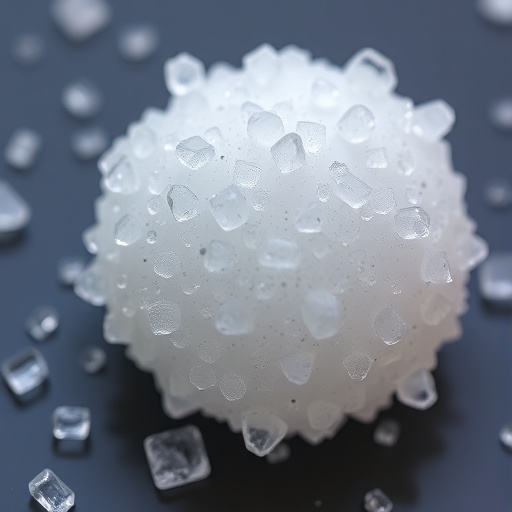
A new review published in Environmental Chemistry Letters highlights nano-silica as one of the most promising tools for solving a long-standing problem in enhanced oil recovery: the loss of surfactants inside reservoir rocks. Surfactant flooding is designed to recover oil that remains trapped after conventional waterflooding, but much of the injected chemical can disappear before it reaches the oil. The molecules attach to mineral surfaces, become immobilized in porous networks, or accumulate at rock–water interfaces. This reduces the concentration of active surfactant available to lower oil–water interfacial tension and alter rock wettability. The review, led by researchers from Universiti Teknologi Malaysia and collaborating institutions, examines how silica nanoparticles can preserve surfactants in the flowing phase while improving the movement of residual oil through underground formations.
The stakes are considerable. Conventional recovery methods generally extract less than 40% of the oil originally present in a reservoir, leaving a large volume trapped in pores by capillary forces and unfavorable wettability. Chemical enhanced oil recovery attempts to mobilize this residual oil by injecting carefully designed mixtures of surfactants, polymers, alkalis and, increasingly, nanoparticles. Surfactants are particularly valuable because they can reduce interfacial tension between oil and water from tens of millinewtons per meter to ultralow values, sometimes below 0.01 mN/m. At such low tensions, trapped oil droplets can deform and move through pore throats that would otherwise hold them in place. Yet surfactants are often the most expensive component of a chemical flood, and adsorption onto reservoir minerals can consume a substantial fraction of the injected dose. In some systems, retention has been reported to approach 80% of the surfactant introduced.
The underlying chemistry depends on the electrical character of both the surfactant and the rock. Surfactant molecules contain a water-compatible head group and an oil-compatible hydrocarbon tail. Depending on the charge of the head group, they are classified as anionic, cationic, nonionic or zwitterionic. Anionic surfactants, such as sodium dodecyl sulfate, are widely studied because they are relatively inexpensive and effective at reducing interfacial tension. However, they can strongly interact with positively charged mineral sites, calcium ions and clay surfaces. Cationic surfactants may be especially effective in carbonate reservoirs, where they can modify oil-wet rock toward a more water-wet state, but they may also adsorb strongly onto negatively charged minerals. Nonionic surfactants tolerate salinity more effectively, while zwitterionic molecules contain both positive and negative charges and can remain stable under demanding conditions. In every case, pH, temperature, salt concentration, mineralogy and surfactant concentration determine how much chemical remains available to perform its intended function.
Surfactant adsorption typically develops in stages. Individual molecules first attach to favorable sites on a mineral surface. As the surface becomes occupied, the molecules can organize into structures known as hemimicelles, followed by larger admicelles or bilayer-like aggregates. At higher concentrations, free molecules in solution form micelles, which are clusters capable of solubilizing oil components and supporting microemulsion formation. The concentration at which micelles begin to appear is known as the critical micelle concentration. Adsorption may increase as more surfactant is supplied, but eventually reach a plateau when the available mineral sites become saturated. High salinity can intensify retention by compressing the electrical double layer surrounding charged surfaces. This weakens electrostatic repulsion and allows molecules to approach one another and the rock more easily. Temperature can produce competing effects: it may increase molecular mobility and weaken physical attachment, but it can also change aggregation, solubility and the balance of enthalpic and entropic forces.
Nano-silica offers a way to interfere with this process before the surfactant becomes permanently trapped on the rock. These particles, generally between 1 and 100 nanometers in diameter, possess a large specific surface area and abundant surface hydroxyl groups. Their chemistry can be adjusted to make them hydrophilic, hydrophobic or chemically functionalized. When dispersed in an injection fluid, the particles can migrate through pore spaces, attach to mineral walls and occupy sites that would otherwise be available to surfactant molecules. The resulting layer acts as a partial protective barrier. Nano-silica can also attract surfactant molecules through hydrogen bonding, surface association and other intermolecular interactions, redirecting them from the reservoir mineral toward the nanoparticle surface. Because the surfactant remains associated with a mobile colloidal phase rather than being irreversibly fixed to the rock, more of it may travel deeper into the formation.
Several experimental results summarized in the review illustrate the scale of the effect. In one study using quartz sand, adding 0.5 wt% hydrophilic silica nanoparticles reduced the adsorption density of sodium dodecyl sulfate from 2.84 to 1.61 mg/g, a decrease of approximately 43%. Other experiments with colloidal silica reported reductions in surfactant loss approaching 64%. In a separate system, only 0.05 wt% nano-silica reduced adsorption of a nonionic alcohol ethoxylate by 16.9%, while core flooding increased oil recovery to 14.3%, compared with 7.2% for surfactant flooding alone under the reported test conditions. Another investigation found that silica nanoparticles lowered nonionic surfactant adsorption from 1.37 to 0.21 mg/g. For sodium dodecyl sulfate injected into crushed carbonate, increasing the nanoparticle concentration to 2,000 ppm reduced maximum adsorption from 1.90 to 1.12 mg/g. These values come from different rocks, fluids, temperatures and laboratory methods, so they cannot be treated as a universal performance standard. They nevertheless show why nanoparticle-assisted flooding has attracted growing attention.
The particles may improve recovery through more than one mechanism at the same time. By coating mineral surfaces, nano-silica can reduce direct surfactant–rock contact. By carrying surfactant molecules, it can help distribute the chemical more evenly through a porous medium. By changing surface wettability, it may shift a rock toward water-wet behavior, allowing water to penetrate oil-filled pores more effectively. Silica can also stabilize emulsions and nanoparticle-assisted microemulsions, increase the contact area between the injected fluid and residual oil, and reduce capillary forces that hold oil in small pores. In some formulations, hydrophobic silica interacts with oil and surfactant tails, while hydrophilic silica forms hydrogen-bond networks with polar surfactant heads and water. These interactions can alter micelle stability, interfacial tension, rheology and transport. The correct balance is essential: too little nanoparticle may provide insufficient surface coverage, whereas too much may increase viscosity, promote aggregation or obstruct pore throats.
The review also places nano-silica within a broader search for alternatives to conventional adsorption-control strategies. Alkalis such as sodium carbonate and sodium hydroxide can increase the negative charge of certain rock surfaces, creating repulsion against anionic surfactants. They can also react with acidic components in crude oil to generate soap in situ, further reducing interfacial tension. However, reactions with calcium and magnesium may produce mineral scale, impair permeability and foul equipment. Polymers can coat rock surfaces and act as sacrificial agents, but many polymer systems lose stability under high temperature and high salinity. Other nanoparticles, including zinc oxide, zirconium oxide and titanium dioxide, have also reduced surfactant retention in laboratory studies. Zirconium oxide, for example, reduced the maximum adsorption of Triton X-100 by about 65% in one reported experiment. Nano-silica remains particularly attractive because it is chemically versatile, comparatively inexpensive and available from abundant sources.
One of those sources is rice husk, an agricultural residue containing roughly 15–28 wt% silica alongside lignocellulosic material. Researchers have developed routes that extract the organic fraction and thermally convert the silica-rich residue into amorphous, porous nanoparticles. Such approaches could lower energy demand compared with producing silica from sand by electric-arc methods while supporting a circular use of biomass waste. Other synthesis routes employ sodium silicate, potassium silicate, tetraethyl orthosilicate, sol–gel processing, hydrothermal treatment or biological systems such as yeast. Manufacturing choices influence particle size, pore structure, purity, surface charge and cost. These characteristics ultimately control how the particles disperse, how deeply they penetrate the reservoir and how they interact with surfactants and minerals.
Despite the promising laboratory results, the path to field deployment is not automatic. Reservoir fluids can contain high concentrations of salts and divalent ions, while temperatures and pressures may vary substantially across a formation. Under these conditions, nano-silica can agglomerate, settle or become trapped near the injection well. Poorly designed formulations may increase pressure requirements or damage permeability instead of improving flow. The long-term fate of nanoparticles also requires careful study, including their transport through geological formations, retention in rock, interaction with microorganisms and potential release into produced water. The review calls for systematic testing in representative brines, high-pressure core floods, microfluidic models and pilot-scale systems. Researchers must measure not only adsorption reduction and oil recovery, but also injectivity, chemical stability, nanoparticle recovery, environmental behavior and full-project economics.
The central message is that nano-silica could transform surfactant flooding from a chemically inefficient process into a more targeted form of underground oil mobilization. By competing for mineral sites, binding surfactant molecules and modifying the oil–water–rock interface, silica nanoparticles can preserve more active surfactant where it is needed. Reported experiments include adsorption reductions from roughly 15% to more than 60%, alongside measurable improvements in oil displacement. The technology is not a universal solution, and the strongest results depend on matching particle surface chemistry, concentration, surfactant type, pH, salinity and rock mineralogy. Still, the combination of nanoscale transport, tunable surface interactions and potentially low-cost production gives nano-silica an unusual position among enhanced oil recovery additives. As energy companies face pressure to extract more from mature reservoirs while reducing chemical waste, these tiny particles may become an important part of the next generation of oilfield chemistry.
Cite Scienmag News
Bethany Barker. (August 26, 2026). Nano-Silica Reduces Surfactant Adsorption in Oil Recovery: A Review. Scienmag. https://scienmag.com/nano-silica-reduces-surfactant-adsorption-in-oil-recovery-a-review/
Bethany Barker. "Nano-Silica Reduces Surfactant Adsorption in Oil Recovery: A Review." Scienmag, 26 August 2026, https://scienmag.com/nano-silica-reduces-surfactant-adsorption-in-oil-recovery-a-review/. Accessed 4 September 2026.
Bethany Barker. "Nano-Silica Reduces Surfactant Adsorption in Oil Recovery: A Review." Scienmag. August 26, 2026. https://scienmag.com/nano-silica-reduces-surfactant-adsorption-in-oil-recovery-a-review/


