


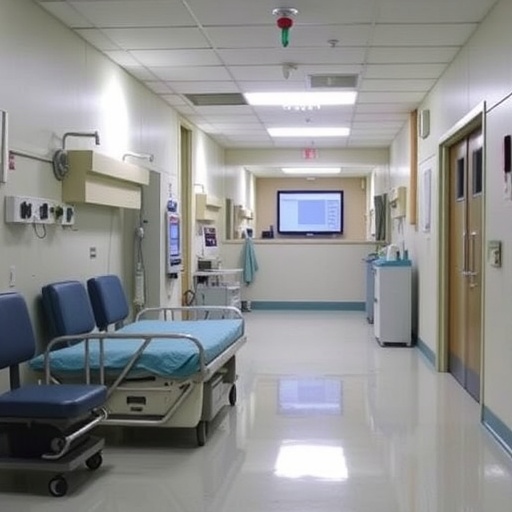
Emergency departments are often treated as the unavoidable front line of cancer care, but a new qualitative study suggests that many emergency visits during treatment begin long before a patient reaches a hospital door. They often start with a troubling symptom, uncertainty about what it means, and the absence of a trusted professional who can provide timely reassurance. Interviews with patients from populations disproportionately affected by acute care use reveal that emergency department visits are shaped not only by the severity of treatment-related symptoms, but also by communication gaps, limited self-management support, previous experiences with the health system, and advice from family members and friends. The study, published in Supportive Care in Cancer, offers an unusually close look at how patients decide whether a symptom can be managed at home, requires a call to the oncology team, or demands emergency care.
The research was conducted as part of a quality-improvement initiative at a large academic medical center in the southeastern United States. Investigators interviewed 10 adults who had received systemic anticancer therapy within 30 days before visiting an emergency department. All participants were Black, Medicaid insured, or both, groups that had shown higher emergency care use at the medical center than privately insured or non-Hispanic White patients. Participants were between 37 and 61 years old and represented different cancer diagnoses and treatment experiences. The interviews lasted approximately 30 minutes and explored what happened before the emergency visit, how symptoms were managed, whether patients contacted clinicians, and how relatives, friends, caregivers, or peers influenced decisions. Researchers analyzed the transcripts using iterative thematic analysis, comparing accounts and refining themes as new interviews were reviewed.
Two broad routes to the emergency department emerged. Some patients went directly to the emergency department without first speaking with a health professional. Others were directed there by a clinician, either during a scheduled infusion visit or after contacting the health system between appointments. Although these pathways looked different on the surface, the underlying forces were remarkably similar. Patients described symptoms that appeared suddenly or intensified over time, followed by anxiety and uncertainty about whether the problem was a normal consequence of cancer treatment or a sign of a life-threatening complication. The emergency department became attractive not necessarily because patients believed they needed advanced emergency procedures, but because it was perceived as the fastest and most reliable place to obtain an answer. In technical terms, the emergency visit often functioned as a response to unresolved clinical uncertainty: patients needed rapid triage, diagnostic evaluation, and reassurance when outpatient decision-making pathways felt inaccessible.
The symptoms themselves varied widely. Participants described severe constipation accompanied by dehydration, vomiting and profound weakness, cold sensitivity that escalated into a panic attack, red eyes and vision changes, uncontrolled blood pressure, pain, nausea, fatigue, and other treatment-related problems. What transformed these symptoms into emergencies was often the interpretation attached to them. A patient with new numbness, for example, could not determine whether it represented chemotherapy-induced peripheral neuropathy or a dangerous neurological event. Another patient connected a concerning sensation with prior scan results and worried about a cardiac problem. Others feared a stroke, aneurysm, cancer recurrence, or a complication that could become fatal. The study therefore highlights a central principle of symptom science: perceived danger is not determined solely by physiological intensity. It also depends on novelty, uncertainty, prior experiences, health literacy, and whether a person has access to an authoritative explanation.
Trust played a decisive role in the choices patients made. Participants frequently expressed strong confidence in their cancer care team while describing distrust of other hospitals or clinics. Some believed that only their primary academic cancer center had the complete medical record, the necessary expertise, and the ability to understand the “whole picture.” This preference for integrated care is clinically understandable, particularly for patients receiving complex systemic therapies that can affect multiple organ systems. However, it also created a paradox. Some patients hesitated to seek care at a nearby hospital, even when traveling to the academic center was difficult or potentially unsafe. Others waited for a future oncology appointment rather than obtaining interim evaluation. In these situations, trust in a particular institution did not necessarily prevent emergency care; instead, it could delay appropriate outpatient or local care until symptoms became more severe.
The availability of clinical advice between scheduled visits was another critical factor. Although the medical center offered a 24-hour telephone triage program, clinical navigation, and chemotherapy education, patients did not always know whom to contact or whether help would be available when they needed it. Several described uncertainty about after-hours support, previous unsatisfactory experiences, or reluctance to “bother” the care team. Weekends and evenings were especially problematic. Patients sometimes mentally excluded their oncology team from consideration simply because symptoms began outside normal working hours. Access barriers also extended beyond oncology. One participant who was worried about a cardiac test result tried to arrange cardiology follow-up but was told that an appointment was unavailable for three weeks. From the patient’s perspective, the emergency department was not merely convenient; it was one of the few places offering immediate, coordinated evaluation when specialty appointments and telephone advice were unavailable.
The interviews also revealed how cancer treatment can cause patients to normalize symptoms that deserve clinical attention. Feeling ill was often regarded as an unavoidable part of chemotherapy or other systemic treatment. Patients described “pushing through,” waiting for symptoms to pass, or concealing discomfort from people around them. This normalization can be adaptive in the short term, allowing patients to tolerate expected side effects, but it becomes dangerous when there is no clear distinction between manageable symptoms and warning signs. Supportive medications introduced another layer of difficulty. Anti-nausea, pain, and bowel medications were sometimes ineffective or produced side effects that patients found as distressing as the original symptoms. Rather than contacting the care team for adjustments, some participants reduced or stopped the medications. Symptoms then escalated, while patients experimented with improvised strategies such as dietary changes, distraction, hydration attempts, or other self-directed remedies.
Importantly, the patients did not describe themselves as passive recipients of care. Many wanted greater autonomy and actively tried to develop the skills needed to manage treatment at home. They searched for information, drew lessons from previous emergency visits, tested strategies, and attempted to protect family members from caregiver exhaustion. Self-management, in this context, was both a practical necessity and a form of self-advocacy. Yet patients also recognized the limits of their knowledge. They wanted to make independent decisions without self-medicating or taking potentially unsafe actions without professional confirmation. Family members, friends, caregivers, and other people living with cancer often filled this information gap. These informal networks acted as surrogate triage systems, helping patients interpret symptoms and decide whether to wait, call, or seek emergency care. Relatives sometimes insisted on an emergency visit, drove the patient to the hospital, or overruled the patient’s initial belief that the symptoms were manageable. Health care experience within a social network could make advice feel especially authoritative, but the study found that nonmedical advisers also exerted substantial influence.
The researchers argue that reducing potentially preventable emergency visits will require more than telling patients to call before going to the hospital. Patients need clear, cancer-specific instructions delivered before symptoms become frightening, including practical thresholds for when to monitor at home, contact the oncology team, attend an urgent outpatient clinic, or call emergency services. Such guidance may include symptom-specific decision rules, medication instructions, hydration plans, and explicit examples of red-flag symptoms. However, education alone is unlikely to work if patients cannot reach a knowledgeable professional when uncertainty arises. The authors recommend strengthening all-hours communication, making contact pathways easier to understand, ensuring timely and consistent responses, and expanding access to urgent outpatient appointments. They also suggest including caregivers and informal advisers in education efforts, since these individuals frequently participate in real-world decisions.
The study has important limitations. It involved only 10 participants from one academic medical center, selected through a convenience process that required a subsequent infusion appointment. No American Indian patients participated, and the findings cannot establish whether the same patterns occur in other marginalized populations or across oncology settings more broadly. The interviews also captured patient recollections after emergency visits, which may have been influenced by the outcome of those encounters. Even so, the consistency of the themes offers a useful framework for understanding why emergency care remains common during cancer treatment. The authors describe emergency department use as the product of interacting clinical, emotional, social, and organizational factors: symptoms become alarming, self-management reaches its limits, trusted advice is unavailable, and informal networks help determine the next step. Their health system is now using these findings in a cancer-care learning collaborative, where oncology programs test locally adapted improvements. The broader message is clear: preventing unnecessary emergency visits will depend on building a safer bridge between treatment appointments, not simply asking patients to cross it alone.
Cite Scienmag News
Nathaniel Bowman. (August 26, 2026). Interviews Reveal Why Underserved Cancer Patients Visit Emergency Departments During Treatment. Scienmag. https://scienmag.com/interviews-reveal-why-underserved-cancer-patients-visit-emergency-departments-during-treatment/
Nathaniel Bowman. "Interviews Reveal Why Underserved Cancer Patients Visit Emergency Departments During Treatment." Scienmag, 26 August 2026, https://scienmag.com/interviews-reveal-why-underserved-cancer-patients-visit-emergency-departments-during-treatment/. Accessed 4 September 2026.
Nathaniel Bowman. "Interviews Reveal Why Underserved Cancer Patients Visit Emergency Departments During Treatment." Scienmag. August 26, 2026. https://scienmag.com/interviews-reveal-why-underserved-cancer-patients-visit-emergency-departments-during-treatment/


