


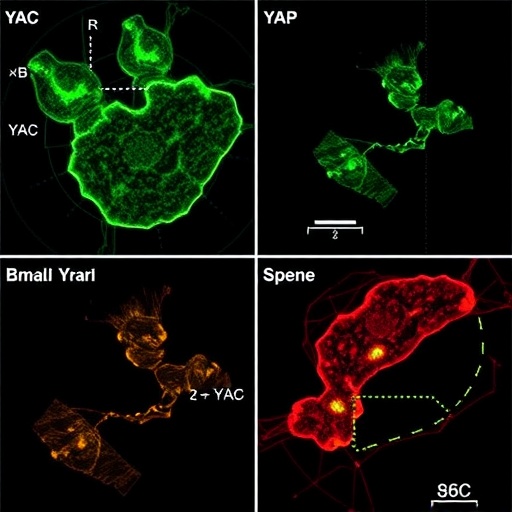
Aging skin is often described as a visible record of time, but its decline is also the result of a persistent molecular disturbance. As tissues grow older, they become less efficient at maintaining their structure, repairing injuries and controlling inflammatory reactions. The epidermis, the outermost layer of the skin, is particularly important because it forms the body’s primary barrier against the external environment. When this barrier weakens, skin becomes more vulnerable to damage, oxidative stress and infection, while wounds heal more slowly. A new study in mice has identified a previously uncharacterized transcriptional mechanism that may help explain why inflammation becomes chronic in aged epidermis. The work reveals that BMAL1, best known as a core component of the circadian clock, collaborates with the mechanosensitive protein YAP to reshape gene activity in aging skin. Instead of functioning primarily as a timekeeping factor, BMAL1 appears to participate in a noncircadian regulatory program that intensifies inflammatory gene expression.
The discovery centers on the way transcription factors control enhancers, regulatory regions of DNA that act as molecular switches for nearby genes. Enhancers do not usually encode proteins themselves. Instead, they recruit combinations of transcription factors and cofactors that determine when and how strongly a gene is expressed. In healthy epidermis, BMAL1 and YAP occupy enhancer regions linked to epidermal identity, helping skin cells preserve their specialized state. BMAL1, or brain and muscle ARNT-like 1, is widely recognized for coordinating daily cycles of gene expression through its partnership with other clock proteins. YAP, by contrast, is a major effector of the Hippo signaling pathway and responds to mechanical forces, cell density and tissue architecture. Its activity can influence proliferation, differentiation and regeneration. The study indicates that these two proteins form a functional partnership in epidermal cells, connecting circadian biology with tissue mechanics and gene regulation.
The researchers found that aging changes the consequences of this partnership. In older epidermis, BMAL1 and YAP showed enhanced binding at enhancer regions associated with inflammation. This altered occupancy was linked to stronger transcription of inflammatory target genes, suggesting that the aging process rewires existing regulatory circuitry rather than simply activating an entirely new pathway. The same molecular partners that help preserve epidermal identity in younger tissue can therefore become associated with a damaging inflammatory program later in life. Such enhancer rewiring provides a possible explanation for the persistence of low-grade inflammation, sometimes called inflammaging. Instead of a brief response that resolves after injury or infection, inflammatory transcription can remain elevated, contributing to tissue dysfunction and impaired homeostasis. The findings place chromatin regulation at the center of this transition, showing how changes in the use of regulatory DNA may convert normal maintenance mechanisms into drivers of chronic inflammation.
This mechanism is especially significant because it separates BMAL1’s inflammatory role from its canonical function in the circadian clock. The study describes BMAL1 activity in the epidermis that operates independently of its role in daily rhythmic gene expression. In other words, BMAL1 is not acting only as a biological timekeeper. It also serves as a context-dependent transcriptional partner whose effects depend on the factors bound alongside it and the enhancer landscape of the cell. YAP appears to provide a critical connection to the physical state of the tissue. Because YAP responds to mechanical inputs such as changes in cell packing, matrix stiffness and tissue tension, it can translate the altered architecture of aged skin into changes in gene activity. When YAP and BMAL1 bind together at selected enhancers, they may stabilize or intensify the recruitment of transcriptional machinery, increasing the production of genes that shape epidermal behavior and inflammatory signaling.
The study also identifies an interaction with NF-κB, one of the best-known regulators of inflammation. NF-κB acts as a central transcriptional hub for genes involved in immune responses, cytokine production and stress signaling. The researchers report that the inflammatory program associated with BMAL1–YAP cooperation is partially coregulated by NF-κB. This suggests that aging epidermis may experience a convergence of several regulatory systems: BMAL1–YAP enhancer occupancy provides one layer of control, while NF-κB reinforces the inflammatory output. Such cooperation could make the response more persistent than activation of any single factor alone. It may also help explain why inflammatory signals in aged skin are difficult to shut down. Once enhancer regions become preferentially occupied by multiple transcriptional regulators, the resulting chromatin state may favor continued expression even after the original stimulus has weakened.
A further finding links the process to interleukin-17, or IL-17, a cytokine associated with inflammatory immune responses at barrier tissues. In aged skin, pro-inflammatory IL-17 signaling activated YAP through a mechanism that did not depend on the conventional Hippo pathway. Under many conditions, Hippo pathway activity controls whether YAP remains inactive in the cytoplasm or enters the nucleus, where it can influence transcription. The observation that IL-17 can activate YAP independently of this pathway indicates that inflammatory cytokines may directly reroute YAP activity through alternative signaling mechanisms. This provides an important connection between immune-derived signals and the mechanical or transcriptional state of epidermal cells. It also suggests a feed-forward model: age-related inflammation increases IL-17 signaling, IL-17 activates YAP, and YAP then cooperates with BMAL1 at inflammatory enhancers to strengthen the transcriptional response.
The consequences of this molecular circuit could extend across several features of aging skin. Persistent activation of inflammatory genes can disrupt epidermal differentiation, weaken barrier integrity and alter the behavior of stem and progenitor cells responsible for renewal. Chronic inflammation is also frequently associated with elevated oxidative stress and the accumulation of DNA damage, both of which can further impair tissue function. When the skin is injured, an inflammatory response is necessary to initiate repair, but prolonged or poorly resolved signaling can interfere with the later stages of regeneration. The BMAL1–YAP mechanism described in the study may therefore help connect inflammation with inefficient wound healing and loss of tissue homeostasis. Because the work was conducted in the murine epidermis, it does not yet establish that the same regulatory circuit operates identically in human skin. Nevertheless, the conservation of many signaling pathways and transcriptional mechanisms makes the findings relevant to questions about human aging and chronic inflammatory skin disorders.
The discovery points toward several possible therapeutic strategies, although none can yet be considered validated treatments. Interfering with inappropriate YAP activation, modulating BMAL1’s enhancer-associated functions or reducing excessive IL-17 signaling could theoretically weaken the inflammatory circuit while preserving the proteins’ normal roles in tissue maintenance. Targeting enhancer activity rather than broadly suppressing inflammation may offer greater precision, since BMAL1, YAP and NF-κB each regulate many genes required for healthy cellular function. However, such approaches would need to distinguish harmful age-associated activity from beneficial responses involved in barrier repair, regeneration and defense against pathogens. The study also raises the possibility that restoring the regulatory balance of aged epidermal cells may be more effective than blocking a single inflammatory molecule. Understanding how chromatin accessibility, mechanical signals and cytokine pathways interact will be essential for designing interventions that calm chronic inflammation without compromising skin resilience.
By revealing a noncircadian BMAL1–YAP program in aged epidermis, the research expands the biological meaning of both proteins. BMAL1 is shown not merely as a component of the cellular clock, and YAP not merely as a sensor of tissue mechanics, but as members of a flexible regulatory network whose effects change with age and inflammatory context. The work offers a molecular explanation for how aging can transform normal enhancer activity into a persistent inflammatory state. It also illustrates why the biology of aging cannot be reduced to one damaged pathway: tissue decline emerges from the interaction of chromatin architecture, immune signaling, mechanical stress and cell identity. If future studies confirm that this mechanism is conserved in human skin, the BMAL1–YAP axis could become a promising target for strategies designed to restore epidermal balance, improve repair and limit the chronic inflammation that accompanies aging.
Cite Scienmag News
Beatrice Stafford. (August 25, 2026). Noncircadian BMAL1–YAP signaling amplifies chronic inflammation in aging skin. Scienmag. https://scienmag.com/noncircadian-bmal1-yap-signaling-amplifies-chronic-inflammation-in-aging-skin/
Beatrice Stafford. "Noncircadian BMAL1–YAP signaling amplifies chronic inflammation in aging skin." Scienmag, 25 August 2026, https://scienmag.com/noncircadian-bmal1-yap-signaling-amplifies-chronic-inflammation-in-aging-skin/. Accessed 3 September 2026.
Beatrice Stafford. "Noncircadian BMAL1–YAP signaling amplifies chronic inflammation in aging skin." Scienmag. August 25, 2026. https://scienmag.com/noncircadian-bmal1-yap-signaling-amplifies-chronic-inflammation-in-aging-skin/


