


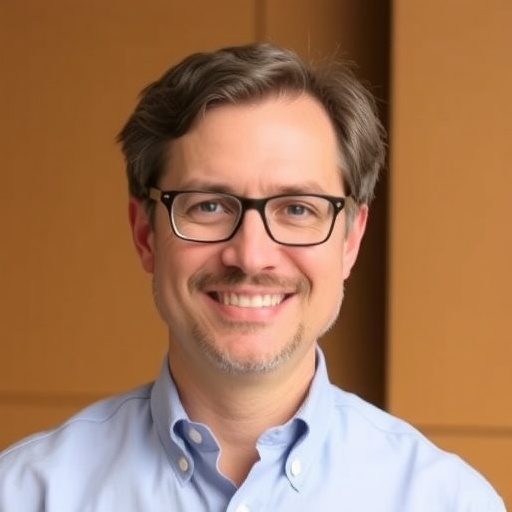
Weill Cornell Medicine is launching a new Department of Systems and Computational Biomedicine, an initiative designed to bring genomics, artificial intelligence and patient-centered research into a single framework for understanding disease. Dan Landau, an internationally recognized cancer researcher, geneticist and physician-scientist, has been appointed the department’s inaugural chair, effective Sept. 1. His work has helped establish new ways to analyze cancer at the level of individual cells and to detect tumor-derived DNA circulating in the blood. The appointment places Landau at the center of an institutional effort to use large-scale biological data not only to explain how disease develops, but also to predict its emergence and guide earlier intervention.
The new department will consolidate elements of Weill Cornell Medicine’s Department of Physiology and Biophysics, the Institute for Computational Biomedicine and other systems biology and computation-focused programs. Its creation follows a multiyear reorganization intended to strengthen connections between basic science, clinical medicine and technology development. Rather than treating computational biology as a supporting service, the department will position it as a central research discipline. Its scientists will work with clinicians and experimental biologists to interpret complex measurements generated from patients, including genomic sequences, medical images, electronic health records and physiological data collected through mobile and wearable devices. The goal is to transform these disparate streams into coherent biological models that can reveal why diseases arise and why patients respond differently to the same treatment.
Landau’s research background reflects the kind of interdisciplinary science the department is intended to promote. He is the Bibliowicz Family Professor of Medicine and a professor of medicine and systems and computational biomedicine at Weill Cornell Medicine. He is also affiliated with the Sandra and Edward Meyer Cancer Center, the Englander Institute for Precision Medicine and the New York Genome Center, and practices oncology at NewYork-Presbyterian/Weill Cornell Medical Center. His work has focused on cancer evolution, somatic mutations and the molecular changes that allow malignant cells to emerge and survive. In particular, he has advanced single-cell profiling methods, which examine genetic and molecular features in individual cells rather than averaging signals across an entire tumor. This distinction is critical because tumors are rarely uniform; they contain diverse cell populations with different mutations, behaviors and vulnerabilities.
One of the department’s central ambitions is to construct large datasets derived directly from human patients. These datasets could combine DNA sequencing, RNA and other molecular measurements with longitudinal clinical records, imaging, treatment histories and continuous physiological monitoring. Properly integrated, such information could allow researchers to trace disease over time instead of examining it at isolated clinical moments. Artificial intelligence models trained on these data may eventually identify molecular patterns associated with elevated risk, treatment resistance or impending relapse. Such systems would not replace clinical judgment, but could provide physicians with dynamic risk assessments that are more individualized than conventional population-based statistics. The same datasets could also help researchers identify previously unrecognized disease subtypes and uncover biological targets for new therapies.
The technical challenge is substantial. Patient-derived information is produced by instruments and institutions using different standards, sampling schedules and measurement technologies. Genomic data may be incomplete, clinical records may contain inconsistencies and wearable devices can generate noisy signals influenced by behavior or environment. Computational biomedicine must therefore address data harmonization, privacy, bias, statistical validation and the interpretability of machine-learning models. A prediction is not clinically useful simply because it is accurate in a research dataset; it must also be reliable across populations and understandable enough to support decisions about screening or treatment. The new department is expected to combine computational expertise with experimental validation and clinical evaluation, creating a feedback loop in which predictions can be tested in the laboratory and at the bedside.
Landau also plans to establish an innovation laboratory devoted to molecular measurement technologies for the artificial-intelligence era. The premise is that future computational systems will be limited by the quality and scale of the biological information available to them. New technologies capable of measuring many molecular features simultaneously, repeatedly and at lower cost could provide the dense datasets needed to model disease with greater precision. Single-cell and multi-omic approaches are especially important because they can connect genetic alterations with gene activity, cellular states and interactions among cells. By developing measurement platforms within the department, Weill Cornell Medicine hopes to generate its own high-dimensional datasets rather than relying exclusively on existing technologies. Those tools could become a foundation for both fundamental discoveries and clinically deployable diagnostics.
Landau’s research has already moved from laboratory investigation into commercial applications. He helped launch C2i Genomics in 2019, a company that combined whole-genome sequencing with machine-learning methods to monitor cancer. The platform was designed to detect minimal residual disease, meaning small numbers of cancer cells that remain after treatment and may later lead to recurrence. In 2024, C2i Genomics was acquired by diagnostics company Veracyte, which has expanded its capabilities in cancer care. Veracyte has since launched the TrueMRD test for muscle-invasive bladder cancer, with additional applications planned. Landau also helped found Montage Bio, which licensed computational, cell-free DNA sequencing and single-cell multi-omic technologies from Cornell to develop precision medicines against novel somatic targets. These efforts illustrate how research on cancer genomes can be translated into tools for monitoring patients and designing therapies.
The new department will be built through recruitment as well as institutional consolidation. Landau expects to recruit five to seven junior faculty members and one to two mid-career investigators specializing in computational biology and artificial intelligence. Some appointments may be jointly organized with existing academic departments, allowing computational researchers to work closely with experts in cancer, physiology, genetics and clinical medicine. The department will also add computational staff and laboratory resources, while providing dedicated space for collaborative research. Weill Cornell Medicine has committed new laboratory areas in recently acquired floors of 1334 York Ave., which will serve as a physical center for the department and its molecular innovation laboratory. The design reflects a broader shift in biomedical research toward teams that unite experimental scientists, data scientists, engineers and physicians.
The initiative is supported in part by a $20 million gift to Cornell University from philanthropists Andrew and Ann Tisch. The funding includes an endowed professorship for the department’s chair, which Landau will hold as the Andrew H. and Ann R. Tisch Professor of Systems and Computational Biomedicine. The gift is intended to encourage collaboration among Weill Cornell Medicine, Cornell Tech and Cornell’s Ithaca campus. Landau has described partnerships beyond individual laboratories as essential because artificial-intelligence systems generally improve when trained on larger and more diverse datasets. He has also emphasized connections with hospitals, biotechnology companies and frontier AI laboratories in New York and elsewhere. The strategy reflects an emerging reality in biomedical science: understanding complex disease increasingly requires resources, expertise and patient data on a scale that no single laboratory can assemble alone.
Landau earned bachelor’s and medical degrees from Tel Aviv University and a doctorate in cancer biology from Paris Diderot University. After serving as a flight surgeon in the Israeli Air Force, he trained in internal medicine and oncology at Yale, Dana-Farber Cancer Institute and Harvard Medical School before joining Weill Cornell Medicine in 2016. He has published extensively in leading scientific journals and received honors including a Sontag Foundation Distinguished Scientist Award, a Pershing Square Sohn Prize for Young Investigators in Cancer Research and an NIH Director’s New Innovator Award. His appointment signals Weill Cornell Medicine’s intention to make computational and systems-based research a defining component of its scientific future. If the department succeeds, its most significant contribution may be a new model of biomedical discovery—one in which molecular measurements, clinical observations and artificial intelligence continuously inform one another to detect disease earlier, explain its complexity and make treatment more precisely responsive to each patient.
Web References: https://news.weill.cornell.edu/news/2022/12/20m-gift-to-boost-innovation-in-health-and-technology
Cite Scienmag News
Nathaniel Bowman. (August 24, 2026). Dan Landau named inaugural chair of Weill Cornell’s computational biomedicine department. Scienmag. https://scienmag.com/dan-landau-named-inaugural-chair-of-weill-cornells-computational-biomedicine-department/
Nathaniel Bowman. "Dan Landau named inaugural chair of Weill Cornell’s computational biomedicine department." Scienmag, 24 August 2026, https://scienmag.com/dan-landau-named-inaugural-chair-of-weill-cornells-computational-biomedicine-department/. Accessed 4 September 2026.
Nathaniel Bowman. "Dan Landau named inaugural chair of Weill Cornell’s computational biomedicine department." Scienmag. August 24, 2026. https://scienmag.com/dan-landau-named-inaugural-chair-of-weill-cornells-computational-biomedicine-department/


