


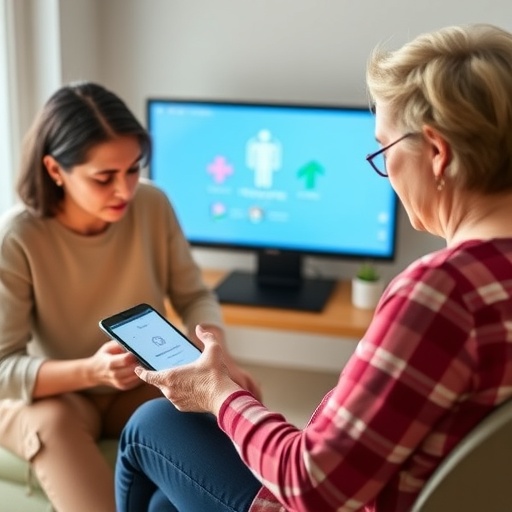
An entirely online wellness program combining guided movement, breathing and meditation, coping-skills training, and disease education reduced symptoms of anxiety and depression in adults living with chronic medical conditions, according to a randomized clinical trial published August 20 in PLOS Medicine. The study, conducted by researchers led by Puneeta Tandon of the University of Alberta in Canada, suggests that a single digital intervention could address mental and physical burdens shared by people with very different diseases. Its findings also raise an important question for digital mental health care: how much human support is actually necessary for these programs to work?
Chronic illnesses often bring a second, less visible burden. More than half of adults living with long-term physical conditions experience anxiety, depression, fatigue, or some combination of these symptoms. Persistent symptoms can make it harder to work, exercise, sleep, follow medical advice, or attend appointments, creating a feedback loop in which declining mental health further complicates disease management. Yet access to psychological support remains uneven. Mobility limitations, geographic distance from specialists, treatment costs, and shortages of trained clinicians can all prevent patients from receiving practical help. Digital programs may offer a way to deliver structured support at home, but evidence from large clinical trials has remained limited.
To test the approach, the researchers enrolled 825 adults from 13 countries in a fully remote, three-arm randomized controlled trial. Participants reported living with chronic medical conditions that included primary biliary cholangitis, chronic digestive diseases, cirrhosis, and heart failure. They were randomly assigned either to a waitlist control group, to a self-directed version of the eMPower digital program, or to the same program supplemented by brief weekly telephone check-ins with trained non-clinicians. Randomization helps researchers compare groups that are similar on average at the start of a study, making it more likely that differences observed later are related to the intervention rather than to pre-existing characteristics.
The eMPower program was designed as a multicomponent intervention rather than as a single relaxation exercise. Participants received guided movement sessions, breathing and meditation practices, coping-skills training, and education related to living with disease. These elements target several pathways through which chronic illness can affect well-being. Movement may help participants remain physically active within their limits, while controlled breathing and meditation can influence physiological arousal associated with stress. Coping-skills training is intended to help people respond to difficult thoughts, symptoms, and daily disruptions, and disease education can support a greater sense of understanding and self-management.
The primary outcome was measured using a standardized scale for anxiety and depression symptoms that ranges from 0 to 42, with higher scores indicating a greater symptom burden. After 12 weeks, participants who used eMPower with telephone support showed a 2.9-point greater improvement than those in the waitlist control group. The 95% confidence interval for this difference ranged from 2.0 to 3.8 points, meaning that the researchers’ statistical estimate was accompanied by a quantified range of uncertainty. The supported-program group also reported better quality of life and less fatigue, two outcomes that can be especially difficult to improve in people managing chronic disease.
The self-directed program produced a similar result in an exploratory analysis. Participants using eMPower without weekly telephone calls showed a 2.6-point greater improvement in anxiety and depression symptoms than the control group, with a 95% confidence interval from 1.8 to 3.5 points. The researchers did not detect a statistically significant difference between the supported and self-directed formats. However, they emphasize that the trial was not designed or powered to establish that the two versions were equivalent. In other words, the findings indicate that both formats performed better than the waitlist in the study, but they do not prove that telephone support adds no benefit for particular patients or that every participant would respond equally well without it.
That distinction could be important for the future scale of digital health care. A program that produces meaningful improvements without requiring one-to-one contact for every participant could reach far more people while reserving professional or human support for those with more severe symptoms or greater barriers to self-management. The telephone check-ins in this trial were provided by trained non-clinicians, rather than by specialist mental health professionals. This model may reduce pressure on overstretched clinical services, although it does not eliminate the need for medical assessment, psychotherapy, medication, or crisis care when those forms of treatment are appropriate.
The researchers caution that the results should not be generalized too broadly. The study population consisted primarily of women with higher levels of education, and outcomes were assessed only over 12 weeks. It remains unclear whether the improvements persist over longer periods, whether participants continue using the techniques after the program ends, or how well the intervention would work in populations with different levels of digital access, education, language, age, or cultural background. Although nearly one in four participants was over 65 and 84 percent completed the 12-week follow-up, people who volunteer for an online trial may already be more comfortable using digital tools than the broader chronic-illness population.
The study also illustrates how patient involvement can shape a digital intervention. Patient partners and organizations representing heart, kidney, liver, transplant, and digestive disease communities contributed to the program from its early development. Gail Wright, a patient with primary biliary cholangitis and president of the Canadian PBC Society, said that participants with substantial symptom burdens reported clinically meaningful improvements in fatigue and overall quality of life. First author Emily Johnson said that the remote design allowed people with severe fatigue, mobility limitations, or limited access to specialist centers to participate without adding another appointment to their week. The investigators argue that a cross-condition program, tailored with disease-specific education, may be more efficient than creating separate digital platforms for every diagnosis.
The authors describe eMPower as a practical complement to conventional care, not a replacement for it. Chronic disease treatment often focuses necessarily on organ-specific measurements, medications, and procedures, while anxiety, low mood, and exhaustion can receive less structured attention. A home-based program may give patients concrete skills to try between clinical visits and may help integrate mental and physical health into the same care plan. The trial’s results provide evidence that this strategy can improve symptoms across several chronic disease groups, but future research will need to determine who benefits most, how long the effects last, and when human support produces additional value. For now, the findings suggest that carefully designed digital self-management programs could become a scalable part of whole-person chronic care.
News Publication Date: August 20, 2026
Web References: https://plos.io/4c4DL6K; https://doi.org/10.1371/journal.pmed.1005198
References: Johnson E, Hyde A, Corrick S, Isley S, Wright G, Ezekowitz J, et al. (2026) Effect of a digital intervention on mental health symptoms in adults with chronic conditions: A three-arm randomized controlled trial. PLOS Medicine 23(8): e1005198.
Cite Scienmag News
Glenn Wilkins. (August 20, 2026). Digital wellness program reduces anxiety, depression among adults with chronic health conditions. Scienmag. https://scienmag.com/digital-wellness-program-reduces-anxiety-depression-among-adults-with-chronic-health-conditions/
Glenn Wilkins. "Digital wellness program reduces anxiety, depression among adults with chronic health conditions." Scienmag, 20 August 2026, https://scienmag.com/digital-wellness-program-reduces-anxiety-depression-among-adults-with-chronic-health-conditions/. Accessed 5 September 2026.
Glenn Wilkins. "Digital wellness program reduces anxiety, depression among adults with chronic health conditions." Scienmag. August 20, 2026. https://scienmag.com/digital-wellness-program-reduces-anxiety-depression-among-adults-with-chronic-health-conditions/


