


Oakland, California—A new content analysis of Instagram marketing suggests that brands selling intoxicating hemp-derived cannabinoids are using the visual language of youth culture to normalize products such as Delta-8 THC, HHC and THC-P, while providing remarkably little information about health risks or age restrictions. The study, published in Addiction, examined hundreds of posts from leading brands and found that memes, cartoons, entertainment references and other youth-oriented cues were common features of the online marketplace. Researchers say the findings highlight how social media can function as an informal advertising system for psychoactive products that have often escaped the safeguards applied to regulated cannabis and tobacco.
The researchers collected and coded 837 Instagram posts published between February 2024 and February 2025 by nine prominent brands: CannaAid, Cycling Frog, Delta Extrax, Elyxr, Fly Urb, Hometown Hero, Koi CBD, Mood and Official Canna River. Each post was evaluated for several marketing characteristics, including product descriptions, recreational claims, visual imagery, brand positioning, health statements and warnings about age or safety. The analysis focused on intoxicating hemp products, a broad category of cannabinoids derived from hemp but capable of producing psychoactive effects. These products include Delta-8 THC, a compound chemically similar to Delta-9 THC, as well as newer or less extensively studied cannabinoids such as HHC and THC-P.
Nearly half of all posts—49.6 percent—contained imagery or cultural references likely to appeal to younger audiences. The researchers classified memes, cartoon characters, colorful illustrations, internet humor and recognizable elements of popular culture as youth-oriented cues. These techniques are not merely decorative. In advertising research, visual familiarity and entertainment value can reduce perceived risk, strengthen brand recognition and associate a product with social belonging. When those features are combined with psychoactive products, they may make consumption appear routine, harmless or socially expected, particularly to adolescents and young adults who spend substantial time on image-driven platforms.
The study also found that recreational positioning was widespread. Fifty-two percent of the posts promoted effects such as relaxation, happiness or mood enhancement, or showed the products in ordinary social and leisure settings. A beverage might be presented as part of a gathering, while an edible or vape could be placed in scenes associated with relaxation, music or recreation. Such framing shifts attention away from pharmacology and toward lifestyle. Instead of explaining dose, onset time or possible adverse reactions, the posts often presented intoxication as a convenient route to pleasure or social connection. The researchers noted that earlier work on cannabis advertising has linked these positive portrayals with more favorable attitudes toward cannabis and increased likelihood of use.
The marketing patterns differed by product category. Beverage advertising was the most heavily oriented toward recreation: 84.3 percent of beverage posts used recreational themes, and 56.9 percent included youth-oriented imagery or cultural signals. Cartridges and vapes followed, with youth-oriented content appearing in 53.5 percent of posts. Edible products showed similar patterns, with 49.2 percent containing youth-oriented cues. These differences may reflect the way products are designed and consumed. Drinks can be integrated into social occasions and packaged with bright branding, while vapes and edibles can be portrayed as portable, discreet and easy to use. The visual flexibility of these formats may allow marketers to present psychoactive consumption as an ordinary part of everyday life.
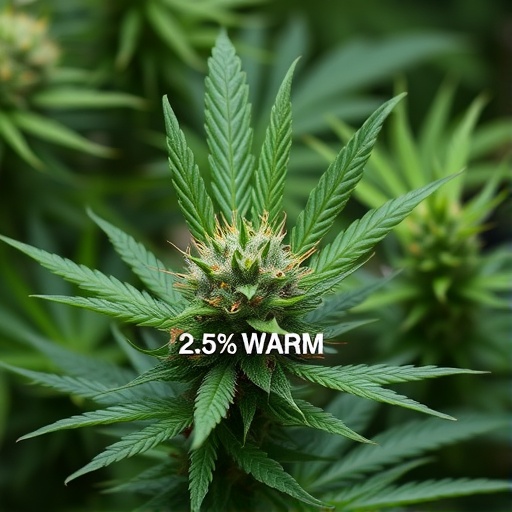
Against this highly engaging promotional environment, health and age information was almost absent. Only 2.5 percent of the 837 posts included a health warning or an explicit age restriction. The scarcity is significant because intoxicating hemp products can vary substantially in potency, formulation and labeling accuracy. Edibles may take longer to produce effects than inhaled products, increasing the possibility of consuming additional doses before intoxication begins. High-potency products can produce anxiety, confusion, impaired coordination and other adverse effects, while interactions with medications and underlying mental-health conditions remain important concerns. Researchers have also pointed to reports of poisonings, emergency-department visits and psychotic episodes occurring alongside the expansion of the market.
Alisa A. Padon, a study co-author and research director of Getting it Right from the Start, a program of the Public Health Institute, said the findings show that brands are reaching youth audiences with few safeguards. She argued that federal restrictions scheduled to take effect in November should be maintained and that additional rules governing social-media content may be necessary. Such rules could address not only direct claims about intoxication but also the use of cartoons, memes, celebrity-style references and other cultural signals that make psychoactive products attractive to minors. Content-based regulation is technically difficult because platforms must distinguish between ordinary speech, adult-oriented advertising and promotional material designed to evade formal restrictions, but the researchers say the scale of youth-oriented marketing warrants closer oversight.
The findings arrive as federal lawmakers debate the future of intoxicating hemp products. The 2018 Farm Bill defined hemp largely according to the concentration of Delta-9 THC, creating an opening for manufacturers to sell products containing other psychoactive cannabinoids. As a result, products with intoxicating effects appeared in jurisdictions where conventional cannabis remained prohibited or tightly controlled. In 2025, Congress enacted Public Law 119-37, which narrows the federal definition of hemp and limits the amount of THC permitted per package. The law is scheduled to take effect on November 12, 2026. However, the restrictions face renewed political challenges: the Senate has passed legislation awaiting House approval that would delay implementation until December 11, 2026, while H.R. 9830 would replace the prohibition with a more permissive regulatory framework allowing higher THC levels and certain synthesized THC compounds.
Lynn Silver, director of Getting it Right from the Start and a physician who was not involved in the study, said the results reflect warnings public-health experts had made since the hemp loophole emerged. She argued that replacing the scheduled prohibition with a permissive federal system could create a backdoor national market for intoxicating THC products, operating outside both state-regulated cannabis programs and state-level bans. The study does not establish that Instagram marketing directly causes youth consumption, because it is a cross-sectional content analysis rather than a longitudinal experiment. It does, however, document a consistent promotional environment in which positive emotional appeals and youth-oriented imagery are common, while warnings are rare. The authors say that combination deserves urgent attention as policymakers determine whether these products will be restricted, regulated or allowed to expand.
The study, by La Capria K., Meng S., Padon A.A., Tillett K.K., Donaldson S.I., Allem J.P., Rossheim M.E., LoParco C., Berg C.J., Jackson K.M. and Chen-Sankey J., builds on previous research identifying cannabis-marketing features that appeal to young people. Its central message is not that every Instagram viewer will respond identically to a meme, cartoon or lifestyle image, but that repeated exposure can shape the cultural meaning of a product. When psychoactive cannabinoids are consistently depicted as cheerful, fashionable and socially useful—and when the same posts omit information about dose, impairment and age limits—the boundary between advertising and normalization becomes difficult to see. For regulators, platforms and public-health researchers, the digital marketplace may therefore be as important as the products themselves.
Web References: https://www.tandfonline.com/doi/full/10.1080/10826084.2026.2645776 ; https://www.sciencedirect.com/science/article/abs/pii/S0955395925000179 ; https://www.phi.org/
References: La Capria K, Meng S, Padon AA, Tillett KK, Donaldson SI, Allem JP, Rossheim ME, LoParco C, Berg CJ, Jackson KM, Chen-Sankey J. Marketing Features of Derived Intoxicating Cannabinoid Product Brands on Instagram: A Content Analysis. Addiction. DOI: 10.1111/add.70576.
Cite Scienmag News
Courtney Benton. (August 19, 2026). Nearly Half of Intoxicating Hemp Instagram Posts Use Youth Marketing; 2.5% Warn. Scienmag. https://scienmag.com/nearly-half-of-intoxicating-hemp-instagram-posts-use-youth-marketing-2-5-warn/
Courtney Benton. "Nearly Half of Intoxicating Hemp Instagram Posts Use Youth Marketing; 2.5% Warn." Scienmag, 19 August 2026, https://scienmag.com/nearly-half-of-intoxicating-hemp-instagram-posts-use-youth-marketing-2-5-warn/. Accessed 3 September 2026.
Courtney Benton. "Nearly Half of Intoxicating Hemp Instagram Posts Use Youth Marketing; 2.5% Warn." Scienmag. August 19, 2026. https://scienmag.com/nearly-half-of-intoxicating-hemp-instagram-posts-use-youth-marketing-2-5-warn/


