


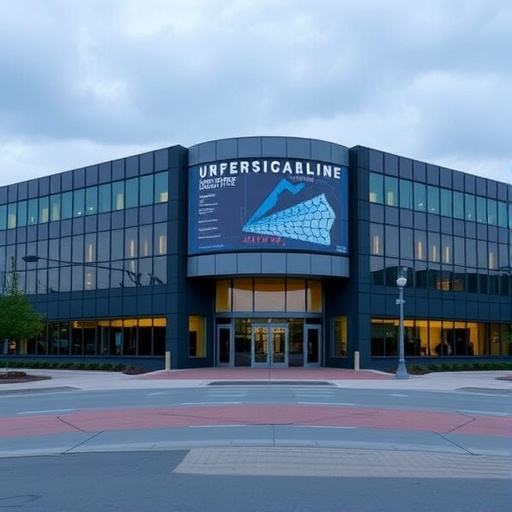
UTICA, New York—SUNY Polytechnic Institute has received a $61.9 million contract from the U.S. Department of Defense to develop artificial intelligence systems designed to help the U.S. Army analyze complex military operations, anticipate emerging threats, and make faster decisions across land, air, space, and cyberspace. The award is among the largest in SUNY Poly’s history and places the institute at the center of a rapidly expanding national effort to apply generative AI, foundation models, advanced simulation, and data-driven reasoning to defense planning. Rather than treating AI as a tool for a single battlefield task, the program aims to create an integrated analytical framework capable of connecting enormous volumes of information and translating them into practical insights for commanders operating in uncertain and rapidly changing environments.
The first project funded under the contract is supported by a $5 million fiscal year 2025 Defense Appropriation secured with the assistance of U.S. Senators Charles E. Schumer and Kirsten Gillibrand. The research will be led by SUNY Poly in partnership with the University of South Florida and the University System of Maryland, with direct support for the U.S. Army Transformation Decision Analysis Center, or TDAC. The initiative, described as the Foundational Models and Modeling Perseveration for AI research effort, is intended to help the Army evaluate strategic options before and during complex operations. Its central challenge is not simply generating predictions, but building systems that can reason over incomplete, conflicting, and rapidly changing information while remaining reliable when conventional assumptions break down.
At the technical core of the work are foundation models: large, adaptable computational systems trained on broad collections of data and subsequently refined for specialized tasks. In a defense environment, such models could combine information from logistics networks, sensors, communications systems, satellite observations, historical records, and simulated operations. Generative AI would then be used to construct plausible scenarios, identify relationships among events, and explore how different decisions might influence future conditions. Advanced inference systems could estimate the likelihood of competing outcomes, reveal hidden dependencies, and help analysts distinguish between a temporary anomaly and a meaningful change in an adversary’s behavior. The goal is to give military planners a more complete picture of a situation without requiring them to manually process every data stream.
The research will also examine how AI can represent and simulate multi-domain operations, in which an action in one environment can produce consequences in several others. A disruption in cyberspace, for example, could affect communications, logistics, air defenses, and the movement of forces on the ground. Modeling these interactions requires more than a conventional predictive algorithm. Researchers must develop representations of time, geography, uncertainty, causality, and the relationships among multiple actors. Spatial reasoning models may allow an AI system to understand how terrain, infrastructure, distance, and movement constrain possible actions, while active inference approaches can enable systems to update their internal models as new evidence becomes available. These capabilities could help planners compare strategies in simulated environments before committing resources in the real world.
Synthetic data will be another important element of the program. Military organizations often face strict limits on the availability, classification, or quality of real-world operational data. Synthetic data generation offers a way to produce realistic but artificial examples of events, environments, and system behaviors for training and testing AI models. Properly designed synthetic datasets can expose algorithms to rare or dangerous scenarios that may not occur frequently enough to appear in historical records. They can also be used to test whether a model remains dependable when weather, geography, communications, or adversary tactics differ from the conditions represented in its original training data. Researchers will need to ensure that synthetic information does not introduce misleading patterns that cause an AI system to perform well in simulation but fail in actual operations.
The initiative will investigate anomaly detection and time-series foundation models as well. Anomaly detection systems search for observations that differ significantly from expected behavior, a capability that could assist with identifying unusual network activity, unexpected equipment performance, changes in supply flows, or developments in an operational environment. Time-series foundation models are designed to interpret data that unfold continuously, such as sensor measurements, communications traffic, energy use, transportation patterns, or equipment health. By analyzing trends over time rather than isolated observations, these models may detect gradual changes that would otherwise be overlooked. Large language models could complement these systems by helping analysts query complex datasets in natural language, summarize evidence, and connect structured data with reports and other unstructured information.
Reliability and security will be decisive tests for the technology. AI systems used in adversarial environments cannot be evaluated only by their average accuracy under normal conditions. They must also withstand deliberate attempts to manipulate their inputs, exploit weaknesses in their training data, or induce confident but incorrect conclusions. The research will therefore address robust performance under cyber threats, incomplete information, disrupted communications, and limited computational resources. Researchers are expected to examine methods for detecting uncertainty, validating model outputs, and preventing systems from treating fabricated or corrupted data as trustworthy evidence. Explainability and human oversight will also be important, because commanders and analysts must be able to understand the basis for an AI-generated recommendation and recognize when the system lacks sufficient information to offer a reliable answer.
SUNY Poly researchers have spent the past two years preparing for the effort by developing white papers, meeting with Department of Defense program managers, aligning their research with TDAC priorities, and working directly with TDAC scientists. Principal Investigator Bill Thistleton is leading the project with Co-Principal Investigators and contributors Arjun Singh, Amit Sangwan, Andrea Dziubek, Steve Schneider, Mahmoud Badr, and Emilio Cobanera. Their work is intended to support what the Army describes as a faster, data-driven decision advantage. In practice, that means developing analytical tools capable of helping leaders compare possible courses of action, assess operational risks, identify capability gaps, and adapt plans as circumstances change. The partnership also links SUNY Poly’s applied research infrastructure with a broader university network, allowing specialized expertise in artificial intelligence, modeling, engineering, cybersecurity, and decision science to be combined within a common defense program.
University and government officials described the contract as both a research milestone and an investment in regional innovation. SUNY Poly President Winston Soboyejo said the award would enable the institute and its partners to address complex national security challenges while advancing research in science and engineering. SUNY Chancellor John B. King Jr. emphasized the institution’s role in developing AI for public purposes and strengthening national security. Schumer said the investment could help establish SUNY Poly as a national leader in safe and reliable AI, while Gillibrand described responsible artificial intelligence as a central component of future defense capabilities. Representative John W. Mannion called the institute a regional priority and national asset, pointing to the concentration of research and technology activity in Central New York and the Mohawk Valley.
For the Army, the broader significance of the contract lies in its attempt to move AI from isolated demonstrations into dependable decision-support infrastructure. A system that can generate a convincing scenario is not necessarily a system that can support a high-stakes decision; it must be tested against uncertainty, adversarial behavior, changing conditions, and the consequences of incorrect advice. SUNY Poly’s program will therefore focus on connecting generative models with simulation, statistical inference, anomaly detection, and human judgment. If successful, the resulting technologies could help military planners understand complex operational environments more quickly, explore the consequences of alternative strategies, and maintain readiness across multiple domains. The work also reflects a larger scientific race to determine whether increasingly powerful AI models can be made not only capable, but secure, transparent, and dependable when the cost of error is exceptionally high.
News Publication Date: Thursday, June 25, 2026
Web References: https://mediasvc.eurekalert.org/Api/v1/Multimedia/58637bc4-264a-48cd-930b-5056e2702667/Rendition/low-res/Content/Public
References: SUNY Polytechnic Institute; U.S. Department of Defense; U.S. Army Transformation Decision Analysis Center; University of South Florida; University System of Maryland; U.S. Senators Charles E. Schumer and Kirsten Gillibrand.
Keywords
Artificial intelligence, generative AI, foundation models, military technology, defense research, U.S. Army, synthetic data, anomaly detection, time-series models, spatial reasoning, active inference, SUNY Polytechnic Institute, multi-domain operations, cybersecurity, decision support
Cite Scienmag News
Denise Maddox. (August 19, 2026). Defense Department Awards SUNY Polytechnic Institute $61.9 Million for AI, Defense Innovation. Scienmag. https://scienmag.com/defense-department-awards-suny-polytechnic-institute-61-9-million-for-ai-defense-innovation/
Denise Maddox. "Defense Department Awards SUNY Polytechnic Institute $61.9 Million for AI, Defense Innovation." Scienmag, 19 August 2026, https://scienmag.com/defense-department-awards-suny-polytechnic-institute-61-9-million-for-ai-defense-innovation/. Accessed 3 September 2026.
Denise Maddox. "Defense Department Awards SUNY Polytechnic Institute $61.9 Million for AI, Defense Innovation." Scienmag. August 19, 2026. https://scienmag.com/defense-department-awards-suny-polytechnic-institute-61-9-million-for-ai-defense-innovation/


