


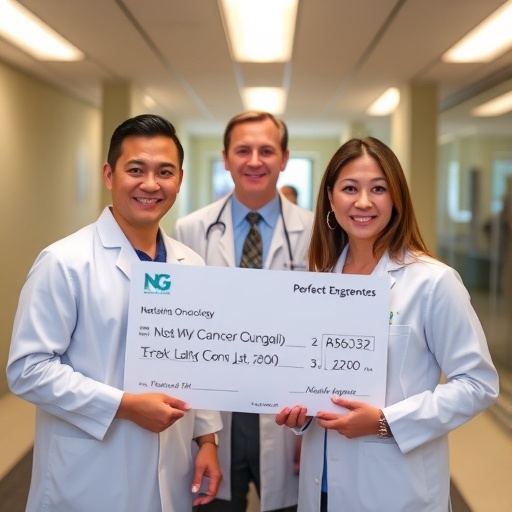
NRG Oncology, one of the principal research organizations within the U.S. National Cancer Institute’s National Clinical Trials Network, has secured a new six-year funding award to continue leading large, practice-changing studies in cancer medicine. The renewed support will allow the organization to remain a lead protocol organization within the NCTN, the national infrastructure responsible for coordinating many of the clinical trials that establish new standards of cancer care. The grant cycle began on March 1, 2026, and includes a modest increase compared with the previous funding period, which ran from 2019 through February 2026. The award comes after an exceptionally strong peer-review process in which NRG Oncology received a score of 10, the highest rating available under the NCI’s grant evaluation system.
The result marks the third consecutive grant cycle in which NRG Oncology has achieved the exceptional score. In the NCI review framework, such scores reflect a judgment that a research program has outstanding scientific merit, a clear potential for meaningful clinical impact, and the infrastructure needed to deliver its proposed work. For a cooperative clinical research group, the evaluation encompasses far more than laboratory discovery. Reviewers assess the organization’s ability to design statistically rigorous trials, recruit patients across multiple institutions, manage complex data, integrate biological specimens, monitor treatment safety, and translate results into clinical practice. NRG Oncology’s renewal therefore represents both continued federal investment and a strong endorsement of its research model.
“This is the third grant cycle in a row that NRG Oncology has received an exceptional score during the grant application review process,” said Quynh Thu Le, MD, an NRG Oncology Group Chair, Chair of the Department of Radiation Oncology at Stanford University, and Co-Director of the Radiation Biology Program at the Stanford Cancer Institute. She also chairs the NRG Oncology Board of Directors. Le described the recognition as an acknowledgment of the collective effort required to improve outcomes for people affected by cancer. In modern oncology, advances rarely result from a single institution or discipline. They emerge from coordinated studies that combine clinical expertise with molecular biology, imaging, radiation science, surgery, pathology, biostatistics, and patient-centered research.
NRG Oncology’s renewed mission focuses on adult patients with sex-specific malignancies, including breast, gynecologic, and prostate cancers, as well as people with localized or locally advanced cancers. These diseases occupy an important space in cancer research because treatment decisions often depend on the biological behavior of a tumor, its anatomical extent, the risk of recurrence, and the patient’s individual health profile. Localized cancers may be curable, but unnecessary treatment can cause lasting harm, including infertility, cardiovascular complications, neurological effects, sexual dysfunction, or chronic tissue damage. NRG Oncology’s trials seek to identify which patients require intensive treatment, which can safely receive less, and how emerging therapies can be integrated without compromising disease control.
A central feature of the group’s scientific strategy is risk stratification, the process of separating patients into clinically meaningful categories according to the likelihood that their cancer will return or progress. Researchers use conventional clinical variables, such as tumor stage and grade, alongside biomarkers that reveal genetic, molecular, or immune characteristics of the disease. This information can be incorporated into algorithms that guide treatment intensity and duration. For example, a molecular signature may indicate that a tumor is biologically aggressive even when it appears limited on imaging, or it may identify a patient whose cancer is unlikely to benefit from prolonged therapy. Testing these approaches in prospective, multi-institutional trials is essential because an algorithm must demonstrate reproducible clinical benefit, not merely statistical association.
The group is also applying emerging knowledge in therapeutics to early- and late-phase clinical trials. These studies may evaluate targeted medicines designed to interfere with specific signaling pathways, immunotherapies that alter the interaction between tumors and the immune system, or combinations intended to overcome treatment resistance. In localized and locally advanced disease, the timing of systemic therapy can be as important as the drug itself. Investigators may test whether treatment given before surgery or radiation can shrink a tumor, eliminate microscopic disease, or provide an early indication of sensitivity. Other trials examine whether maintenance therapy can prevent recurrence after definitive treatment. Because these questions involve both survival and long-term quality of life, they require carefully controlled designs and prolonged follow-up.
Radiation oncology, surgery, and medical imaging are additional areas in which NRG Oncology is testing new technologies through multi-institutional research. Advances in image guidance can allow clinicians to locate tumors and vulnerable organs with greater precision, while modern radiation techniques can shape dose distributions around complex anatomy. Surgical trials may evaluate less invasive procedures or strategies that preserve normal function without reducing cancer control. Imaging research can explore whether functional or molecular scans provide information beyond standard anatomical pictures. Yet technological sophistication alone does not establish clinical value. NRG Oncology’s randomized trials are intended to determine whether these innovations improve survival, reduce toxic effects, enhance quality of life, or make treatment more efficient and accessible.
“The overall impact of NRG Oncology is high, with the potential to markedly enhance the quality of clinical trials based on the outstanding progress during the current funding period,” NCI grant reviewers wrote, highlighting the organization’s continued emphasis on science-driven and molecularly guided therapeutic studies. Their assessment also recognized the group’s focus on sex-driven, rare, and localized or locoregionally advanced cancers. These categories include diseases for which individual hospitals may struggle to enroll enough participants to answer important questions. By connecting hundreds of centers, cooperative groups can assemble patient populations large enough to compare treatments reliably, investigate uncommon tumor features, and identify differences in outcomes across diverse communities.
The scale of that network is central to the organization’s work. NRG Oncology was founded in 2012 through the integration of research programs associated with the National Surgical Adjuvant Breast and Bowel Project, the Radiation Therapy Oncology Group, and the Gynecologic Oncology Group. It now brings together more than 1,300 research sites worldwide, with most located in the United States and Canada. Its investigators include medical and radiation oncologists, surgeons, physicists, pathologists, statisticians, imaging specialists, and other experts. Patient advocates also participate in the research process, helping shape questions that matter to people living with cancer and drawing attention to outcomes that may not be captured by survival statistics alone. The organization’s studies are supported primarily by NCI grants and form part of the federally funded NCTN, one of the world’s largest publicly supported infrastructures for cancer clinical research.
Robert Mannel, MD, an NRG Oncology Group Chair and Director of the Stephenson Cancer Center at the University of Oklahoma, emphasized that the renewal depended on the contributions of member sites, researchers, advocates, staff, and—most importantly—the patients who enroll in trials. Norman Wolmark, MD, the organization’s grant contact principal investigator and a professor of surgery at the University of Pittsburgh, said the exceptional score and the strengths identified by reviewers indicate that NRG Oncology is positioned to build on its recent achievements. Over the next six years, the group will use the new funding to pursue trials intended to make cancer treatment more precise: matching therapies to tumor biology, limiting unnecessary exposure, improving the use of radiation and surgery, and producing evidence that can move rapidly from research centers into everyday care. For patients, the significance of the award will ultimately be measured not by the grant itself, but by whether the studies it enables help more people live longer and with fewer consequences of cancer and its treatment.
News Publication Date: Not provided. The renewed six-year grant cycle began March 1, 2026.
Web References: NRG Oncology, www.nrgoncology.org
Cite Scienmag News
Nathaniel Bowman. (August 12, 2026). NRG Oncology Earns Perfect Grant Score and Increased National Cancer Institute Funding. Scienmag. https://scienmag.com/nrg-oncology-earns-perfect-grant-score-and-increased-national-cancer-institute-funding/
Nathaniel Bowman. "NRG Oncology Earns Perfect Grant Score and Increased National Cancer Institute Funding." Scienmag, 12 August 2026, https://scienmag.com/nrg-oncology-earns-perfect-grant-score-and-increased-national-cancer-institute-funding/. Accessed 3 September 2026.
Nathaniel Bowman. "NRG Oncology Earns Perfect Grant Score and Increased National Cancer Institute Funding." Scienmag. August 12, 2026. https://scienmag.com/nrg-oncology-earns-perfect-grant-score-and-increased-national-cancer-institute-funding/


