


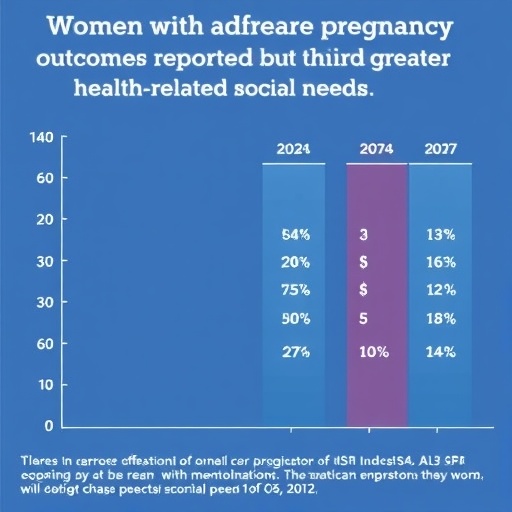
A new study from Mass General Brigham has identified a striking connection between adverse pregnancy outcomes and the social conditions experienced by Black and Latina women. The research, published in JAMA Network Open, found that women who had experienced complications such as preeclampsia, gestational hypertension, gestational diabetes, low birth weight, or preterm birth also reported substantially greater health-related social needs. These needs extended far beyond medical care, encompassing education, employment, food security, transportation, financial stability, housing-related concerns, utilities, safety, and access to family or community support. The findings suggest that the circumstances surrounding pregnancy may be inseparable from the biological risks that shape maternal and infant health.
Adverse pregnancy outcomes, often referred to collectively as APOs, are clinically important because their consequences can continue long after delivery. Preeclampsia and gestational hypertension, for example, are linked to a higher future risk of chronic hypertension, stroke, heart disease, and other cardiovascular conditions. Gestational diabetes can increase the likelihood of later type 2 diabetes and cardiovascular disease, while preterm birth and low birth weight may signal serious complications affecting both parent and infant. Although APOs can occur in any pregnancy, they disproportionately affect Black women and, in many settings, Latina women as well. The new analysis adds another layer to this disparity by showing that APOs are associated with the broader social environment in which pregnancy takes place.
The investigators analyzed data from the BUSY-BP cohort, a study involving Black and Latina women recruited through hospitals and health centers affiliated with Mass General Brigham. Participants completed a health-related social needs screening tool designed to capture conditions that can influence health but are not always visible during a routine clinical examination. The questionnaire addressed living circumstances, access to food and transportation, utility needs, personal safety, financial strain, employment, education, and family and community support. The analysis included 883 women who had previously been pregnant. Of these participants, 400, or 45.3 percent, reported having experienced at least one adverse pregnancy outcome.
The researchers observed that the prevalence of APOs rose as the overall burden of social needs increased. The relationship was particularly notable for needs involving education. Participants were asked whether they required assistance with beginning or completing job training or obtaining a high school diploma or General Educational Development equivalency certificate. These educational needs were among the social factors most strongly associated with a history of pregnancy complications. The result does not establish that limited educational opportunity directly causes preeclampsia, diabetes, or preterm birth, but it indicates that educational disadvantage and pregnancy-related health risks frequently occur together and may reflect shared underlying mechanisms.
Those mechanisms could involve several interacting biological and behavioral pathways. Financial strain and unstable employment can make it difficult to obtain nutritious food, attend prenatal appointments, fill prescriptions, or secure reliable transportation. Chronic stress associated with poverty, discrimination, unsafe housing, or inadequate social support may influence the neuroendocrine and immune systems, potentially contributing to inflammation, vascular dysfunction, and abnormal placental development. These processes are relevant to preeclampsia and fetal growth problems, while limited access to preventive care may delay the detection or treatment of hypertension and diabetes. The study did not determine which pathways were responsible for the observed associations, but its findings underscore that social conditions can become clinically significant through complex physiological routes.
The results are especially important because pregnancy may represent a rare period when people have frequent contact with the health care system. Prenatal visits typically involve repeated assessments of blood pressure, weight, glucose regulation, fetal growth, and mental health. Yet standard obstetric care may not consistently identify whether a patient has enough food, can reach the clinic, has a safe place to live, or is facing financial or educational barriers. Michael C. Honigberg, a cardiologist and researcher with the Mass General Brigham Heart and Vascular Institute and the study’s senior author, described pregnancy as a “critical window of engagement” for patients and providers. In this view, a pregnancy complication should trigger not only cardiovascular risk prevention but also a structured assessment of social needs.
The postpartum period may be an equally important opportunity for intervention. After delivery, many patients lose regular contact with obstetric services at precisely the moment when the long-term implications of an APO should be discussed. A patient who experienced gestational hypertension may need ongoing blood-pressure monitoring, while someone with gestational diabetes may benefit from diabetes screening and lifestyle support. If that same patient is also experiencing food insecurity, unstable employment, or difficulty completing education, medical advice alone may be insufficient. Integrating social workers, community health workers, nutrition services, transportation assistance, and educational resources into postpartum care could make risk-reduction strategies more practical and sustainable.
The authors emphasize that the findings should not be interpreted as proof that social needs directly caused the complications. Because the study examined information from women who had already been pregnant and compared reported social needs with pregnancy outcomes, it could identify associations but not establish the direction of causality. Social hardship may contribute to pregnancy complications, but a complicated pregnancy could also create new financial, employment, or emotional difficulties. Other factors, including access to health care, neighborhood conditions, exposure to racism, prior medical history, and environmental stressors, may influence both social needs and pregnancy outcomes. Further research will be required to separate these effects and determine which interventions produce measurable improvements.
The study nevertheless offers a powerful argument for broadening the definition of pregnancy care. Treating blood pressure, glucose levels, and placental health remains essential, but the new evidence suggests that clinical teams should also ask whether patients have the social resources needed to follow medical recommendations and recover after birth. The researchers point to social support programs and other postpartum interventions as promising avenues for future investigation. If hospitals can identify unmet needs early and connect patients with effective assistance, pregnancy care could become a platform for preventing future cardiovascular disease while also improving conditions for women and babies. The central message is both simple and consequential: pregnancy complications are not only medical events; they can reveal the cumulative effects of social conditions on human biology.
News Publication Date: 12-Aug-2026
Web References: Mass General Brigham: https://www.massgeneralbrigham.org/ ; JAMA Network Open article: https://jamanetwork.com/journals/jamanetworkopen/fullarticle/10.1001/jamanetworkopen.2026.28595
References: Rana M et al. “Adverse Pregnancy Outcomes and Health-Related Social Needs Among Parous Women.” JAMA Network Open. DOI: 10.1001/jamanetworkopen.2026.28595
Cite Scienmag News
Harold Sullivan. (August 12, 2026). Women with adverse pregnancy outcomes reported greater health-related social needs. Scienmag. https://scienmag.com/women-with-adverse-pregnancy-outcomes-reported-greater-health-related-social-needs/
Harold Sullivan. "Women with adverse pregnancy outcomes reported greater health-related social needs." Scienmag, 12 August 2026, https://scienmag.com/women-with-adverse-pregnancy-outcomes-reported-greater-health-related-social-needs/. Accessed 4 September 2026.
Harold Sullivan. "Women with adverse pregnancy outcomes reported greater health-related social needs." Scienmag. August 12, 2026. https://scienmag.com/women-with-adverse-pregnancy-outcomes-reported-greater-health-related-social-needs/


