


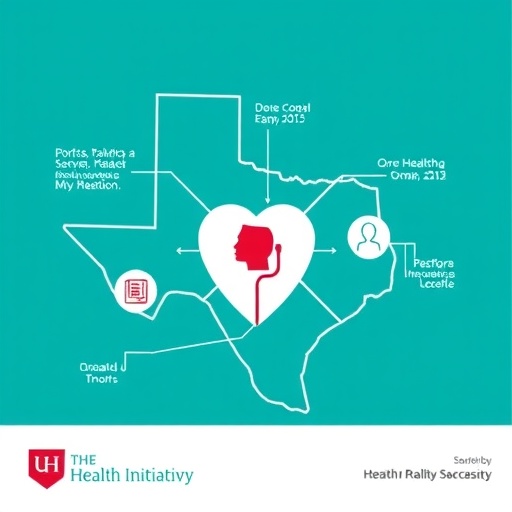
The University of Houston has launched UH Health, a cross-disciplinary academic health enterprise intended to reshape how healthcare professionals are educated, how medical research is conducted and how care reaches communities across Texas. The initiative brings together medicine, nursing, pharmacy, optometry, psychology, social work, population health, biomedical research and health systems science under a single interprofessional framework. University leaders say the model is designed to confront a rapidly intensifying combination of population growth, healthcare worker shortages, chronic disease and unequal access to medical services.
Rather than treating healthcare disciplines as separate academic and clinical systems, UH Health is built around team-based care. In this approach, physicians, nurses, pharmacists, optometrists, behavioral health specialists, social workers and public health experts contribute to a shared understanding of each patient’s needs. The model reflects the growing recognition that health outcomes are shaped not only by disease biology, but also by mental health, housing, income, nutrition, transportation and access to preventive services. By training students to work across professional boundaries, the University hopes to prepare graduates for a healthcare system increasingly focused on coordinated and personalized care.
“Healthcare is no longer delivered in isolation, and complex health challenges require coordinated solutions,” said Jonathan McCullers, vice president for health affairs at UH and dean of the Tilman J. Fertitta Family College of Medicine. The university’s academic health strategy is intended to place students in an environment where clinical reasoning, behavioral science, population health and scientific discovery interact. Such integration can help future clinicians identify the underlying drivers of illness, select more appropriate interventions and communicate more effectively with specialists and community organizations.
The launch comes as Texas faces a widening gap between healthcare demand and workforce capacity. Rapid population growth, an aging population and shortages of trained professionals have placed pressure on hospitals and clinics throughout the state. The Texas Hospital Association has reported that 64% of hospitals were operating with fewer beds or reduced services because of staffing shortages. UH Health aims to expand the pipeline of physicians, nurses, pharmacists, optometrists, social workers and other professionals while emphasizing workforce readiness, collaborative practice and the ability to manage complex cases.
UH’s location near the Texas Medical Center gives the initiative access to one of the world’s largest concentrations of hospitals, research institutes and specialized clinical programs. Partnerships with organizations including HCA Healthcare, Memorial Hermann Hospital, Baylor College of Medicine and MD Anderson Cancer Center are expected to provide students and researchers with expanded opportunities for clinical training, translational research and collaboration. Translational research—the process of moving discoveries from laboratories into diagnostics, treatments and public health programs—depends heavily on this type of interaction between universities, hospitals and industry.
The university is also positioning UH Health as a platform for research that reaches beyond traditional medical departments. Scientists in chemistry, physics and biomedical engineering are working alongside health researchers on problems ranging from cancer and infectious disease to substance-use disorders and neurodegeneration. UH researchers have received more than $11 million from the Cancer Prevention and Research Institute of Texas for work involving cancer prevention, diagnosis and treatment. A fentanyl vaccine developed at the university is advancing toward human trials, although its clinical effectiveness and safety will need to be established through carefully controlled studies.
Brain health is another major focus. Texas ranks fourth nationally in the number of Alzheimer’s cases and second in Alzheimer’s-related deaths, according to the Texas Department of State Health Services. More than 100 faculty members across 12 of UH’s 16 colleges are involved in research related to prevention, early detection, caregiving and treatment, supported by $62.5 million in active grants. Their work may involve diverse technologies and methods, including biological markers, computational analysis, behavioral interventions, biomedical engineering and the study of social factors that influence cognitive decline and caregiver health.
To strengthen this research ecosystem, UH is investing $77 million in a new 55,000-square-foot medical research building. The facility is expected to support interdisciplinary laboratories and shared scientific infrastructure, allowing investigators from different fields to exchange data, equipment and expertise more efficiently. In modern biomedical science, discoveries often emerge at the boundaries between disciplines—for example, when engineering approaches are applied to drug delivery, physical sciences are used to study disease mechanisms or data science improves early diagnosis.
UH Health’s community programs are intended to connect these academic and research activities with practical healthcare needs. The UH Health Family Care Center provides primary care and mental health services to the university and surrounding communities, including Third Ward, East End and South Houston. The Household-Centered Care program gives students experience through home visits with community caregivers, while the 3rd Ward Place of Wellness offers screenings, preventive services and health education. The College of Optometry extends access to vision care through community clinics and outreach programs serving children and families.
The enterprise is also expanding beyond Houston through a partnership with DHR Health in the Rio Grande Valley, a rapidly growing region that continues to face significant medical access challenges. University officials say the collaboration could support healthcare education, workforce development and research tailored to local needs. By linking professional training, scientific discovery and community partnerships, UH Health is presenting an academic health model designed for a state where medical demands are growing faster than conventional systems can respond.
Web References: https://mediasvc.eurekalert.org/Api/v1/Multimedia/ed42117d-36c9-45cf-b2e3-443e4e08b680/Rendition/low-res/Content/Public
References: Texas Hospital Association; Texas Department of State Health Services; University of Houston
Cite Scienmag News
Courtney Benton. (August 11, 2026). UH Health Initiative Aims to Improve Healthcare Outcomes Across Texas. Scienmag. https://scienmag.com/uh-health-initiative-aims-to-improve-healthcare-outcomes-across-texas/
Courtney Benton. "UH Health Initiative Aims to Improve Healthcare Outcomes Across Texas." Scienmag, 11 August 2026, https://scienmag.com/uh-health-initiative-aims-to-improve-healthcare-outcomes-across-texas/. Accessed 3 September 2026.
Courtney Benton. "UH Health Initiative Aims to Improve Healthcare Outcomes Across Texas." Scienmag. August 11, 2026. https://scienmag.com/uh-health-initiative-aims-to-improve-healthcare-outcomes-across-texas/


