


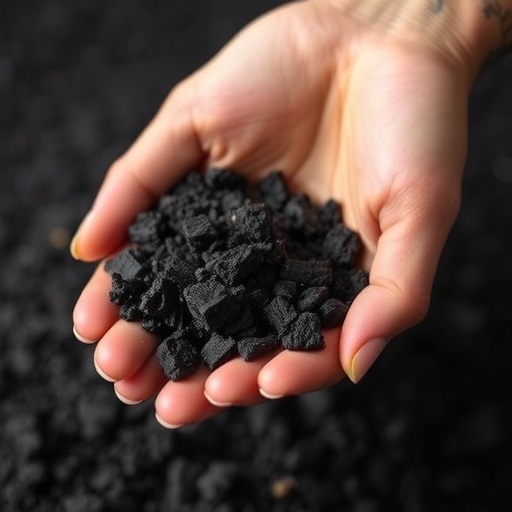
Researchers at the University of Patras have discovered that biochar produced from malt spent rootlets, a largely overlooked byproduct of the brewing industry, can dramatically improve the ability of sand to capture and retain Escherichia coli. In laboratory experiments, sand containing 10% of the biochar removed 94.1% of bacterial cells from flowing water, compared with just 17.8% removal by untreated sand. The findings suggest that brewery waste could be transformed into a low-cost material for reducing microbial movement through filtration systems, soil and groundwater.
The study, published in Biochar, examined how E. coli CN-13 behaves when passing through saturated sand amended with biochar derived from malt spent rootlets. These rootlets are residues generated during malt production, when barley is processed for brewing. Rather than allowing this material to remain an industrial waste stream, the researchers converted it into biochar through pyrolysis, a thermal process that heats organic material in limited oxygen. The treatment was carried out at 850 °C, producing a carbon-rich material with a highly porous and irregular surface.
That structure appears to be central to the biochar’s performance. The resulting malt spent rootlets biochar, known as MSRB, had a specific surface area of approximately 290 square meters per gram. A large surface area provides more sites where bacterial cells can interact with the material. Its heterogeneous surface may also contain a variety of chemical groups and microscopic pores that influence whether microorganisms remain suspended in water, become physically trapped between sand grains or attach directly to the biochar.
To investigate these interactions, the research team carried out two complementary sets of experiments. In batch adsorption tests, bacterial suspensions were mixed with MSRB under controlled chemical conditions, allowing the scientists to measure how rapidly cells were removed from the water and how much biochar was needed to retain them. In separate flow-through experiments, water containing E. coli was passed through columns packed with saturated quartz sand containing different proportions of MSRB. This arrangement was designed to simulate the movement of contaminated water through a porous geological or filtration medium.
The batch experiments indicated that bacterial adsorption onto the biochar followed a pseudo-first-order kinetic model, meaning that the rate of removal was strongly related to the number of available attachment sites remaining on the material. The results also fit a Freundlich isotherm, a model commonly used to describe adsorption onto surfaces with sites of varying strength. Importantly, the researchers distinguished between actual adsorption and natural bacterial inactivation. Cells can lose viability over time even when they are not captured by a solid material, so separating these processes allowed the team to estimate the contribution of biochar more precisely.
Water chemistry had a significant influence on bacterial retention. When the ionic strength of the solution was increased from 1 to 150 millimolar potassium chloride, adsorption onto MSRB declined. The researchers linked this reduction primarily to electrostatic shielding. Bacterial cells generally carry a net negative surface charge, while the biochar surface under the tested conditions was comparatively positive. These opposite charges can promote attachment, but dissolved ions can partially screen the electrical forces between them, weakening the attraction and making it easier for cells to remain mobile in the water.
The column experiments revealed that the amount of biochar changed not only the efficiency of bacterial removal but also the underlying mechanism. In untreated sand, and in sand containing 5% MSRB, physical straining was the dominant process. In this situation, cells are retained because they are too large to pass easily through narrow gaps between sand grains or become lodged within the pore network. However, when the biochar content reached 10% by weight, numerical modeling showed that direct and irreversible attachment became the main retention mechanism. The bacteria were no longer being held primarily by geometry; they were binding to the biochar-amended medium.
This mechanistic shift is significant because it indicates that biochar can do more than reduce the size of open spaces in a sand filter. At sufficient concentrations, it creates an active chemical and physical surface capable of capturing microorganisms. Strong attachment may reduce the likelihood that retained bacteria will be released again when water chemistry or flow conditions change. Such behavior could be valuable in engineered filtration systems and in amendments intended to limit the movement of pathogens through sandy soils toward groundwater.
The researchers caution that the results are an early proof of concept rather than an immediate prescription for field deployment. The experiments used sterilized quartz sand, controlled water chemistry and a single bacterial strain, while natural soils and aquifers contain clay minerals, organic matter, dissolved substances and competing microorganisms that may alter bacterial attachment. The column tests also included only one run for each biochar application rate, and long-term changes in flow, clogging, biochar stability and microbial survival remain unresolved. Even with these limitations, the study points to a compelling connection between waste valorization and environmental protection: a residue from malt production may become a functional material for reducing bacterial transport in water and soil systems.
News Publication Date: 10-Aug-2026
Web References: https://doi.org/10.1007/s42773-026-00648-2
References: Giannopoulos, C. P., Kolotouros, C. A. & Manariotis, I. D. “Sorption and transport of Escherichia coli CN-13 in saturated sand columns amended with biochar derived from malt spent rootlets.” Biochar 8, 130 (2026).
Keywords
Biochar, malt spent rootlets, Escherichia coli, water filtration, groundwater protection, bacterial adsorption, microbial transport, saturated sand, adsorption kinetics, brewery waste, environmental engineering, soil remediation
Cite Scienmag News
Denise Maddox. (August 10, 2026). Brewery-waste biochar could trap harmful bacteria in sandy water filters. Scienmag. https://scienmag.com/brewery-waste-biochar-could-trap-harmful-bacteria-in-sandy-water-filters/
Denise Maddox. "Brewery-waste biochar could trap harmful bacteria in sandy water filters." Scienmag, 10 August 2026, https://scienmag.com/brewery-waste-biochar-could-trap-harmful-bacteria-in-sandy-water-filters/. Accessed 4 September 2026.
Denise Maddox. "Brewery-waste biochar could trap harmful bacteria in sandy water filters." Scienmag. August 10, 2026. https://scienmag.com/brewery-waste-biochar-could-trap-harmful-bacteria-in-sandy-water-filters/


