


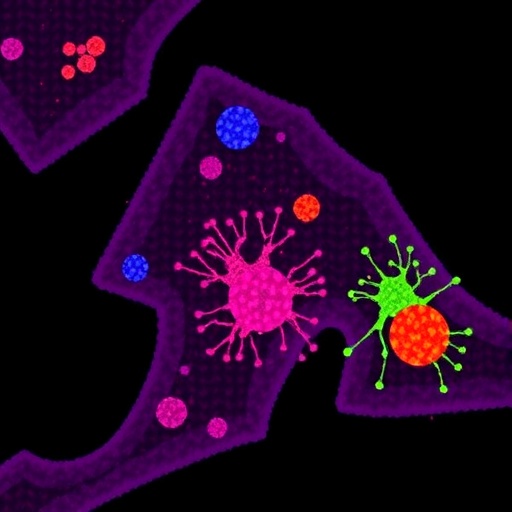
A rare epithelial cell known as the tuft cell may be far more important in cancer biology than previously thought. A new review in Genes & Diseases proposes that tumors expressing POU2F3—the master transcriptional regulator of tuft cell identity—form a distinct molecular category that appears across several organs. These “tuft cell-like” cancers have been identified in the lung, pancreas, stomach, colon, breast, prostate, thymus, and neuroendocrine tissues, raising the possibility that a shared cellular program could influence tumor development, immune evasion, treatment resistance, and patient survival.
Tuft cells are specialized chemosensory epithelial cells that normally line tissues exposed to the outside world, including the airways and gastrointestinal tract. They detect chemical and microbial signals and communicate with nearby immune cells. One of their characteristic functions is the production of interleukin-25, or IL-25, a cytokine that helps organize type 2 immune responses. Their identity depends heavily on POU2F3, a transcription factor that activates the gene networks required for tuft cell differentiation and maintenance. When this program appears inside a tumor, it may give malignant cells unusual sensory, metabolic, and signaling capabilities.
The researchers examined POU2F3 expression using data from The Cancer Genome Atlas, a large public collection of genomic information from human tumors. Their pan-cancer analysis covered 33 cancer types and revealed striking differences between malignant and adjacent normal tissues. Elevated POU2F3 expression was detected in several cancers, including cervical squamous cell carcinoma, cholangiocarcinoma, esophageal carcinoma, stomach adenocarcinoma, and thyroid carcinoma. In contrast, lower levels were observed in prostate and kidney cancers and in head and neck squamous cell carcinoma. The findings suggest that tuft cell-like programs do not occur uniformly, but emerge according to the tissue, genetic drivers, and cellular environment of each tumor.
The clearest evidence comes from small cell lung cancer, or SCLC, where POU2F3 identifies a distinct subtype that lacks the classic neuroendocrine features of many other small cell tumors. Rather than relying on the transcriptional circuitry associated with neuroendocrine differentiation, these cancers appear to depend on a tuft cell-associated network. That dependency could create a therapeutic vulnerability: if tumor cells require POU2F3-driven gene regulation to survive, drugs designed to disrupt this pathway or its downstream partners might selectively affect the cancer while sparing most normal cells. Similar molecular signatures have been reported in lung adenocarcinoma, pulmonary squamous cell carcinoma, and thymic squamous cell carcinoma.
The role of tuft cells in pancreatic cancer appears more complicated. During the earliest stages of tumor formation, tuft cells may exert protective effects by producing prostaglandin D2, a lipid mediator involved in inflammation and tissue regulation. As oncogenic KRAS signaling becomes established, however, inflammatory pathways can alter tuft cell behavior. The cells may then support tumor growth, acquire stem cell-like properties, and contribute to resistance against therapy. The review also discusses evidence that pancreatic tuft cells can shift toward a neural-like progenitor state, a form of cellular plasticity that may be associated with aggressive disease and poor clinical outcomes.
In colorectal cancer, tuft cell-related signaling may help create an environment in which tumors evade immune attack and preserve cancer stem cell populations. These stem-like cells are thought to fuel recurrence, metastasis, and resistance to conventional treatment. Tuft cells in the gastrointestinal tract can communicate with surrounding immune and epithelial cells, potentially reshaping the tumor microenvironment through cytokines and other signaling molecules. Because the same pathways that support normal tissue repair can be reactivated during cancer, the biological effects of tuft cell programs may depend on their location and on the genetic alterations present in the tumor.
Gastric cancer provides another example of how tuft cell biology can intersect with the nervous system. Tuft cells participate in cholinergic signaling involving acetylcholine and nerve growth factor. These molecules can influence epithelial growth, nerve-tumor interactions, inflammation, and tissue remodeling. Experimental studies indicate that interfering with these signaling circuits can reduce tumor-promoting activity in model systems. The findings are part of a broader shift in cancer research toward understanding tumors as ecosystems in which malignant cells interact continuously with nerves, immune cells, blood vessels, and specialized epithelial populations.
The clinical meaning of POU2F3 expression is highly context dependent. In thymoma, high POU2F3 levels were associated with shorter overall survival. In breast cancer, the unfavorable prognostic effect was especially evident among patients with stage III disease, suggesting that tuft cell-like biology may become more consequential as tumors advance. POU2F3 should therefore not be viewed as a universal marker of poor prognosis. Its significance may depend on cancer type, stage, coexisting mutations, and the specific transcriptional network activated in each tumor. Future studies will need to determine whether POU2F3 is merely a marker of aggressive disease or an active driver that can be therapeutically targeted.
The review points toward a new way of classifying cancers based not only on their organ of origin, but also on the unusual cell states they adopt. Identifying POU2F3-positive tumors could help researchers group biologically similar cancers that currently receive very different diagnoses. More work is needed to validate the marker in patient samples, establish how tuft cell-like programs arise, and develop treatments that block their harmful effects without disrupting normal epithelial functions. If those questions can be answered, the biology of a rare sensory cell may become a valuable guide for cancer diagnosis, prognosis, and precision therapy across multiple organs.
Web References: https://doi.org/10.1016/j.gendis.2025.101939
References: Mengling Ye, Yuyang Liu, Hui Li, “Pan-cancer analysis and mechanistic insights of tuft cell-like tumors,” Genes & Diseases, Volume 13, Issue 5, 2026, Article 101939.
Cite Scienmag News
Nathaniel Bowman. (August 6, 2026). Tuft Cell-Like Tumors Reveal New Cancer Subtype With Distinct Biology, Treatment Potential. Scienmag. https://scienmag.com/tuft-cell-like-tumors-reveal-new-cancer-subtype-with-distinct-biology-treatment-potential/
Nathaniel Bowman. "Tuft Cell-Like Tumors Reveal New Cancer Subtype With Distinct Biology, Treatment Potential." Scienmag, 6 August 2026, https://scienmag.com/tuft-cell-like-tumors-reveal-new-cancer-subtype-with-distinct-biology-treatment-potential/. Accessed 4 September 2026.
Nathaniel Bowman. "Tuft Cell-Like Tumors Reveal New Cancer Subtype With Distinct Biology, Treatment Potential." Scienmag. August 6, 2026. https://scienmag.com/tuft-cell-like-tumors-reveal-new-cancer-subtype-with-distinct-biology-treatment-potential/


