


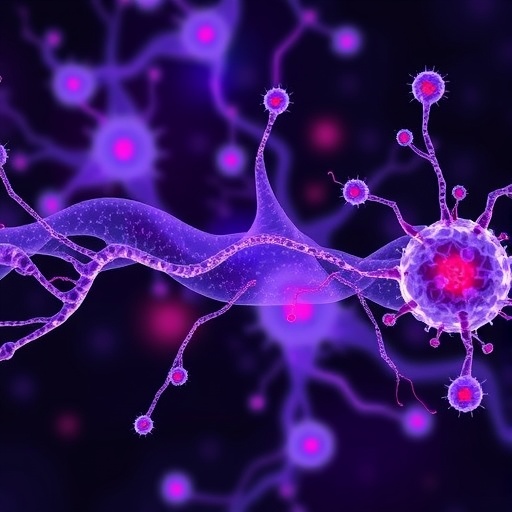
Dendritic cells and T cells are often described as the immune system’s intelligence network: dendritic cells detect danger and present molecular evidence, while T cells decide whether to destroy the threatened target. In cancer, however, this communication channel can be disrupted before an effective immune response begins. A review by M. Cho and M. Song, published in Experimental & Molecular Medicine, examines how tumours reshape the metabolism of both cell types, turning the dendritic cell–T cell axis from an immune activation pathway into a system marked by exhaustion, suppression and failed coordination.
The study focuses on a central principle of tumour biology: metabolism is not merely a source of energy, but also a form of cellular instruction. Growing tumours consume large quantities of glucose, amino acids and oxygen, while releasing metabolites that alter the behaviour of nearby immune cells. These changes occur in the tumour microenvironment, a complex region containing cancer cells, blood vessels, fibroblasts and infiltrating immune populations. Within this environment, dendritic cells may encounter tumour antigens but fail to mature properly, while T cells may receive incomplete or contradictory signals.
Dendritic cells normally function as professional antigen-presenting cells. After capturing proteins from damaged or infected tissue, they process those proteins into peptide fragments and display them on major histocompatibility complex molecules. Mature dendritic cells then travel to lymph nodes, where they activate antigen-specific T cells through a combination of antigen recognition, co-stimulatory signals and cytokine production. This process is essential for generating cytotoxic T lymphocytes capable of recognising and killing malignant cells. Tumour-derived metabolic stress can interfere with every stage of this sequence, from antigen processing to T-cell priming.
One of the most important barriers is competition for glucose. Cancer cells frequently rely on high-rate glycolysis, converting glucose into lactate even when oxygen is available, a phenomenon commonly associated with the Warburg effect. The resulting glucose shortage can deprive T cells of the fuel needed for proliferation and effector activity. Lactate accumulation further lowers the local pH and can suppress cytokine production, cytotoxicity and migration. In dendritic cells, altered glucose availability may affect maturation and antigen presentation, weakening the initial instructions delivered to T cells.
Oxygen deprivation adds another layer of metabolic pressure. Rapid tumour growth and abnormal blood-vessel formation create hypoxic regions in which oxygen levels fluctuate or remain chronically low. Hypoxia-inducible factors, particularly HIF-related signalling pathways, can reprogram immune-cell metabolism and influence the expression of genes involved in inflammation, migration and immune suppression. Under these conditions, dendritic cells may adopt dysfunctional or tolerogenic states rather than the highly stimulatory phenotype required for strong anti-tumour immunity. T cells, meanwhile, may struggle to maintain mitochondrial function and long-term survival.
The review also highlights the importance of amino-acid metabolism. Tumours and suppressive myeloid cells can consume arginine, tryptophan and other nutrients required for lymphocyte expansion. Arginine depletion can reduce T-cell receptor signalling and impair the formation of memory T cells. Tryptophan breakdown through enzymes such as indoleamine 2,3-dioxygenase produces kynurenine and related metabolites, which can promote immune tolerance and alter T-cell differentiation. These pathways may also influence dendritic-cell maturation, helping create an environment in which tumour antigens are recognised without generating a decisive attack.
Lipids and fatty acids represent another metabolic battleground. Dendritic cells require carefully regulated lipid handling to produce membranes, signalling molecules and antigen-presenting machinery. Excessive lipid accumulation, driven by tumour-derived factors or inflammatory stress, can impair antigen processing and reduce the quality of dendritic-cell activation. T cells also remodel their lipid metabolism as they move from quiescence to activation and eventually to memory. Chronic exposure to oxidised lipids, reactive oxygen species and nutrient scarcity can damage mitochondria and push T cells toward dysfunctional states commonly associated with exhaustion.
These findings help explain why immune checkpoint inhibitors do not work equally well in every patient. Drugs that block inhibitory receptors such as PD-1 or CTLA-4 can release molecular brakes on T cells, but they may have limited impact if dendritic cells cannot provide effective antigen presentation or if the tumour microenvironment lacks the nutrients needed for T-cell expansion. The review therefore presents the dendritic cell–T cell axis as a connected metabolic circuit. Improving T-cell function alone may not be sufficient; successful treatment may require simultaneous restoration of dendritic-cell activity and correction of the surrounding metabolic conditions.
Several therapeutic strategies are emerging from this framework. Researchers are investigating approaches that inhibit tumour lactate production, improve oxygen delivery, block immunosuppressive enzymes or reprogramme nutrient consumption. Metabolic drugs could potentially be combined with checkpoint blockade, cancer vaccines, dendritic-cell therapies or adoptive T-cell transfer. Another possibility is to engineer immune cells with enhanced mitochondrial fitness or altered nutrient use, allowing them to remain active in hostile tumour environments. However, the review stresses that metabolism is shared by cancer cells and immune cells, making selectivity a major challenge. A treatment that blocks a metabolic pathway indiscriminately could weaken the immune response as well as the tumour.
The broader message is that cancer immunotherapy may need to move beyond the idea of immune cells as isolated targets. Dendritic cells and T cells operate as a coordinated network, and tumours can undermine that network by changing the chemical landscape in which it functions. Mapping these metabolic interactions could help identify biomarkers that predict treatment response and reveal rational drug combinations. By treating immune communication, nutrient availability and cellular energy production as interconnected features of tumour biology, scientists may be able to design therapies that restore the immune system’s ability to recognise, organise and eliminate malignant cells.
Cite Scienmag News
Nathaniel Bowman. (August 6, 2026). How Tumors Rewire Dendritic Cell–T Cell Communication, Revealing New Therapeutic Opportunities. Scienmag. https://scienmag.com/how-tumors-rewire-dendritic-cell-t-cell-communication-revealing-new-therapeutic-opportunities/
Nathaniel Bowman. "How Tumors Rewire Dendritic Cell–T Cell Communication, Revealing New Therapeutic Opportunities." Scienmag, 6 August 2026, https://scienmag.com/how-tumors-rewire-dendritic-cell-t-cell-communication-revealing-new-therapeutic-opportunities/. Accessed 4 September 2026.
Nathaniel Bowman. "How Tumors Rewire Dendritic Cell–T Cell Communication, Revealing New Therapeutic Opportunities." Scienmag. August 6, 2026. https://scienmag.com/how-tumors-rewire-dendritic-cell-t-cell-communication-revealing-new-therapeutic-opportunities/


