


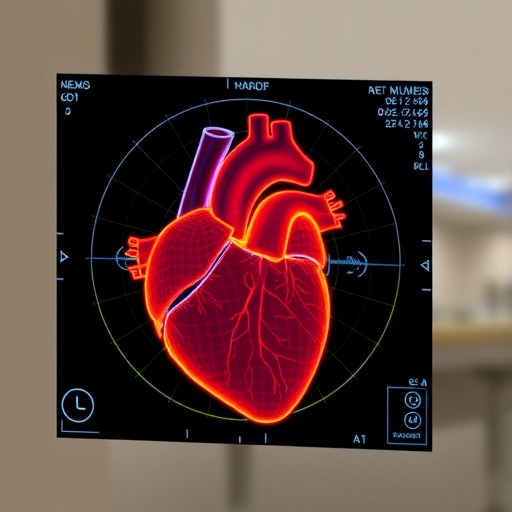
A child’s heartbeat can reveal a great deal long before a scan or blood test does. Yet the traditional tool for detecting cardiac abnormalities—the stethoscope—depends heavily on the listener’s experience, the child’s cooperation and the acoustic conditions of the room. A new study by researchers including Raffaella Malvermi, Stefano Mannarino and Valentina Garella explores how data-driven murmur detection could strengthen pediatric cardiac auscultation and help bring specialist assessment closer to patients through tele-consultation.
Heart murmurs are sounds produced when blood flow through the heart or major vessels becomes turbulent. Some murmurs are harmless and occur in otherwise healthy children, while others can signal structural or functional heart disease. Distinguishing between these possibilities is a familiar challenge in pediatrics. A clinician must identify subtle changes in timing, pitch, intensity and location, often while a young patient is moving, crying or breathing irregularly. Even trained clinicians may hear the same sound differently under difficult conditions.
The research described in Pediatric Research focuses on transforming heart sounds into data that can be analyzed more consistently. Digital stethoscopes and electronic phonocardiography systems can record acoustic signals from the chest and convert them into waveforms. These recordings preserve features that may be difficult to describe using words alone, including the frequency distribution of a murmur, its duration within the cardiac cycle and the way its intensity changes over time. Once digitized, the sounds can be processed using signal-processing methods and machine-learning algorithms.
Data-driven murmur detection generally begins by separating meaningful cardiac sounds from background noise. A recording may contain breath sounds, speech, movement artifacts, clothing friction and interference caused by the sensor itself. Algorithms can analyze the signal in the time domain, where the timing and shape of sounds are visible, and in the frequency domain, where the distribution of acoustic energy can reveal whether a sound is predominantly low, middle or high pitched. These features can then be used to identify patterns associated with normal heart sounds or potentially significant murmurs.
The pediatric setting makes this task particularly demanding. Children’s heart rates vary with age, activity and emotional state, while the acoustic characteristics of the chest change as the body grows. A system trained on adult recordings cannot simply be assumed to work reliably in infants or children. Pediatric heart sounds may also be brief, softer or embedded in faster cardiac cycles, leaving less time for a clinician—or an algorithm—to distinguish one component from another. The study’s emphasis on pediatric auscultation therefore addresses a specialized technical and clinical problem rather than a straightforward extension of adult cardiac monitoring.
The potential value becomes especially clear in tele-consultation. In many communities, a primary-care clinician may be the first person to hear a suspicious sound, while pediatric cardiology expertise is concentrated in regional or urban centers. A digital recording could allow a remote specialist to review the same acoustic event rather than relying only on a written description such as “soft systolic murmur.” Automated analysis could provide an additional layer of support by flagging recordings that merit expert review, helping clinicians prioritize referrals and reducing uncertainty when immediate specialist access is limited.
Such technology is not intended to replace clinical judgment. A murmur-detection model can identify acoustic patterns, but it cannot independently determine the full clinical meaning of those patterns. Symptoms, oxygen saturation, family history, physical examination findings and the child’s overall condition remain essential. Even an apparently reassuring recording cannot exclude every form of heart disease, and an algorithmic alert would not by itself establish a diagnosis. Echocardiography and specialist evaluation remain necessary when the clinical picture warrants them.
The most important questions for this approach will be answered through validation. Researchers must test whether a system performs consistently across different ages, recording devices, hospitals and levels of background noise. They must also measure how often it misses clinically important murmurs and how often it generates false alarms. Transparent training data, careful labeling by experts and evaluation on independent patient groups are crucial because machine-learning systems can reproduce biases in the data used to build them. For tele-consultation, secure data transfer, patient privacy and clear responsibility for follow-up decisions are equally important.
The study arrives as digital health tools are reshaping the role of the stethoscope. Rather than eliminating bedside examination, data-driven auscultation could make it more shareable, measurable and accessible. A sound captured in a local clinic might become a compact clinical record that can be reviewed by specialists across distance, while algorithmic analysis could help clinicians decide which cases need urgent attention. If future studies demonstrate reliable performance in real-world pediatric care, intelligent murmur detection may offer a practical bridge between frontline medicine and specialist cardiology—turning one of the oldest diagnostic instruments into a connected tool for modern care.
Cite Scienmag News
Harold Sullivan. (August 3, 2026). AI-Powered Murmur Detection Could Expand Remote Pediatric Heart Exam Teleconsultations. Scienmag. https://scienmag.com/ai-powered-murmur-detection-could-expand-remote-pediatric-heart-exam-teleconsultations/
Harold Sullivan. "AI-Powered Murmur Detection Could Expand Remote Pediatric Heart Exam Teleconsultations." Scienmag, 3 August 2026, https://scienmag.com/ai-powered-murmur-detection-could-expand-remote-pediatric-heart-exam-teleconsultations/. Accessed 4 September 2026.
Harold Sullivan. "AI-Powered Murmur Detection Could Expand Remote Pediatric Heart Exam Teleconsultations." Scienmag. August 3, 2026. https://scienmag.com/ai-powered-murmur-detection-could-expand-remote-pediatric-heart-exam-teleconsultations/


