


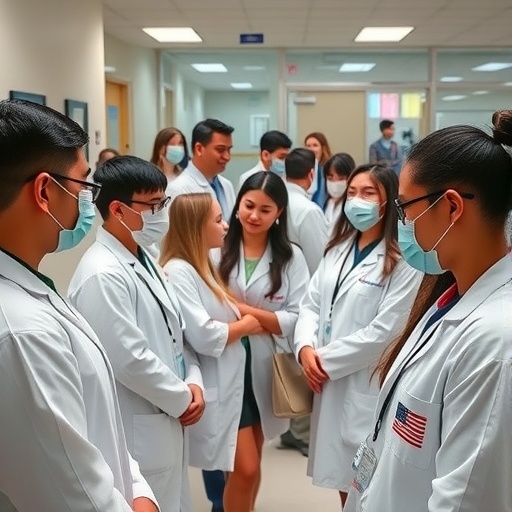
TAMPA, Fla., July 30, 2026 — Thirty Florida high school students from 18 communities received an intensive introduction to virology and pandemic preparedness this month, participating in the Global Virus Network’s (GVN) 2026 Global Guardians for Pandemic Preparedness program. Hosted in Tampa from July 20 to 24 with support from the University of South Florida (USF) Youth Experiences program, the initiative placed students inside the scientific, clinical and public health systems that detect, investigate and control viral threats.
The five-day program was designed to move beyond classroom explanations of viruses. Participants visited research laboratories, hospital microbiology facilities and public health agencies, observing how information travels from basic research to diagnostic testing, clinical care and community intervention. The program highlighted the interconnected nature of pandemic preparedness, in which virologists, epidemiologists, physicians, laboratory specialists, communication experts and policymakers must coordinate rapidly when a pathogen begins spreading.
Students toured the USF Health Institute for Translational Virology & Innovation, a GVN Center of Excellence, as well as the microbiology laboratories at Tampa General Hospital, the Florida Bureau of Public Health Laboratories’ Tampa Branch and the Florida Department of Health in Hillsborough County. These visits introduced participants to the technical infrastructure supporting viral surveillance. Public health laboratories, for example, can use molecular methods to identify pathogen-specific genetic material, characterize unusual samples and support outbreak investigations before a cluster develops into a larger crisis.
The program also explored the biological mechanisms that allow viruses to cause disease and move through populations. Students learned how vaccines train the immune system to recognize viral antigens, reducing the likelihood of severe illness and transmission. Sessions on mosquitoes and animal research examined the ecological and evolutionary factors that influence the emergence of pathogens, including the role of vectors and animal reservoirs. By studying these links, participants were introduced to the concept that human health is shaped by interactions among people, animals and the environment.
An outbreak simulation placed the students in the position of public health decision-makers working with incomplete information. They had to weigh the timing of warnings, testing strategies, vaccination priorities and other interventions while considering the consequences of acting too slowly or imposing measures before evidence was conclusive. The exercise demonstrated why outbreak response is not simply a matter of identifying a virus. Officials must interpret imperfect data, estimate transmission dynamics and communicate uncertainty while attempting to limit infections and maintain public trust.
That trust became a central theme of the program’s discussions about misinformation. Students examined how inaccurate claims can spread through online networks and why false narratives may outpace carefully verified scientific information. They discussed the responsibility of scientists and communicators to explain evidence clearly, distinguish established findings from preliminary results and address public concerns without oversimplifying complex biology. In a pandemic, effective communication can influence whether people seek testing, accept vaccination or follow measures intended to reduce transmission.
The students also met Robert C. Gallo, MD, co-founder of the GVN and founding director of the USF Health Institute for Translational Virology & Innovation. Gallo’s discoveries helped establish the modern understanding of retroviruses and contributed to the identification of human immunodeficiency virus as the cause of AIDS. Speaking with the students, he emphasized that progress in virology depends not only on landmark discoveries but also on persistence, collaboration and the willingness to investigate difficult questions. “The world will always face new viruses,” Gallo said. “The question is whether enough people understand them.”
The program’s organizers reported statistically significant gains between pre-program and post-program assessments, indicating that students increased their knowledge during the week. Nearly every participant said they would recommend the experience to a friend. Although some students arrived primarily interested in medicine, the program introduced them to careers in epidemiology, biotechnology, biomedical research, public health, policy and science communication. Several participants said they had gained a clearer understanding of how infectious disease physicians and laboratory scientists can influence public health decisions beyond direct patient care.
The program concluded with a graduation ceremony attended by USF President Moez Limayem, PhD, and GVN CEO Mathew Evins, who presented certificates to the participants. Limayem spoke with students about their college plans and scientific interests, which ranged from microbiology and medicine to public policy and biomedical sciences. The partnership between USF and GVN, whose international headquarters is based at the university, is expected to expand the initiative nationally in 2027 and internationally the following year. GVN also plans to pursue scholarships that could broaden participation for students from diverse backgrounds. The organizers’ central message was that pandemic preparedness begins long before the next outbreak, through sustained investment in scientific education, public trust and the young people who will build the next generation of viral surveillance and response systems.
News Publication Date: July 30, 2026
Web References: Global Virus Network, https://gvn.org/; Global Guardians for Pandemic Preparedness, https://gvn.org/activities/nurture/; University of South Florida Youth Experiences, https://www.usf.edu/innovative-education/yxp/index.aspx; USF Health Institute for Translational Virology & Innovation, https://health.usf.edu/virology-institute/; Florida Department of Health in Hillsborough County, https://hillsborough.floridahealth.gov/
Cite Scienmag News
Kristina Jarvis. (August 1, 2026). USF-backed Global Virus Network trains Florida students in pandemic preparedness. Scienmag. https://scienmag.com/usf-backed-global-virus-network-trains-florida-students-in-pandemic-preparedness/
Kristina Jarvis. "USF-backed Global Virus Network trains Florida students in pandemic preparedness." Scienmag, 1 August 2026, https://scienmag.com/usf-backed-global-virus-network-trains-florida-students-in-pandemic-preparedness/. Accessed 4 September 2026.
Kristina Jarvis. "USF-backed Global Virus Network trains Florida students in pandemic preparedness." Scienmag. August 1, 2026. https://scienmag.com/usf-backed-global-virus-network-trains-florida-students-in-pandemic-preparedness/


