


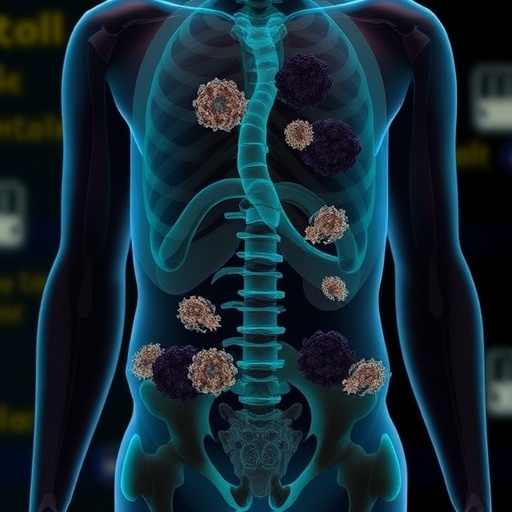
A new Germany-wide research project will examine how invasive fungal infections are diagnosed and treated and whether a coordinated care model could improve outcomes for some of the country’s most vulnerable patients. The project, titled “Versorgung invasiver Mykosen in Deutschland – Analyse der Ist-Situation und des Bedarfs zur Implementierung eines neuen Versorgungskonzeptes,” or MYK-IMPAKT, has received more than €1 million from the Innovation Committee of Germany’s Federal Joint Committee, known as the Gemeinsamer Bundesausschuss, or G-BA.
Led by Jannik Stemler of Clinic I of Internal Medicine at University Hospital Cologne and Oliver A. Cornely, director of the Institute for Translational Research at the CECAD Cluster of Excellence at the University of Cologne, the project will run for 30 months. Ingo Meyer, head of the PMV research group at University Hospital Cologne, is also participating. The researchers aim to produce the first detailed nationwide analysis of how invasive mycoses are managed across Germany and to use those findings to design a structured model of care.
Invasive fungal infections are uncommon compared with many bacterial or viral diseases, but their consequences can be severe. They occur most often when the immune system is profoundly weakened, including in patients undergoing organ transplantation, intensive cancer treatment or prolonged intensive care. The infections can spread from an initial site into the bloodstream or other organs, causing systemic disease. Aspergillus, Candida and Mucorales species are among the most important pathogens, although the precise clinical picture depends on the organism, the patient’s immune status and the organs affected.
The medical challenge is intensified by the speed at which these infections can progress and by the difficulty of confirming a diagnosis. Symptoms may be nonspecific, while conventional cultures can be slow or insensitive. Clinicians may need to combine imaging, fungal biomarkers, molecular tests, pathology and microbiological analysis before reaching a sufficiently reliable diagnosis. At the same time, antifungal therapy often has to begin before all evidence is available. Treatment choices depend on the suspected species, resistance patterns, organ function, drug interactions and whether surgery or other source-control procedures are required.
“ In clinical practice, we see every day just how difficult it can be to treat patients with invasive fungal infections,” Stemler said. Through MYK-IMPAKT, the investigators will assess where delays, fragmented responsibilities or unequal access to specialist expertise may affect care. The study will examine disease prevalence, morbidity and mortality, as well as diagnostic and treatment pathways. It will also assess how patients move between inpatient and outpatient services, offering a broader view than studies limited to individual hospitals or specialist centers.
To build this picture, the researchers will analyse extensive routine data from statutory health insurance providers, including BARMER, DAK-Gesundheit and the Research Data Centre for Health. The combined datasets may represent more than 74 million insured people. Approximately 8,000 patients with invasive fungal infections are expected to be analysed each year, allowing the team to investigate patterns that would be difficult to detect in conventional clinical trials. Such data can reveal hospital admissions, treatment sequences, transfers, readmissions, mortality and the use of healthcare services over time.
Routine healthcare data also present important methodological challenges. Invasive mycoses are identified through administrative diagnostic and billing codes that may not capture the full clinical complexity of an infection. The researchers will therefore need to interpret coded diagnoses alongside treatment and service-use patterns, while accounting for differences in hospital documentation and patient risk. Even with these limitations, large-scale longitudinal datasets can show how care varies between regions and healthcare settings and where outcomes may be associated with delays or gaps in specialist management.
The second phase of MYK-IMPAKT will use the results of the healthcare analysis to develop a new care model with doctors, patients and other stakeholders. The proposed approach could help coordinate diagnostic expertise, antifungal treatment, surgery, radiology, microbiology, pathology and follow-up care. Its design will be guided by the so-called Quadruple Aim: better patient outcomes, improved quality of care, more efficient use of resources and reduced workload for healthcare professionals. Rather than imposing a single treatment protocol, the model is expected to clarify when and how specialist advice should be requested and how complex cases can be managed across institutions.
The project builds on the experience of the European Excellence Center for Invasive Fungal Infections at University Hospital Cologne, which has been recognized by the European Confederation of Medical Mycology. Between August 2021 and July 2025, the center’s ECMM Expert Council received 543 national and international requests for advice, mainly involving severe infections caused by Aspergillus, Candida or Mucorales. In response to increasing demand, the center established a multidisciplinary Mycosis Board in 2024, bringing together specialists in infectious diseases, radiology, microbiology, surgery and pathology to discuss difficult cases. MYK-IMPAKT will, for the first time, systematically incorporate insights from these consultations into the design of a nationwide healthcare model. The project is funded under G-BA grant reference number 01VSF26040.
References: Federal Joint Committee Innovation Committee, grant reference number 01VSF26040; University Hospital Cologne; European Confederation of Medical Mycology.
Cite Scienmag News
Ophelia Keating. (August 1, 2026). Funding Targets Better Treatments for Invasive Fungal Infections. Scienmag. https://scienmag.com/funding-targets-better-treatments-for-invasive-fungal-infections/
Ophelia Keating. "Funding Targets Better Treatments for Invasive Fungal Infections." Scienmag, 1 August 2026, https://scienmag.com/funding-targets-better-treatments-for-invasive-fungal-infections/. Accessed 3 September 2026.
Ophelia Keating. "Funding Targets Better Treatments for Invasive Fungal Infections." Scienmag. August 1, 2026. https://scienmag.com/funding-targets-better-treatments-for-invasive-fungal-infections/


