


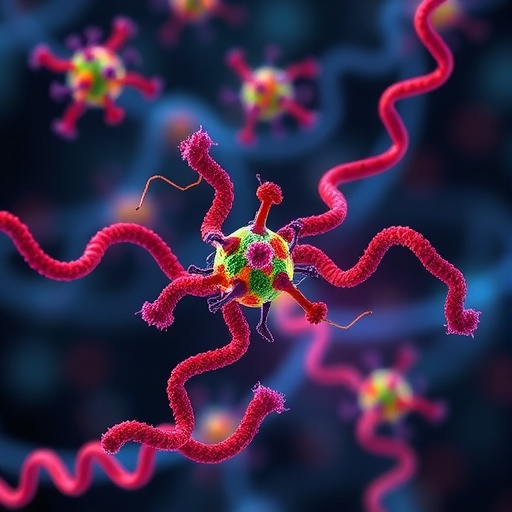
Gene regulation is often portrayed as the work of stable molecular machines: large complexes assembled from precisely arranged parts, operating like miniature factories inside the cell. A new Perspective in Nature Reviews Molecular Cell Biology argues that this picture is incomplete. According to the authors, many of the complexes that control gene expression are not permanent structures at all, but rapidly changing assemblies whose components associate, separate and are replaced over time. Their biological activity may depend less on how tightly molecules bind at equilibrium than on how quickly they arrive, react, rearrange and depart.
This shift in perspective is emerging from the combination of structural biology with single-molecule and live-cell imaging. Cryo-electron microscopy and other structural methods can reveal molecular machines at remarkable resolution, showing where proteins and RNA are positioned within a complex. Yet these images are usually snapshots of selected states. Imaging individual molecules in real time reveals a more fluid environment in which complexes can exist as ensembles of short-lived intermediates. The authors propose that understanding gene regulation therefore requires studying not only molecular shapes, but also the timing of assembly and disassembly.
The principle of dynamic, reversible assembly applies across several major areas of RNA biology. During ribosome biogenesis, for example, ribosomal RNA and proteins are brought together through a succession of processing, folding and quality-control steps. The resulting particles are not simply built in one uninterrupted operation. Factors can bind temporarily, stimulate a particular reaction and then leave, allowing the next stage to proceed. Such transient interactions can help the cell coordinate a long pathway while preventing immature or incorrectly assembled ribosomal particles from advancing.
Spliceosomes provide another example of molecular machinery whose function depends on movement through multiple states. These ribonucleoprotein complexes assemble on precursor messenger RNA, rearrange their RNA and protein components, carry out intron removal and then disassemble so that their parts can be reused. Rather than behaving as a single fixed machine, the spliceosome is a catalytic cycle driven by successive conformational and compositional changes. The timing of these transitions can influence whether a splice site is recognized accurately, how quickly an intron is removed and how the system responds to competing regulatory signals.
Small RNA pathways also rely on carefully timed interactions between RNA molecules and their protein partners. A small RNA may guide a protein complex to a specific messenger RNA or genomic region, but recognition alone does not guarantee a biological outcome. Loading, remodeling, target engagement and release must occur in an appropriate sequence. If a component remains bound too long, the complex may become trapped in an unproductive state; if it dissociates too quickly, targeting may fail. Dynamic exchange can therefore provide both flexibility and a mechanism for quality control.
The same logic extends to transcription factors and the larger assemblies that form around them at regulatory DNA. Many transcription factors contain intrinsically disordered regions, segments that lack a single stable three-dimensional structure under cellular conditions. These regions can make numerous weak and transient contacts with co-regulators, chromatin-associated proteins and other transcription factors. Individually, such interactions may be short-lived, but collectively they can create selective and highly responsive regulatory environments. This multivalent behavior may allow transcription factors to recognize functional partners without relying on one rigid molecular interface.
Intrinsically disordered regions can also help explain how transcriptional specificity emerges in the crowded nucleus. A regulatory protein must locate the correct genomic sites and recruit appropriate cofactors while avoiding inappropriate interactions elsewhere. Networks of weak contacts can tune this selectivity through concentration, chemical modification, local crowding and the duration of molecular encounters. In some contexts, these interactions may promote transient condensate-like assemblies enriched in transcriptional regulators. The authors emphasize that such assemblies should be understood through their exchange rates and functional consequences rather than treated automatically as stable organelles.
A central message of the Perspective is that kinetic control can be more informative than equilibrium affinity. Two molecules may have similar binding strengths but behave very differently if one association is rapid and reversible while the other is slow and persistent. Rates of binding, catalytic conversion, conformational change and dissociation determine how long a complex remains in a particular state and how efficiently it progresses through a pathway. These kinetic parameters can establish checkpoints, filter incorrect substrates and coordinate reactions that occur on different timescales.
This framework has implications for disease as well as basic biology. Mutations that alter an interaction surface may not simply weaken or strengthen binding; they may change the lifetime of a complex, the order of assembly or the probability of reaching a productive state. Changes in intrinsically disordered regions, RNA-binding proteins or regulatory cofactors could therefore disrupt gene expression by reshaping molecular timing. The resulting defects may contribute to disorders associated with abnormal RNA processing, ribosome production or transcriptional control. By treating gene-regulatory complexes as dynamic systems, researchers may gain new ways to connect molecular mechanisms with pathology.
The authors ultimately call for time-integrated structure–function studies that unite high-resolution structures with measurements of molecular motion. Future experiments will need to determine how individual components exchange inside living cells, how kinetic parameters are altered by regulatory signals and how transient states contribute to fidelity and adaptability. The emerging view is not that molecular architecture has become irrelevant, but that structure is only one frame in a continuous process. Gene regulation may be best understood as a choreography of reversible interactions, in which cellular decisions arise from when molecules meet, how long they remain together and how rapidly the next state is reached.
Cite Scienmag News
Juliet Wilcox. (July 31, 2026). Molecular Exchange Controls Gene Regulation Complexes, Study Finds. Scienmag. https://scienmag.com/molecular-exchange-controls-gene-regulation-complexes-study-finds/
Juliet Wilcox. "Molecular Exchange Controls Gene Regulation Complexes, Study Finds." Scienmag, 31 July 2026, https://scienmag.com/molecular-exchange-controls-gene-regulation-complexes-study-finds/. Accessed 4 September 2026.
Juliet Wilcox. "Molecular Exchange Controls Gene Regulation Complexes, Study Finds." Scienmag. July 31, 2026. https://scienmag.com/molecular-exchange-controls-gene-regulation-complexes-study-finds/


