

Thursday, July 30, 2026
Science
No Result
View All Result
  • Login
  • HOME
  • SCIENCE NEWS
  • CONTACT US
  • HOME
  • SCIENCE NEWS
  • CONTACT US
No Result
View All Result
Scienmag
No Result
View All Result
Home Science News Biology

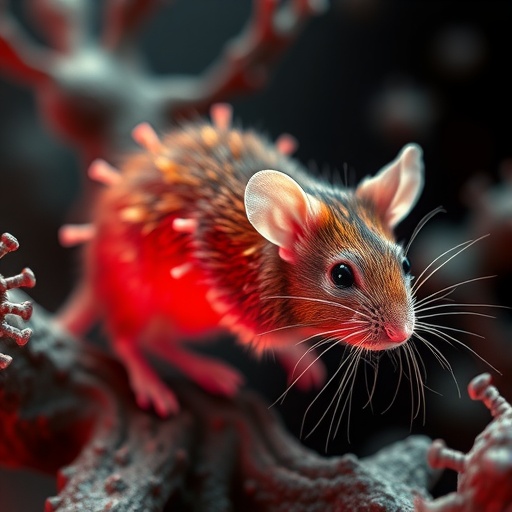
Why the hepatitis E virus cannot infect mice

July 30, 2026
in Biology
Reading Time: 2 mins read
0
Why the hepatitis E virus cannot infect mice

Why the hepatitis E virus cannot infect mice

65
SHARES
587
VIEWS
Share on FacebookShare on Twitter
ADVERTISEMENT

Genetic material is not unpacked

It has long been known that the hepatitis E virus cannot establish an infection in mice, but the reasons were unknown. The virology research team in Bochum therefore systematically examined the replication cycle of the virus in liver cell cultures of mice. “We observed that most processes of viral infection also function in mouse cells,” reports Frericks. Viral particles attached to murine hepatocytes andnew virus particles could also be formed and released from the host cell if viral entry was bypassed. “But functional cell entry is blocked,” the scientist continues. “Even when our findings indicate that the virus particles are imported, the viral genetic material is likely not unpacked in the mouse cells.”

This is important for a variety of reasons: For one, it improves our understanding of the host range of this zoonotic virus and help assess the risk of transmission to other animal species. Secondly, it could pave the way for establishing a mouse model to study the disease. “This would be immensely helpful in testing therapeutic approaches,” says Frericks. “There is still no specific, effective treatment for hepatitis E.”

Hepatitis E

The hepatitis E virus (HEV) is one of the main causes of acute viral hepatitis. Up to about 70,000 people die every year from the disease. After the first documented epidemic outbreak from 1955 to 1956, it took approximately 50 years before researchers began to intensively study the topic. Acute infections normally cure themselves in patients with intact immune systems, but HEV can become chronic in individuals with a reduced or suppressed immune system, as well as organ transplant recipients or persons infected with HIV. The virus is also particularly dangerous to pregnant women. There is no vaccination or specific active antiviral available in Europe.


Journal

Emerging Microbes & Infections

DOI

10.1080/22221751.2026.2706321

Method of Research

Experimental study

Subject of Research

Cells

Article Title

Viral Entry Defines the Hepatitis E Virus Species Barrier in Murine Hepatocytes

Article Publication Date

27-Jul-2026

Media Contact

Meike Driessen

Ruhr-University Bochum

meike.driessen@uv.rub.de

Office: 49-234-32-26952

Journal

Emerging Microbes & Infections

DOI

10.1080/22221751.2026.2706321

Method of Research

Experimental study

Subject of Research

Cells

Article Title

Viral Entry Defines the Hepatitis E Virus Species Barrier in Murine Hepatocytes

Article Publication Date

27-Jul-2026

Share26Tweet16
Previous Post

Sequential reading of a stepwise-shortened peptide immobilized on nanopore

Next Post

RWJBarnabas Health and Rutgers researchers find AI tool helps detect patient deterioration earlier, reducing hospital deaths

Related Posts

Shining a light on constructing blood supply systems for artificial tissues
Biology

Shining a light on constructing blood supply systems for artificial tissues

July 30, 2026
Beyond bunny tourism: the hidden consequences of unregulated feeding of rabbits on Okunoshima Island
Biology

Beyond bunny tourism: the hidden consequences of unregulated feeding of rabbits on Okunoshima Island

July 30, 2026
LorMe: a unified framework for standardized microbiome analysis
Biology

LorMe: a unified framework for standardized microbiome analysis

July 30, 2026
Chicken kidney sponge could be ‘outstanding’ at cleaning up polluted ports
Biology

Chicken kidney sponge could be ‘outstanding’ at cleaning up polluted ports

July 30, 2026
Biofilm clue opens route to anti-infection treatments of the future
Biology

Biofilm clue opens route to anti-infection treatments of the future

July 30, 2026
Monkey friendships with dogs, deer and even pigs offer clues to the evolutionary origins of pet-keeping
Biology

Monkey friendships with dogs, deer and even pigs offer clues to the evolutionary origins of pet-keeping

July 30, 2026
Next Post
RWJBarnabas Health and Rutgers researchers find AI tool helps detect patient deterioration earlier, reducing hospital deaths

RWJBarnabas Health and Rutgers researchers find AI tool helps detect patient deterioration earlier, reducing hospital deaths

  • Mothers who receive childcare support from maternal grandparents show more

    Mothers who receive childcare support from maternal grandparents show more parental warmth, finds NTU Singapore study

    27656 shares
    Share 11059 Tweet 6912
  • University of Seville Breaks 120-Year-Old Mystery, Revises a Key Einstein Concept

    1061 shares
    Share 424 Tweet 265
  • Bee body mass, pathogens and local climate influence heat tolerance

    682 shares
    Share 273 Tweet 171
  • Researchers record first-ever images and data of a shark experiencing a boat strike

    546 shares
    Share 218 Tweet 137
  • Groundbreaking Clinical Trial Reveals Lubiprostone Enhances Kidney Function

    531 shares
    Share 212 Tweet 133
Science

Embark on a thrilling journey of discovery with Scienmag.com—your ultimate source for cutting-edge breakthroughs. Immerse yourself in a world where curiosity knows no limits and tomorrow’s possibilities become today’s reality!

RECENT NEWS

  • Perpendicular switching of polarization in layered ferroelectrics
  • Shining a light on constructing blood supply systems for artificial tissues
  • The world smells different in Parkinson’s disease
  • Beyond bunny tourism: the hidden consequences of unregulated feeding of rabbits on Okunoshima Island

Categories

  • Agriculture
  • Anthropology
  • Archaeology
  • Athmospheric
  • Biology
  • Biotechnology
  • Blog
  • Bussines
  • Cancer
  • Chemistry
  • Climate
  • Earth Science
  • Editorial Policy
  • Marine
  • Mathematics
  • Medicine
  • Pediatry
  • Policy
  • Psychology & Psychiatry
  • Science Education
  • Social Science
  • Space
  • Technology and Engineering

Subscribe to Blog via Email

Success! An email was just sent to confirm your subscription. Please find the email now and click 'Confirm Follow' to start subscribing.

Join 5,147 other subscribers

© 2025 Scienmag - Science Magazine

Welcome Back!

Login to your account below

Forgotten Password?

Retrieve your password

Please enter your username or email address to reset your password.

Log In
No Result
View All Result
  • HOME
  • SCIENCE NEWS
  • CONTACT US

© 2025 Scienmag - Science Magazine
