


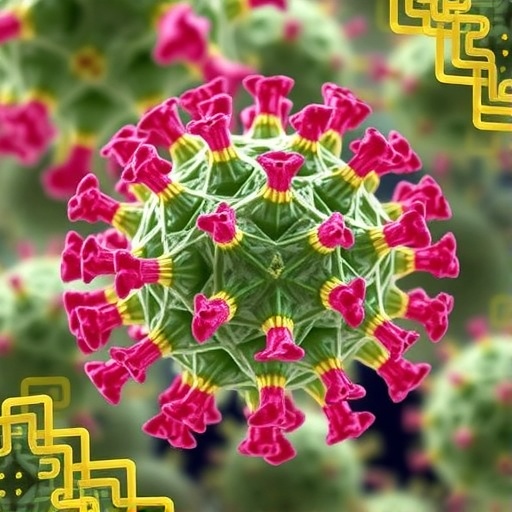

Recognition of foreign molecules inside cells is critical for immunity across all domains of life. Proteins of the STAND NTPase superfamily1,2, including eukaryotic NOD-like receptors, play a central role in this process3,4. In bacteria and archaea, although several STAND families sense phage proteins5,6,7,8,9, their functional diversity remains largely unexplored. Here we conduct a systematic phylogenetic analysis of prokaryotic STAND NTPases and identify at least 90 structurally distinct families associated with antiviral defence. We first show that the uncharacterized Avs7 family recognizes the major capsid protein (MCP) of tailed phages. Three cryogenic electron microscopy structures of Salmonella enterica Avs7 reveal an asymmetric, butterfly-shaped tetramer that assembles stepwise through large, MCP-induced conformational changes, incorporating bacterial elongation factor Tu (EF-Tu) as a structural component that enhances defence. Using genetic screens with a library of 687 phage genes, we further show that 13 additional STAND families sense 13 conserved phage proteins, encompassing most of the core structural and replicative components of tailed phages. These include 2 distinct MCP-sensing families (Avs8 and Avs10) and 11 others (Avs11–21), which recognize the portal, portal adaptor, tail nozzle, head–tail connector, tail terminator, tail tube protein, tail assembly chaperone, tape measure protein, DNA polymerase, helicase/RecA-type ATPase and single-stranded DNA annealing protein, respectively. Together, our findings reveal a mechanism of host-factor repurposing and establish structure-based pattern recognition as a fundamental strategy of bacterial immunity.
Lee, H., Luengo-Woods, S., Zhang, J. et al. Diverse bacterial pattern recognition receptors sense the core phage proteome.
Nature (2026). https://doi.org/10.1038/s41586-026-10852-6
https://doi.org/10.1038/s41586-026-10852-6
Cite Scienmag News
Kristina Jarvis. (July 30, 2026). Diverse bacterial pattern recognition receptors sense the core phage proteome. Scienmag. https://scienmag.com/diverse-bacterial-pattern-recognition-receptors-sense-the-core-phage-proteome/
Kristina Jarvis. "Diverse bacterial pattern recognition receptors sense the core phage proteome." Scienmag, 30 July 2026, https://scienmag.com/diverse-bacterial-pattern-recognition-receptors-sense-the-core-phage-proteome/. Accessed 4 September 2026.
Kristina Jarvis. "Diverse bacterial pattern recognition receptors sense the core phage proteome." Scienmag. July 30, 2026. https://scienmag.com/diverse-bacterial-pattern-recognition-receptors-sense-the-core-phage-proteome/

