

Tuesday, July 28, 2026
Science
No Result
View All Result
  • Login
  • HOME
  • SCIENCE NEWS
  • CONTACT US
  • HOME
  • SCIENCE NEWS
  • CONTACT US
No Result
View All Result
Scienmag
No Result
View All Result
Home Science News Medicine

Molecular Profiling and Rare Cancer Treatment Access Expand across Europe

July 28, 2026
in Medicine
Reading Time: 2 mins read
0
Molecular Profiling and Rare Cancer Treatment Access Expand across Europe

Molecular Profiling and Rare Cancer Treatment Access Expand across Europe

65
SHARES
587
VIEWS
Share on FacebookShare on Twitter
ADVERTISEMENT

A new European study reports how molecular profiling is reshaping access to therapies for rare cancers—conditions where the number of patients is small, the evidence base is fragmented, and treatment options often hinge on matching the right drug to the right tumor biology. Researchers describe an approach designed to shorten the time between diagnosis and actionable molecular insight, turning tumor genomics into a practical gateway for clinical care.

The work centers on comprehensive profiling of rare cancers, capturing alterations across key genomic and pathway-level features. By identifying actionable targets—such as mutations, gene fusions, and dysregulated signaling patterns—the study aims to map patients to existing treatments, including targeted therapies and, in some contexts, precision-enabled trial options.

A major challenge in rare disease oncology is that many molecularly defined subgroups contain only a handful of individuals. This makes conventional “one-size-fits-all” trials difficult to run. The study therefore emphasizes a systems perspective: molecular data must be delivered in a way that clinicians and networks can interpret, prioritize, and use for treatment decisions.

Operational details are critical. The researchers outline how harmonized workflows can reduce variation between participating centers, standardize sample handling, and improve the reliability of sequencing-derived findings. Such consistency is especially important when results determine eligibility for specific therapies or investigational protocols.

Beyond identifying targets, the study evaluates what happens after profiling: how results are translated into access pathways. That includes integrating molecular outputs with clinical eligibility criteria, coordinating referrals, and ensuring that treatment recommendations are communicated in time to affect care.

The authors argue that equitable access requires more than technology. It demands governance, shared protocols, and transparent linking between molecular testing and therapeutic availability across Europe. Without these links, high-resolution profiling can remain underused.

Technically, the profiling strategy leverages modern sequencing and bioinformatic interpretation to classify alterations according to their potential clinical relevance. The study highlights how prioritization frameworks can distinguish between biomarkers with established therapeutic links and those still emerging in clinical evidence.

Overall, the findings suggest that when molecular profiling is operationalized—through standardized analytics, rapid reporting, and coordinated treatment access—rare cancer patients may benefit from more timely, evidence-informed precision choices. The study positions molecular diagnostics as a “bridge” between tumor genomics and real-world oncology delivery.

The results appear in Nature Communications and are associated with DOI: 10.1038/s41467-026-75776-1, underscoring Europe’s growing focus on scalable precision medicine for low-incidence malignancies.

Subject of Research: Molecular profiling and access to treatment for rare cancers in Europe

Article Title: Molecular profiling and access to treatment for rare cancers in Europe

Article References: Morfouace, M., Hoogstoel, F., Oliveira, J. et al. Molecular profiling and access to treatment for rare cancers in Europe. Nat Commun (2026). https://doi.org/10.1038/s41467-026-75776-1

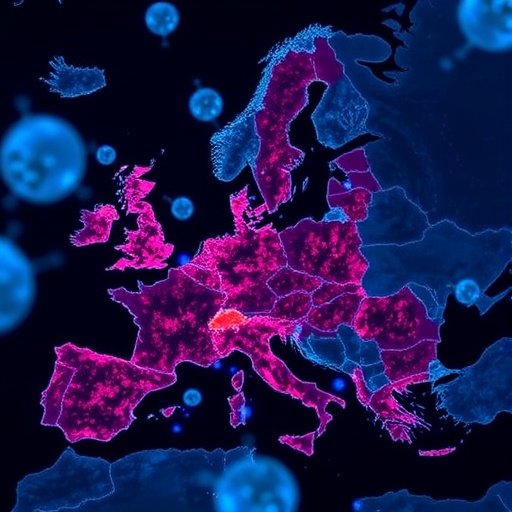
Image Credits: AI Generated

DOI: 10.1038/s41467-026-75776-1

Tags: actionable genetic alterationsgenomic data interpretation for cliniciansgenomic sequencing in oncologyharmonized diagnostic workflowsimproving treatment access for rare cancersmolecular profiling in rare cancersmolecular tumor profiling challengespersonalized cancer treatment approachesprecision medicine in Europerare cancer clinical trialstargeted therapy for rare tumorstumor genomics and pathway analysis
Share26Tweet16
Previous Post

How Accurate Must Newborn Point-of-Care Glucose Tests Be, and Why

Next Post

How the body’s natural recycling system may reduce inflammation

Related Posts

Standardized referral process boosts early intervention enrollment for opioid-exposed infants
Medicine

Standardized referral process boosts early intervention enrollment for opioid-exposed infants

July 28, 2026
Taiwan Study Uses Cluster Analysis to Profile Elderly Emergency Patients
Medicine

Taiwan Study Uses Cluster Analysis to Profile Elderly Emergency Patients

July 28, 2026
Hepatitis Day 2026: Europe’s progress stalls as prevention gaps block targets
Medicine

Hepatitis Day 2026: Europe’s progress stalls as prevention gaps block targets

July 28, 2026
Delayed Umbilical Cord Clamping Duration Linked to Phototherapy Days in Preterm Infants
Medicine

Delayed Umbilical Cord Clamping Duration Linked to Phototherapy Days in Preterm Infants

July 28, 2026
3D-Printable Materials Heal Bodies, Enable Better Robots, Recover Critical Minerals
Medicine

3D-Printable Materials Heal Bodies, Enable Better Robots, Recover Critical Minerals

July 28, 2026
Brown Bullhead Catfish Cancer Reveals Novel Transmissible Melanoma
Medicine

Brown Bullhead Catfish Cancer Reveals Novel Transmissible Melanoma

July 28, 2026
Next Post
How the body’s natural recycling system may reduce inflammation

How the body’s natural recycling system may reduce inflammation

  • Mothers who receive childcare support from maternal grandparents show more

    Mothers who receive childcare support from maternal grandparents show more parental warmth, finds NTU Singapore study

    27656 shares
    Share 11059 Tweet 6912
  • University of Seville Breaks 120-Year-Old Mystery, Revises a Key Einstein Concept

    1061 shares
    Share 424 Tweet 265
  • Bee body mass, pathogens and local climate influence heat tolerance

    682 shares
    Share 273 Tweet 171
  • Researchers record first-ever images and data of a shark experiencing a boat strike

    546 shares
    Share 218 Tweet 137
  • Groundbreaking Clinical Trial Reveals Lubiprostone Enhances Kidney Function

    531 shares
    Share 212 Tweet 133
Science

Embark on a thrilling journey of discovery with Scienmag.com—your ultimate source for cutting-edge breakthroughs. Immerse yourself in a world where curiosity knows no limits and tomorrow’s possibilities become today’s reality!

RECENT NEWS

  • Digital Health Tools Convert Screen Time into Active Time for Childhood Obesity
  • Standardized referral process boosts early intervention enrollment for opioid-exposed infants
  • User-Centered Framework Enables Self-Sufficient Zero-Carbon Energy in High Altitudes
  • Taiwan Study Uses Cluster Analysis to Profile Elderly Emergency Patients

Categories

  • Agriculture
  • Anthropology
  • Archaeology
  • Athmospheric
  • Biology
  • Biotechnology
  • Blog
  • Bussines
  • Cancer
  • Chemistry
  • Climate
  • Earth Science
  • Editorial Policy
  • Marine
  • Mathematics
  • Medicine
  • Pediatry
  • Policy
  • Psychology & Psychiatry
  • Science Education
  • Social Science
  • Space
  • Technology and Engineering

Subscribe to Blog via Email

Enter your email address to subscribe to this blog and receive notifications of new posts by email.

Join 5,146 other subscribers

© 2025 Scienmag - Science Magazine

Welcome Back!

Login to your account below

Forgotten Password?

Retrieve your password

Please enter your username or email address to reset your password.

Log In
No Result
View All Result
  • HOME
  • SCIENCE NEWS
  • CONTACT US

© 2025 Scienmag - Science Magazine

Discover more from Science

Subscribe now to keep reading and get access to the full archive.

Continue reading
