

Tuesday, July 28, 2026
Science
No Result
View All Result
  • Login
  • HOME
  • SCIENCE NEWS
  • CONTACT US
  • HOME
  • SCIENCE NEWS
  • CONTACT US
No Result
View All Result
Scienmag
No Result
View All Result
Home Science News Chemistry

Self-Adaptive Cu–Co Catalyst Rebuilds Itself to Turn Nitrate into Green Ammonia

July 28, 2026
in Chemistry
Reading Time: 2 mins read
0
Self-Adaptive Cu–Co Catalyst Rebuilds Itself to Turn Nitrate into Green Ammonia

Self-Adaptive Cu–Co Catalyst Rebuilds Itself to Turn Nitrate into Green Ammonia

65
SHARES
587
VIEWS
Share on FacebookShare on Twitter
ADVERTISEMENT

Subject of Research: Not applicable
Article Title: Adaptive Cu Reconstruction in Heterostructure Drives High-Rate Nitrate-to-Ammonia Conversion
News Publication Date: 13-Jul-2026
Web References: http://dx.doi.org/10.1002/advs.76573
References:
Image Credits: Credit: Takeshi Fujita from Kochi University of Technology

Keywords

Adaptive reconstruction; nitrate-to-ammonia; electrochemical reduction; Cu–Co heterostructure; hydroxyl-rich CuO; hydrogen spillover; Faradaic efficiency; green ammonia

Converting polluted water into a valuable feedstock is getting a major boost. Nitrate contamination—from farming runoff, industrial discharges, and municipal wastewater—has become a persistent environmental threat. At the same time, ammonia is emerging as a cornerstone chemical for low-carbon industry and carbon-free energy storage. Turning nitrate into ammonia would combine cleanup with production in a single electrochemical step.

The conventional path to ammonia relies on Haber–Bosch synthesis, which demands high temperatures and pressures and generates substantial carbon dioxide emissions. Researchers have therefore been pursuing electrochemical nitrate reduction (NO₃RR) as an ambient alternative powered by renewable electricity. Yet a stubborn bottleneck remains: nitrate reduction requires many proton- and electron-transfer steps, so achieving both high activity and strong selectivity has proven difficult.

Now, a team from Kochi University of Technology and Nagoya University reports a catalyst design that takes a different route. Instead of treating the catalyst as a fixed material, they allow it to “evolve” during operation, reconstructing into the surface state that actually performs best under working conditions.

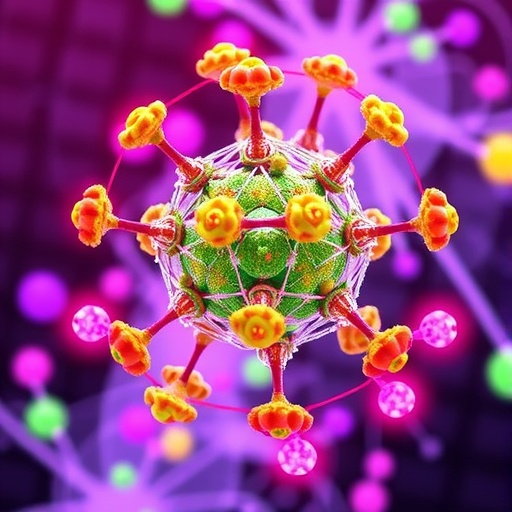
Their heterostructured catalyst pairs crystalline copper oxide with amorphous cobalt oxide, built through a room-temperature, atmospheric-pressure synthesis. When tested across compositions, the Cu–Co system delivered standout ammonia production performance, signaling that the interface is more than a passive boundary.

To reveal what happens during electrolysis, the team combined transmission electron microscopy, X-ray photoelectron spectroscopy, Raman and infrared spectroscopy, electron paramagnetic resonance, and density functional theory. The key discovery: metallic copper formed early does not remain stable. It undergoes spontaneous re-oxidation and hydroxylation, generating hydroxyl-rich copper oxide (Cu–OH) that strongly attracts nitrate ions and stabilizes crucial reaction intermediates.

In this reconstructed state, the division of labor becomes clear. Cu–OH sites handle nitrate adsorption and deoxygenation, while amorphous cobalt oxide accelerates water dissociation to create reactive hydrogen species. Hydrogen then migrates across the Cu–Co interface via hydrogen spillover, boosting hydrogenation of nitrogen-containing intermediates and steering the pathway toward ammonia.

The payoff is striking. The optimized catalyst reaches an ammonia production rate of 54.68 mg h⁻¹ mgcat⁻¹ with a Faradaic efficiency of 95.4% at an applied potential of −0.2 V vs. RHE. It also operates stably for more than 60 hours in a flow cell and reduces nitrate in simulated wastewater from 140 ppm to 7.45 ppm—well below the WHO drinking-water guideline of 50 ppm.

Beyond nitrate remediation, the authors argue that adaptive reconstruction could become a general catalyst strategy for electrochemical technologies ranging from carbon dioxide reduction to water electrolysis and hydrogen production. If catalysts can be engineered to self-optimize in real time, the next generation of “dynamic” electrocatalysts may finally match the ambition of sustainable chemistry.

Tags: ambient electrochemical ammonia synthesiscatalyst reconstruction during electrolysisCu–Co heterostructure catalystenvironmentally sustainable ammonia manufacturinggreen ammonia productionhigh Faradaic efficiency in nitrate reductionhydrogen spillover mechanismhydroxyl-rich CuO catalystnitrate pollution remediationnitrate to ammonia electrochemical conversionrenewable energy-driven nitrate reductionself-adaptive catalyst
Share26Tweet16
Previous Post

Long-Term Care With Family Physicians Reduces Urgent Hospital Admissions, Costs

Next Post

Sylvester Researcher Wins Gabrielle’s Angel Foundation Grant for Neuropathy Study

Related Posts

Advanced Simulations Reveal New Insights Into Proton Transport in Water
Chemistry

Advanced Simulations Reveal New Insights Into Proton Transport in Water

July 28, 2026
Solvent-bridged electrolytes enable high-energy lithium-ion batteries in extreme conditions
Chemistry

Solvent-bridged electrolytes enable high-energy lithium-ion batteries in extreme conditions

July 28, 2026
Ultrafast Discovery of a Photoinduced Hidden State in Metal-Organic Frameworks
Chemistry

Ultrafast Discovery of a Photoinduced Hidden State in Metal-Organic Frameworks

July 28, 2026
Researchers Find Natural Substitute for Artificial Food Dyes
Chemistry

Researchers Find Natural Substitute for Artificial Food Dyes

July 28, 2026
Smart Hydrogel Speeds Wound Healing by Adapting to Tissue Changes
Chemistry

Smart Hydrogel Speeds Wound Healing by Adapting to Tissue Changes

July 27, 2026
University of Tennessee Establishes Governor’s Chair in Nuclear Medicine
Chemistry

University of Tennessee Establishes Governor’s Chair in Nuclear Medicine

July 27, 2026
Next Post
Sylvester Researcher Wins Gabrielle’s Angel Foundation Grant for Neuropathy Study

Sylvester Researcher Wins Gabrielle’s Angel Foundation Grant for Neuropathy Study

  • Mothers who receive childcare support from maternal grandparents show more

    Mothers who receive childcare support from maternal grandparents show more parental warmth, finds NTU Singapore study

    27656 shares
    Share 11059 Tweet 6912
  • University of Seville Breaks 120-Year-Old Mystery, Revises a Key Einstein Concept

    1061 shares
    Share 424 Tweet 265
  • Bee body mass, pathogens and local climate influence heat tolerance

    682 shares
    Share 273 Tweet 171
  • Researchers record first-ever images and data of a shark experiencing a boat strike

    546 shares
    Share 218 Tweet 137
  • Groundbreaking Clinical Trial Reveals Lubiprostone Enhances Kidney Function

    531 shares
    Share 212 Tweet 133
Science

Embark on a thrilling journey of discovery with Scienmag.com—your ultimate source for cutting-edge breakthroughs. Immerse yourself in a world where curiosity knows no limits and tomorrow’s possibilities become today’s reality!

RECENT NEWS

  • Chemical distance model may predict which trace elements plants absorb
  • Study uncovers how blood cancers evade BTK-targeted therapies
  • Advanced Simulations Reveal New Insights Into Proton Transport in Water
  • Primary Care Doctors Compare Tradeoffs Between Salaried Employment and Private Practice

Categories

  • Agriculture
  • Anthropology
  • Archaeology
  • Athmospheric
  • Biology
  • Biotechnology
  • Blog
  • Bussines
  • Cancer
  • Chemistry
  • Climate
  • Earth Science
  • Editorial Policy
  • Marine
  • Mathematics
  • Medicine
  • Pediatry
  • Policy
  • Psychology & Psychiatry
  • Science Education
  • Social Science
  • Space
  • Technology and Engineering

Subscribe to Blog via Email

Enter your email address to subscribe to this blog and receive notifications of new posts by email.

Join 5,146 other subscribers

© 2025 Scienmag - Science Magazine

Welcome Back!

Login to your account below

Forgotten Password?

Retrieve your password

Please enter your username or email address to reset your password.

Log In
No Result
View All Result
  • HOME
  • SCIENCE NEWS
  • CONTACT US

© 2025 Scienmag - Science Magazine

Discover more from Science

Subscribe now to keep reading and get access to the full archive.

Continue reading
