

Monday, July 27, 2026
Science
No Result
View All Result
  • Login
  • HOME
  • SCIENCE NEWS
  • CONTACT US
  • HOME
  • SCIENCE NEWS
  • CONTACT US
No Result
View All Result
Scienmag
No Result
View All Result
Home Science News Cancer

Micropeptides from lncRNAs drive cancer progression and metastasis

July 27, 2026
in Cancer
Reading Time: 2 mins read
0
Micropeptides from lncRNAs drive cancer progression and metastasis

Micropeptides from lncRNAs drive cancer progression and metastasis

65
SHARES
587
VIEWS
Share on FacebookShare on Twitter
ADVERTISEMENT

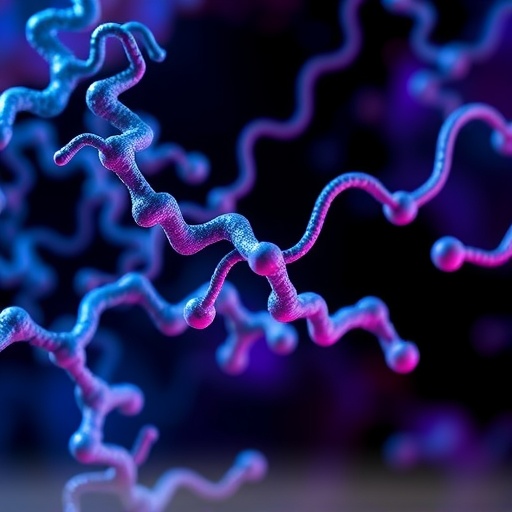
A new study in The British Journal of Cancer reports that long non-coding RNAs (lncRNAs) can carry hidden protein-coding potential, generating micropeptides that may influence how tumors progress and spread. The work focuses on “micropeptides”—tiny, functional peptides produced from short open reading frames embedded within lncRNA transcripts—an area that has increasingly challenged the traditional view that lncRNAs only regulate gene expression without encoding proteins.

Researchers describe a systematic approach to detect “signatures” of micropeptides linked to cancer phenotypes. Rather than treating lncRNAs as purely noncoding, the analysis considers sequence features consistent with translation, as well as biological patterns expected if small peptides are produced and selectively maintained during disease. This includes computational screening for coding-capable regions and integration with cancer-relevant genomic context.

The study emphasizes that micropeptides could help explain why some lncRNAs remain biologically active even when their best-known regulatory roles do not fully account for tumor behavior. By associating micropeptide-derived signals with malignant processes, the findings suggest that cancer progression may partly depend on micropeptide-mediated modulation of cellular pathways.

A central technical theme is distinguishing genuine translation-related signals from spurious noise. The authors use multiple lines of evidence to strengthen candidate micropeptides, leveraging cancer-specific expression patterns and coherence with translation hallmarks. This reduces the risk of overinterpreting random peptide-like motifs that may appear by chance in long transcript sequences.

The results indicate that micropeptide signatures can correlate with tumor progression and metastatic potential. Such signatures may reflect peptides that alter signaling networks, influence stress responses, or affect cell-state transitions associated with invasion. Importantly, the study positions micropeptides as more than molecular curiosities—potentially actionable biomarkers of aggressive cancer biology.

From a methodological perspective, the work highlights the need to re-annotate the noncoding genome with translation in mind. Many lncRNAs may harbor cryptic coding regions that are overlooked in standard pipelines, particularly when peptide lengths fall below conventional detection thresholds.

Overall, the findings support a model in which lncRNA-encoded micropeptides contribute to cancer phenotypes by providing additional layers of control over molecular circuitry. If validated experimentally, the proposed micropeptide signatures could inform future diagnostic strategies and deepen understanding of how metastasis evolves.

Subject of Research: Micropeptides encoded by lncRNAs in cancer progression and metastasis
Article Title: Signatures of micropeptides encoded by lncRNAs in cancer progression and metastasis
Article References: Zok, S., Linial, M. Signatures of micropeptides encoded by lncRNAs in cancer progression and metastasis. Br J Cancer (2026). https://doi.org/10.1038/s41416-026-03556-1
Image Credits: AI Generated
DOI: 10.1038/s41416-026-03556-1

Tags: cancer genome analysis and micropeptidescomputational methods for micropeptide identificationdetection of micropeptides in cancerinnovative approaches to lncRNA researchlncRNA translation signatureslong non-coding RNAs in cancermicropeptides and cancer metastasismicropeptides from lncRNAsmicropeptides influencing cellular pathwaysnoncoding RNA protein-coding potentialrole of small peptides in tumor progressiontumor biology and micropeptides
Share26Tweet16
Previous Post

HK1–LDHA feedback boosts Wnt5a histone lactylation, linking prenatal acetaminophen to male OA

Next Post

Atmospheric Water Harvesting Enables Humidity Control in Medical Devices Worldwide

Related Posts

HK1–LDHA feedback boosts Wnt5a histone lactylation, linking prenatal acetaminophen to male OA
Cancer

HK1–LDHA feedback boosts Wnt5a histone lactylation, linking prenatal acetaminophen to male OA

July 27, 2026
Boosting antitumor immunity by triggering cancer cell pyroptosis
Cancer

Boosting antitumor immunity by triggering cancer cell pyroptosis

July 27, 2026
Self-Sampling Boosts HPV Detection and Increases Cervical Cancer Screening Rates
Cancer

Self-Sampling Boosts HPV Detection and Increases Cervical Cancer Screening Rates

July 27, 2026
KAIST Develops Antibodies With Cellular “Eyes” to Detect Cancer Mutations
Cancer

KAIST Develops Antibodies With Cellular “Eyes” to Detect Cancer Mutations

July 27, 2026
How cells locate their ideal matching partners
Cancer

How cells locate their ideal matching partners

July 27, 2026
APOBEC3 deficiency reshapes macrophage lipid metabolism, boosting anti-tumor immunity
Cancer

APOBEC3 deficiency reshapes macrophage lipid metabolism, boosting anti-tumor immunity

July 27, 2026
Next Post
Atmospheric Water Harvesting Enables Humidity Control in Medical Devices Worldwide

Atmospheric Water Harvesting Enables Humidity Control in Medical Devices Worldwide

  • Mothers who receive childcare support from maternal grandparents show more

    Mothers who receive childcare support from maternal grandparents show more parental warmth, finds NTU Singapore study

    27656 shares
    Share 11059 Tweet 6912
  • University of Seville Breaks 120-Year-Old Mystery, Revises a Key Einstein Concept

    1061 shares
    Share 424 Tweet 265
  • Bee body mass, pathogens and local climate influence heat tolerance

    682 shares
    Share 273 Tweet 171
  • Researchers record first-ever images and data of a shark experiencing a boat strike

    546 shares
    Share 218 Tweet 137
  • Groundbreaking Clinical Trial Reveals Lubiprostone Enhances Kidney Function

    531 shares
    Share 212 Tweet 133
Science

Embark on a thrilling journey of discovery with Scienmag.com—your ultimate source for cutting-edge breakthroughs. Immerse yourself in a world where curiosity knows no limits and tomorrow’s possibilities become today’s reality!

RECENT NEWS

  • Tree Species Diversity Linked to Long-Term Rise in Forest Photosynthesis
  • Nonclassical biosynthetic pathway allows bacteria to synthesize tocopherol
  • Gut microbiome shift links anhedonia and sensation-seeking in prodromal Parkinson’s mice
  • Renewables Ease Energy, Water, and Ecological Strains in Yellow River Basin

Categories

  • Agriculture
  • Anthropology
  • Archaeology
  • Athmospheric
  • Biology
  • Biotechnology
  • Blog
  • Bussines
  • Cancer
  • Chemistry
  • Climate
  • Earth Science
  • Editorial Policy
  • Marine
  • Mathematics
  • Medicine
  • Pediatry
  • Policy
  • Psychology & Psychiatry
  • Science Education
  • Social Science
  • Space
  • Technology and Engineering

Subscribe to Blog via Email

Enter your email address to subscribe to this blog and receive notifications of new posts by email.

Join 5,146 other subscribers

© 2025 Scienmag - Science Magazine

Welcome Back!

Login to your account below

Forgotten Password?

Retrieve your password

Please enter your username or email address to reset your password.

Log In
No Result
View All Result
  • HOME
  • SCIENCE NEWS
  • CONTACT US

© 2025 Scienmag - Science Magazine

Discover more from Science

Subscribe now to keep reading and get access to the full archive.

Continue reading
