

Monday, July 27, 2026
Science
No Result
View All Result
  • Login
  • HOME
  • SCIENCE NEWS
  • CONTACT US
  • HOME
  • SCIENCE NEWS
  • CONTACT US
No Result
View All Result
Scienmag
No Result
View All Result
Home Science News Medicine

Surface Engineering Enables Homotypic Targeting of Extracellular Vesicles

July 27, 2026
in Medicine
Reading Time: 2 mins read
0
Surface Engineering Enables Homotypic Targeting of Extracellular Vesicles

Surface Engineering Enables Homotypic Targeting of Extracellular Vesicles

65
SHARES
587
VIEWS
Share on FacebookShare on Twitter
ADVERTISEMENT

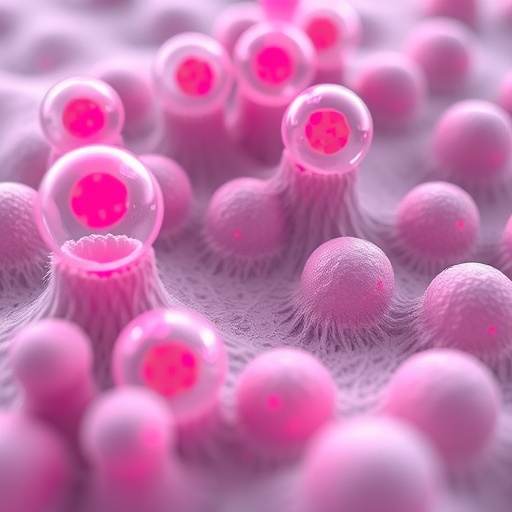
A new study reports a strategy to make extracellular vesicles (EVs) behave less like generic drug carriers and more like precision “mail services” that deliver cargo to their intended cellular neighborhood. Published in Nature Biomedical Engineering, the work describes how engineering the EV surface can dramatically improve what the authors call “super homotypic targeting,” enabling vesicles to preferentially interact with cells of the same origin.

Extracellular vesicles are nanoscale particles released by cells that can transfer proteins, lipids, and nucleic acids. Their natural role in intercellular communication has fueled intense interest in EV-based therapies, particularly because EVs can reduce some limitations of synthetic nanoparticles, such as immunogenicity and poor biodistribution. Yet a persistent challenge remains: directing EVs to the right target cells with high specificity.

The researchers focus on the concept of homotypic targeting, where EVs show a tendency to bind cells that are phenotypically similar to the producing cells. Building on this baseline behavior, they apply surface engineering to tune EV interactions. Instead of relying solely on native surface molecules, the modified vesicles are designed to enhance recognition at the cell membrane level, increasing both uptake efficiency and functional delivery.

Using a combination of physicochemical characterization and cellular assays, the study shows that engineered EVs exhibit stronger binding and internalization compared with unmodified controls. The improved performance appears to stem from enhanced molecular compatibility between the EV surface and target-cell receptors, shifting the targeting balance toward same-cell-type partners.

Importantly, the authors frame their approach as a scalable design principle rather than a one-off modification. By adjusting surface features, EVs can be tuned to exploit biological “matching rules” inherent to cell populations. This could help overcome variability between batches and between donor cell sources—issues that often complicate EV translation.

From a therapeutic perspective, enhanced homotypic targeting could raise the effective dose at the cellular level while potentially reducing off-target exposure. That matters for applications such as oncology, where precision delivery to tumor cells or tumor-associated cell types could improve potency and safety.

Overall, the study suggests that EV biology can be “programmed” through surface engineering to achieve a level of targeting beyond what native vesicles naturally provide. If validated across additional cell types and in vivo models, this concept may accelerate EV platforms toward more reliable, cell-selective therapies.

Wang, HS., Ding, T., Liu, Y. et al. Super homotypic targeting by surface engineering of extracellular vesicles. Nat. Biomed. Eng (2026). https://doi.org/10.1038/s41551-026-01743-2

Subject of Research: Extracellular vesicle (EV) targeting via surface engineering
Article Title: Super homotypic targeting by surface engineering of extracellular vesicles
Article References: Wang, HS., Ding, T., Liu, Y. et al. (2026) Nature Biomedical Engineering. https://doi.org/10.1038/s41551-026-01743-2
Image Credits: AI Generated
DOI: https://doi.org/10.1038/s41551-026-01743-2

Tags: cell-specific EV deliveryenhancing EV uptake efficiencyEV surface modification techniquesEV-based nanomedicineEV-based targeted therapyExtracellular vesicle surface engineeringhomotypic targeting of extracellular vesiclesimproving EV biodistributionintercellular communication via EVsnanoscale vesicle drug deliveryprecision EV "mail services"reducing immunogenicity of EVs
Share26Tweet16
Previous Post

APOBEC3 deficiency reshapes macrophage lipid metabolism, boosting anti-tumor immunity

Next Post

Youth Cut Dietary Emissions as Seniors Drive Rising Overall Greenhouse Gas Growth

Related Posts

Multicenter Large Language Model Predicts Acute Kidney Injury and Explains Risk
Medicine

Multicenter Large Language Model Predicts Acute Kidney Injury and Explains Risk

July 27, 2026
PIN1 boosts YAP1 SUMOylation and blocks ferroptosis through autophagy-driven ACSL4 degradation in cervical cancer
Medicine

PIN1 boosts YAP1 SUMOylation and blocks ferroptosis through autophagy-driven ACSL4 degradation in cervical cancer

July 27, 2026
Trisomy 13 and 18 Patient Outcomes in a Center With Perinatal Palliative Care Program
Medicine

Trisomy 13 and 18 Patient Outcomes in a Center With Perinatal Palliative Care Program

July 27, 2026
Altered heart-brain communication in awake patients with isolated REM sleep behavior disorder
Medicine

Altered heart-brain communication in awake patients with isolated REM sleep behavior disorder

July 27, 2026
Preoperative Model Predicts In-Hospital Major Cardiovascular Events After Hip Fracture Surgery
Medicine

Preoperative Model Predicts In-Hospital Major Cardiovascular Events After Hip Fracture Surgery

July 27, 2026
Recombinant Interleukin-11 Prolonged Therapy Linked to Cardiac Effects in Severe Thrombocytopenia
Medicine

Recombinant Interleukin-11 Prolonged Therapy Linked to Cardiac Effects in Severe Thrombocytopenia

July 27, 2026
Next Post
Youth Cut Dietary Emissions as Seniors Drive Rising Overall Greenhouse Gas Growth

Youth Cut Dietary Emissions as Seniors Drive Rising Overall Greenhouse Gas Growth

  • Mothers who receive childcare support from maternal grandparents show more

    Mothers who receive childcare support from maternal grandparents show more parental warmth, finds NTU Singapore study

    27656 shares
    Share 11059 Tweet 6912
  • University of Seville Breaks 120-Year-Old Mystery, Revises a Key Einstein Concept

    1061 shares
    Share 424 Tweet 265
  • Bee body mass, pathogens and local climate influence heat tolerance

    682 shares
    Share 273 Tweet 171
  • Researchers record first-ever images and data of a shark experiencing a boat strike

    546 shares
    Share 218 Tweet 137
  • Groundbreaking Clinical Trial Reveals Lubiprostone Enhances Kidney Function

    531 shares
    Share 212 Tweet 133
Science

Embark on a thrilling journey of discovery with Scienmag.com—your ultimate source for cutting-edge breakthroughs. Immerse yourself in a world where curiosity knows no limits and tomorrow’s possibilities become today’s reality!

RECENT NEWS

  • Multicenter Large Language Model Predicts Acute Kidney Injury and Explains Risk
  • Emerging Capitalism and Cultural Niche Building in Early Modern Greece
  • Immunogenicity and Safety of BNT162b2 in Juvenile Immune-Mediated Inflammatory Disease Patients
  • PIN1 boosts YAP1 SUMOylation and blocks ferroptosis through autophagy-driven ACSL4 degradation in cervical cancer

Categories

  • Agriculture
  • Anthropology
  • Archaeology
  • Athmospheric
  • Biology
  • Biotechnology
  • Blog
  • Bussines
  • Cancer
  • Chemistry
  • Climate
  • Earth Science
  • Editorial Policy
  • Marine
  • Mathematics
  • Medicine
  • Pediatry
  • Policy
  • Psychology & Psychiatry
  • Science Education
  • Social Science
  • Space
  • Technology and Engineering

Subscribe to Blog via Email

Enter your email address to subscribe to this blog and receive notifications of new posts by email.

Join 5,146 other subscribers

© 2025 Scienmag - Science Magazine

Welcome Back!

Login to your account below

Forgotten Password?

Retrieve your password

Please enter your username or email address to reset your password.

Log In
No Result
View All Result
  • HOME
  • SCIENCE NEWS
  • CONTACT US

© 2025 Scienmag - Science Magazine

Discover more from Science

Subscribe now to keep reading and get access to the full archive.

Continue reading
