

Sunday, July 26, 2026
Science
No Result
View All Result
  • Login
  • HOME
  • SCIENCE NEWS
  • CONTACT US
  • HOME
  • SCIENCE NEWS
  • CONTACT US
No Result
View All Result
Scienmag
No Result
View All Result
Home Science News Medicine

Procedural Memory Replay Happens Independently of the Hippocampus

July 26, 2026
in Medicine
Reading Time: 3 mins read
0
Procedural Memory Replay Happens Independently of the Hippocampus

Procedural Memory Replay Happens Independently of the Hippocampus

65
SHARES
587
VIEWS
Share on FacebookShare on Twitter
ADVERTISEMENT

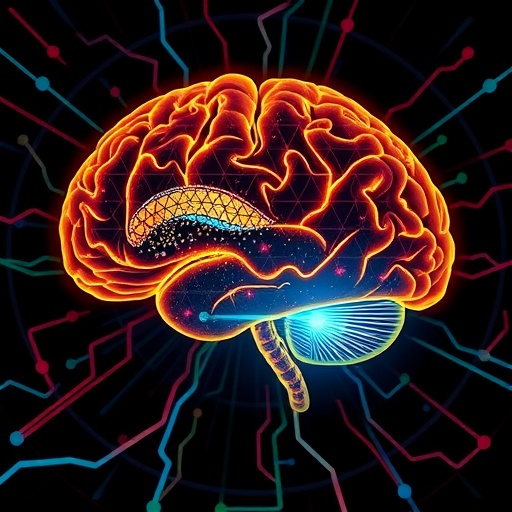
A new study challenges a long-standing assumption about how the brain stores and replays memories. In many learning theories, the hippocampus is treated as a central hub that coordinates “replay”—the rapid, internal reactivation of neural patterns that strengthens memories during offline periods. But results reported in Nature Neuroscience suggest that one key class of knowledge, procedural memory, can be replayed without hippocampal involvement. The findings shift the spotlight toward alternative circuits that may independently preserve skills and habits.

Procedural memories—such as learning a sequence of movements or acquiring a habitual strategy—are typically distinguished from declarative memories, like facts and events. While hippocampal contributions to declarative memory have been intensely studied, the neural requirements for replay of procedural content remained unclear. To test whether hippocampus is necessary, researchers designed experiments that compared learning-related neural activity under conditions that disrupt or remove hippocampal function.

The team focused on neural signals associated with task performance and subsequent replay. They tracked patterns of activity across brain regions known to support motor and habit-related learning, then examined whether similar activation sequences reappeared during rest. If the hippocampus were required, replay should collapse when hippocampal processing was disrupted.

Instead, the study reports that replay dynamics persisted even when hippocampal dependence was eliminated. The internal reactivation sequences showed temporal structure consistent with memory consolidation, indicating that the underlying “neural script” for procedural information remained intact. Importantly, behavioral learning and performance could still be related to replay-related signals, implying that offline reactivation can occur through non-hippocampal mechanisms.

The researchers conclude that procedural memory replay is supported by brain networks distinct from hippocampal circuitry. Rather than acting as a universal replay engine, the hippocampus may specialize in coordinating replay for specific memory types, particularly those involving flexible spatial or episodic representations. For habits and learned actions, other systems—likely involving striatal and cortical loops—may provide the necessary infrastructure.

These results also refine how scientists interpret replay as a general phenomenon. Replay is often discussed as a computational process for reinforcement learning and synaptic optimization, but its implementation may differ across memory domains. If procedural replay can proceed without hippocampal input, then the brain may deploy parallel learning mechanisms depending on what is being learned.

For viral-science audiences, the takeaway is simple: your learned skills may be “rewound” by neural circuits that don’t need the hippocampus at all. That independence could help explain why some habits survive hippocampal damage better than episodic memories do. The work opens new questions about which circuits carry replay for different memory categories and how they interact across sleep, rest, and learning.

In addition to reframing hippocampal necessity, the study highlights experimental strategies for disentangling memory components at the circuit level. Future work will likely map the precise pathways that generate procedural replay and determine how these pathways interact with cortical sensory-motor representations. Understanding that architecture could improve therapies aimed at preserving skills in neurological conditions that affect hippocampal function.

Subject of Research: Procedural memory replay and the role of the hippocampus
Article Title: Replay of procedural memory is independent of the hippocampus.
Article References: Thompson, E.J., Rollik, L.B., Waked, B. et al. Replay of procedural memory is independent of the hippocampus. Nat Neurosci (2026). https://doi.org/10.1038/s41593-026-02362-5
Image Credits: AI Generated
DOI: https://doi.org/10.1038/s41593-026-02362-5
Keywords: procedural memory; hippocampus; neural replay; memory consolidation; circuit mechanisms

Tags: alternative brain regions in procedural memorydifferences between declarative and procedural memoryhippocampal disruption and memory persistencehippocampus role in memory reactivationhippocampus-independent memory consolidationimplications for learning theoriesmechanisms of skill retention without hippocampusneural activity during rest periodsneural basis of habit formationneural circuits for procedural learningoffline replay of motor sequencesprocedural memory replay
Share26Tweet16
Previous Post

Physics Pairing Enables Label-Free 3D Tracking of Lipid Droplet Motility

Next Post

GHP-88310 blocks airborne and contact transmission in ferret measles model

Related Posts

Non-Epitaxial Perovskite Polariton Laser Diode Runs Continuously on Direct Current
Medicine

Non-Epitaxial Perovskite Polariton Laser Diode Runs Continuously on Direct Current

July 26, 2026
Single-Nucleus Spatial Transcriptomics Maps Neoantigen Tumor Cells and T-Cell Colocalization
Medicine

Single-Nucleus Spatial Transcriptomics Maps Neoantigen Tumor Cells and T-Cell Colocalization

July 26, 2026
Quantum biophysical platform enables deterministic satiety control and metabolic homeostasis
Medicine

Quantum biophysical platform enables deterministic satiety control and metabolic homeostasis

July 26, 2026
Brain regions differently control food intake following GIPR agonist or antagonist treatment
Medicine

Brain regions differently control food intake following GIPR agonist or antagonist treatment

July 26, 2026
Inflammatory Biomarkers Distinguish Asymptomatic From Symptomatic Tuberculosis
Medicine

Inflammatory Biomarkers Distinguish Asymptomatic From Symptomatic Tuberculosis

July 26, 2026
Prebiotic sodas pack as much sugar as fiber, study finds
Medicine

Prebiotic sodas pack as much sugar as fiber, study finds

July 26, 2026
Next Post
GHP-88310 blocks airborne and contact transmission in ferret measles model

GHP-88310 blocks airborne and contact transmission in ferret measles model

  • Mothers who receive childcare support from maternal grandparents show more

    Mothers who receive childcare support from maternal grandparents show more parental warmth, finds NTU Singapore study

    27656 shares
    Share 11059 Tweet 6912
  • University of Seville Breaks 120-Year-Old Mystery, Revises a Key Einstein Concept

    1061 shares
    Share 424 Tweet 265
  • Bee body mass, pathogens and local climate influence heat tolerance

    682 shares
    Share 273 Tweet 171
  • Researchers record first-ever images and data of a shark experiencing a boat strike

    546 shares
    Share 218 Tweet 137
  • Groundbreaking Clinical Trial Reveals Lubiprostone Enhances Kidney Function

    531 shares
    Share 212 Tweet 133
Science

Embark on a thrilling journey of discovery with Scienmag.com—your ultimate source for cutting-edge breakthroughs. Immerse yourself in a world where curiosity knows no limits and tomorrow’s possibilities become today’s reality!

RECENT NEWS

  • Could a Robot Tutor Provide Too Much Help?
  • From Cuts and Folds to New Linkages in Science Breakthrough
  • FDA Sodium Targets Show No Clear Impact on Public Health Outcomes
  • Reciprocal cross-border learning uses education to build bridges during turbulence

Categories

  • Agriculture
  • Anthropology
  • Archaeology
  • Athmospheric
  • Biology
  • Biotechnology
  • Blog
  • Bussines
  • Cancer
  • Chemistry
  • Climate
  • Earth Science
  • Editorial Policy
  • Marine
  • Mathematics
  • Medicine
  • Pediatry
  • Policy
  • Psychology & Psychiatry
  • Science Education
  • Social Science
  • Space
  • Technology and Engineering

Subscribe to Blog via Email

Enter your email address to subscribe to this blog and receive notifications of new posts by email.

Join 5,146 other subscribers

© 2025 Scienmag - Science Magazine

Welcome Back!

Login to your account below

Forgotten Password?

Retrieve your password

Please enter your username or email address to reset your password.

Log In
No Result
View All Result
  • HOME
  • SCIENCE NEWS
  • CONTACT US

© 2025 Scienmag - Science Magazine

Discover more from Science

Subscribe now to keep reading and get access to the full archive.

Continue reading
