

Friday, July 17, 2026
Science
No Result
View All Result
  • Login
  • HOME
  • SCIENCE NEWS
  • CONTACT US
  • HOME
  • SCIENCE NEWS
  • CONTACT US
No Result
View All Result
Scienmag
No Result
View All Result
Home Science News Medicine

Repetitive Neuronal Stimulation Reprograms Mature Neurons Into Immature States

July 17, 2026
in Medicine
Reading Time: 2 mins read
0
Repetitive Neuronal Stimulation Reprograms Mature Neurons Into Immature States

Repetitive Neuronal Stimulation Reprograms Mature Neurons Into Immature States

65
SHARES
587
VIEWS
Share on FacebookShare on Twitter
ADVERTISEMENT

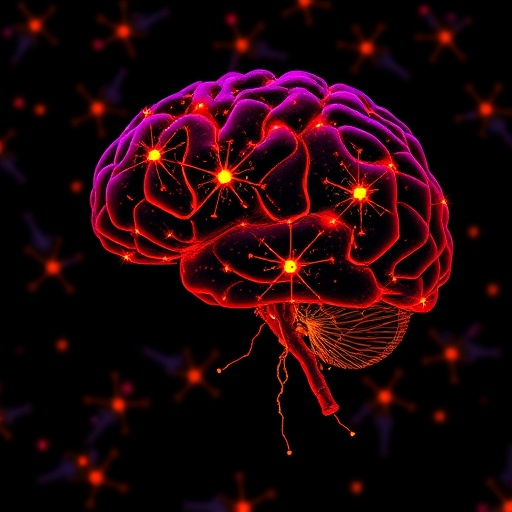
Decades after electroconvulsive therapy (ECT) and repetitive transcranial magnetic stimulation (rTMS) became clinical workhorses for depression and schizophrenia, the cellular logic behind their durable benefits has remained elusive. Now, researchers have developed REPOPS, a patterned neuronal stimulation paradigm in mice intended to reproduce key features of ECT-like activation while allowing mechanistic interrogation.

In behavioral experiments, REPOPS boosted locomotor activity and reduced depression-like behaviors. Importantly, the treatment did not merely produce short-term excitation; it triggered lasting state changes reminiscent of ECT-like outcomes. These functional effects were accompanied by a striking cellular transformation: adult neurons entered a dematuration program, adopting gene expression signatures similar to early postnatal development.

Timing proved critical. Stimulation for three days yielded only transient transcriptional changes, whereas ten-day stimulation produced a stable dematuration state that persisted for more than a month. Genome-wide chromatin accessibility mapping further supported permanence, revealing widespread, durable remodeling of regulatory landscapes that can outlast the stimulation window.

The most surprising clue came from cell-cycle-linked molecular readouts. Although neurons are post-mitotic, REPOPS induced expression patterns characteristic of the G2/M phase in dividing cells, along with mitosis-associated nuclear hallmarks. These included histone phosphorylation, nuclear lamina disruption, and chromatin condensation—signatures consistent with nuclear reprogramming rather than transient activation.

To test causality, the team used genome editing to remove Cyclin B, a central G2/M transition regulator. Without Cyclin B, both nuclear reprogramming and stimulation-driven behavioral changes were reduced, implicating a mechanistic driver that connects “cell-cycle-like” signaling to the redefined neuronal identity.

The study then addressed how reprogramming altered computation. Using calcium imaging in behaving animals, the researchers observed a non-binary effect: REPOPS shifted information encoding in a patterned way. Spatial coding was suppressed, while speed-related coding was enhanced, and this altered coding strategy lasted for over two weeks.

Together, molecular, nuclear, epigenomic, and systems-level results support a model in which ECT-like stimulation creates an “intermediate state” of heightened plasticity. In this framework, neurons reside neither in a fully mature nor fully immature attractor state. Instead, the precise configuration may depend on stimulation strength, frequency, and context—factors that could be beneficial in depression but harmful under conditions such as epilepsy or neurodegeneration.

Finally, clinical relevance was suggested by reanalyzing postmortem RNA-seq datasets from mood-disorder patients. Dentate gyrus neurons from ECT-treated individuals showed an immature-like expression pattern similar to that observed in stimulated animals, strengthening the case that dematuration-like processes may occur in humans.

Subject of Research: Animals
Article Title: Repetitive Neuronal Activation Regulates Cellular Maturation State via Nuclear Reprogramming
News Publication Date: 17-Jul-2026
Web References: http://dx.doi.org/10.1038/s41467-026-74202-w
References: Nature Communications (DOI: 10.1038/s41467-026-74202-w)
Image Credits: Tomoyuki Murano

Keywords: electroconvulsive therapy; rTMS; neuronal stimulation; nuclear reprogramming; dematuration; chromatin accessibility; cell-cycle genes; Cyclin B; neuronal plasticity

Tags: chromatin remodeling in neuronsdepression and schizophrenia treatmentelectroconvulsive therapy mechanismsgene expression changes in neuronslasting neuronal plasticityneural circuit modulation through patterned stimulationneural reprogramming in adult brainsneuronal cell cycle reactivationneuronal dematurationneuroplasticity and cellular transformationRepetitive neuronal stimulationtranscranial magnetic stimulation effects
Share26Tweet16
Previous Post

How a Salt Surge Could Reshape Microbial Ecosystems

Next Post

Extracellular Matrix Stiffness Guides Region-Specific Lung Epithelial Differentiation in Organoids

Related Posts

ASB2 reduces liver fat accumulation, boosting ILC1 balance and anti-tumor immunity
Medicine

ASB2 reduces liver fat accumulation, boosting ILC1 balance and anti-tumor immunity

July 17, 2026
Extracellular Matrix Stiffness Guides Region-Specific Lung Epithelial Differentiation in Organoids
Medicine

Extracellular Matrix Stiffness Guides Region-Specific Lung Epithelial Differentiation in Organoids

July 17, 2026
Subjective Well-Being Mediates Link Between Caregiver Ability and Postoperative Resilience
Medicine

Subjective Well-Being Mediates Link Between Caregiver Ability and Postoperative Resilience

July 17, 2026
Japan Study Explores Community Supporters’ Experiences with Team Orange Dementia Program
Medicine

Japan Study Explores Community Supporters’ Experiences with Team Orange Dementia Program

July 17, 2026
COVID-19 Booster Strategies Deliver Long-Lasting Immunity
Medicine

COVID-19 Booster Strategies Deliver Long-Lasting Immunity

July 17, 2026
Body Detects Temperature Shifts: How Warm and Cool Signals Are Sensed
Medicine

Body Detects Temperature Shifts: How Warm and Cool Signals Are Sensed

July 17, 2026
Next Post
Extracellular Matrix Stiffness Guides Region-Specific Lung Epithelial Differentiation in Organoids

Extracellular Matrix Stiffness Guides Region-Specific Lung Epithelial Differentiation in Organoids

  • Mothers who receive childcare support from maternal grandparents show more

    Mothers who receive childcare support from maternal grandparents show more parental warmth, finds NTU Singapore study

    27656 shares
    Share 11059 Tweet 6912
  • University of Seville Breaks 120-Year-Old Mystery, Revises a Key Einstein Concept

    1061 shares
    Share 424 Tweet 265
  • Bee body mass, pathogens and local climate influence heat tolerance

    682 shares
    Share 273 Tweet 171
  • Researchers record first-ever images and data of a shark experiencing a boat strike

    546 shares
    Share 218 Tweet 137
  • Groundbreaking Clinical Trial Reveals Lubiprostone Enhances Kidney Function

    531 shares
    Share 212 Tweet 133
Science

Embark on a thrilling journey of discovery with Scienmag.com—your ultimate source for cutting-edge breakthroughs. Immerse yourself in a world where curiosity knows no limits and tomorrow’s possibilities become today’s reality!

RECENT NEWS

  • ASB2 reduces liver fat accumulation, boosting ILC1 balance and anti-tumor immunity
  • Extracellular Matrix Stiffness Guides Region-Specific Lung Epithelial Differentiation in Organoids
  • Repetitive Neuronal Stimulation Reprograms Mature Neurons Into Immature States
  • How a Salt Surge Could Reshape Microbial Ecosystems

Categories

  • Agriculture
  • Anthropology
  • Archaeology
  • Athmospheric
  • Biology
  • Biotechnology
  • Blog
  • Bussines
  • Cancer
  • Chemistry
  • Climate
  • Earth Science
  • Editorial Policy
  • Marine
  • Mathematics
  • Medicine
  • Pediatry
  • Policy
  • Psychology & Psychiatry
  • Science Education
  • Social Science
  • Space
  • Technology and Engineering

Subscribe to Blog via Email

Enter your email address to subscribe to this blog and receive notifications of new posts by email.

Join 5,146 other subscribers

© 2025 Scienmag - Science Magazine

Welcome Back!

Login to your account below

Forgotten Password?

Retrieve your password

Please enter your username or email address to reset your password.

Log In
No Result
View All Result
  • HOME
  • SCIENCE NEWS
  • CONTACT US

© 2025 Scienmag - Science Magazine

Discover more from Science

Subscribe now to keep reading and get access to the full archive.

Continue reading
