

Thursday, September 3, 2026
Science
No Result
View All Result
  • Login
  • HOME
  • SCIENCE NEWS
  • CONTACT US
  • HOME
  • SCIENCE NEWS
  • CONTACT US
No Result
View All Result
Scienmag
No Result
View All Result
Home Science News Medicine

Body Detects Temperature Shifts: How Warm and Cool Signals Are Sensed

July 17, 2026
in Medicine
Cassandra Pierce
By Cassandra Pierce Scienmag Editorial Profile - Systems Neuroscience
Reading Time: 2 mins read
0
Body Detects Temperature Shifts: How Warm and Cool Signals Are Sensed

Body Detects Temperature Shifts: How Warm and Cool Signals Are Sensed

65
SHARES
587
VIEWS
Share on FacebookShare on Twitter
ADVERTISEMENT

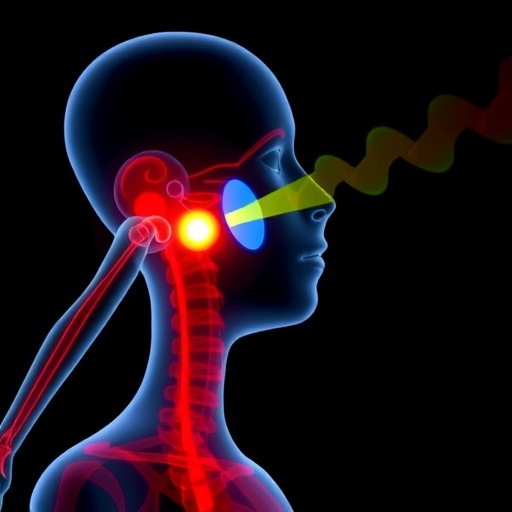
A new study is upending a long-held idea about how the nervous system reads temperature. Researchers at the University of Queensland report that most skin thermoreceptor cells do not specialize exclusively in either cooling or warming. Instead, the same thermoreceptors can carry information about both sensations, suggesting a more flexible “population coding” strategy than previously assumed.

Thermoreceptors are the body’s front-line detectors, continuously sampling conditions at the skin and transmitting signals to the brain. For years, textbooks have described separate pathways for sensing cold versus warmth, implying that distinct sets of nerve cells should respond to each temperature range.

To test this assumption, the team used advanced imaging methods in mouse models to monitor the activity of thousands of thermoreceptor cells at once. Rather than focusing on extreme or painful stimuli, the researchers examined everyday, non-noxious temperature changes—such as shifting into cold rooms or encountering warm bathwater. This approach aimed to capture how thermoreceptors behave in real-life environments.

The results showed that cool and warm information emerges from overlapping neural responses. As temperatures drop, thermoreceptor activity increases; as temperatures rise, overall signaling decreases. Rather than acting like two independent sensors, the cell populations appear to encode temperature through shifts in collective firing patterns and activity levels.

This revised understanding could have important implications for disorders in which thermal sensation is disrupted. Conditions such as spinal cord injury, multiple sclerosis, diabetes, and peripheral neuropathy can impair the body’s thermal sensors, making it harder to respond appropriately to environmental changes and increasing risk during temperature extremes.

Ageing is another major concern. With more frequent and intense heat waves, older adults may experience worsening temperature regulation, potentially tied to degeneration or altered function in thermoreceptor circuits. The study suggests that thermoreceptor dysfunction might contribute to these vulnerabilities.

The authors also propose that impaired thermoreceptor signaling could serve as an early indicator of broader nervous system decline—analogous to how hearing loss has been linked to cognitive deterioration in some populations. Their goal is to clarify which neural pathways should be targeted by future therapies.

The research was published in Neuron under the title “Population encoding of cool and warm by thermoreceptors.” If therapies aim at the wrong neuron types, the new findings imply they may fail to restore normal temperature perception—making this work a potential turning point for next-generation interventions in thermal dysfunction.

Subject of Research: Animals
Article Title: Population encoding of cool and warm by thermoreceptors
News Publication Date: 16-Jul-2026
Web References: https://doi.org/10.1016/j.neuron.2026.06.021
References: 10.1016/j.neuron.2026.06.021
Image Credits: Dr Phill Bokiniec, The University of Queensland.

Article Title: Body Detects Temperature Shifts: How Warm and Cool Signals Are Sensed

Article References: Original research article

Image Credits: AI Generated

DOI: Not provided

Keywords: thermoreceptors, temperature sensing, neuroscience, skin nerves, population coding, Neuron, homeostasis, thermal dysfunction, ageing, thermal neuropathy

Cite Scienmag News

Cassandra Pierce. (July 17, 2026). Body Detects Temperature Shifts: How Warm and Cool Signals Are Sensed. Scienmag. https://scienmag.com/body-detects-temperature-shifts-how-warm-and-cool-signals-are-sensed/

Cassandra Pierce. "Body Detects Temperature Shifts: How Warm and Cool Signals Are Sensed." Scienmag, 17 July 2026, https://scienmag.com/body-detects-temperature-shifts-how-warm-and-cool-signals-are-sensed/. Accessed 3 September 2026.

Cassandra Pierce. "Body Detects Temperature Shifts: How Warm and Cool Signals Are Sensed." Scienmag. July 17, 2026. https://scienmag.com/body-detects-temperature-shifts-how-warm-and-cool-signals-are-sensed/


Tags: advanced imaging of thermoreceptor activityfront-line thermoreceptor functionsmouse models in sensory researchneural encoding of temperature signalsneural response to non-noxious temperature changesoverlapping neural pathways for warmth and coldpopulation coding in temperature sensationrevising traditional temperature sensing theoriessensory processing in the nervous systemskin thermoreceptors in sensory detectiontemperature perception mechanismsThermoreceptor cell flexibility
Share26Tweet16
Previous Post

ORNL Grid Researchers Achieve IEEE Senior Membership Recognition

Next Post

AI Review Shows How Tools Help Nurses Manage Chronic Disease More Proactively

Related Posts

Insulin Resistance Common in Overweight MAFLD Patients in Bangladesh Hospital
Medicine

Insulin Resistance Common in Overweight MAFLD Patients in Bangladesh Hospital

September 3, 2026
Guillain-Barré Syndrome Global Burden Trends and Forecasts Through 204 Countries
Medicine

Guillain-Barré Syndrome Global Burden Trends and Forecasts Through 204 Countries

September 3, 2026
Timing Is Everything: Early Fractional CO2 Laser Treatment Shows Clear Edge for Traumatic Scars
Medicine

Timing Is Everything: Early Fractional CO2 Laser Treatment Shows Clear Edge for Traumatic Scars

September 3, 2026
Decision-Making Readiness in Chemotherapy-Treated Lung Cancer Patients
Medicine

Decision-Making Readiness in Chemotherapy-Treated Lung Cancer Patients

September 3, 2026
Women’s leadership programs fall short on gender equality, review finds
Medicine

Women’s leadership programs fall short on gender equality, review finds

September 3, 2026
War disruption linked to opioid treatment discontinuation in Ukraine, cohort study finds
Medicine

War disruption linked to opioid treatment discontinuation in Ukraine, cohort study finds

September 3, 2026
Next Post
AI Review Shows How Tools Help Nurses Manage Chronic Disease More Proactively

AI Review Shows How Tools Help Nurses Manage Chronic Disease More Proactively

  • Mothers who receive childcare support from maternal grandparents show more optimized

    Mothers who receive childcare support from maternal grandparents show more parental warmth, finds NTU Singapore study

    27656 shares
    Share 11059 Tweet 6912
  • University of Seville Breaks 120-Year-Old Mystery, Revises a Key Einstein Concept

    1061 shares
    Share 424 Tweet 265
  • Bee body mass, pathogens and local climate influence heat tolerance

    682 shares
    Share 273 Tweet 171
  • Researchers record first-ever images and data of a shark experiencing a boat strike

    546 shares
    Share 218 Tweet 137
  • Groundbreaking Clinical Trial Reveals Lubiprostone Enhances Kidney Function

    531 shares
    Share 212 Tweet 133
Science

Embark on a thrilling journey of discovery with Scienmag.com—your ultimate source for cutting-edge breakthroughs. Immerse yourself in a world where curiosity knows no limits and tomorrow’s possibilities become today’s reality!

RECENT NEWS

  • FIMBRIN2 Drives ABA-Induced Stomatal Closure via Actin Remodeling in Guard Cells
  • Lateral Flow Assay Detects Early Pregnancy in Goats
  • Catalysts Turn Biorefinery Waste Into Tomorrow’s Fertilisers
  • New Animal Model Tests Chemotherapy Efficacy and Toxicity

Categories

  • Agriculture
  • Anthropology
  • Archaeology
  • Athmospheric
  • Biology
  • Biotechnology
  • Blog
  • Bussines
  • Cancer
  • Chemistry
  • Climate
  • Earth Science
  • Editorial Policy
  • Marine
  • Mathematics
  • Medicine
  • Pediatry
  • Policy
  • Psychology & Psychiatry
  • Science Education
  • Social Science
  • Space
  • Technology and Engineering

Subscribe to Blog via Email

Enter your email address to subscribe to this blog and receive notifications of new posts by email.

Join 5,151 other subscribers

© 2025 Scienmag - Science Magazine

Welcome Back!

Login to your account below

Forgotten Password?

Retrieve your password

Please enter your username or email address to reset your password.

Log In
No Result
View All Result
  • HOME
  • SCIENCE NEWS
  • CONTACT US

© 2025 Scienmag - Science Magazine

Discover more from Science

Subscribe now to keep reading and get access to the full archive.

Continue reading