

Wednesday, July 15, 2026
Science
No Result
View All Result
  • Login
  • HOME
  • SCIENCE NEWS
  • CONTACT US
  • HOME
  • SCIENCE NEWS
  • CONTACT US
No Result
View All Result
Scienmag
No Result
View All Result
Home Science News Technology and Engineering

Agroecological Systems Could Prevent Food Systems From Damaging Global Commons

July 15, 2026
in Technology and Engineering
Reading Time: 2 mins read
0
Agroecological Systems Could Prevent Food Systems From Damaging Global Commons

Agroecological Systems Could Prevent Food Systems From Damaging Global Commons

65
SHARES
587
VIEWS
Share on FacebookShare on Twitter
ADVERTISEMENT

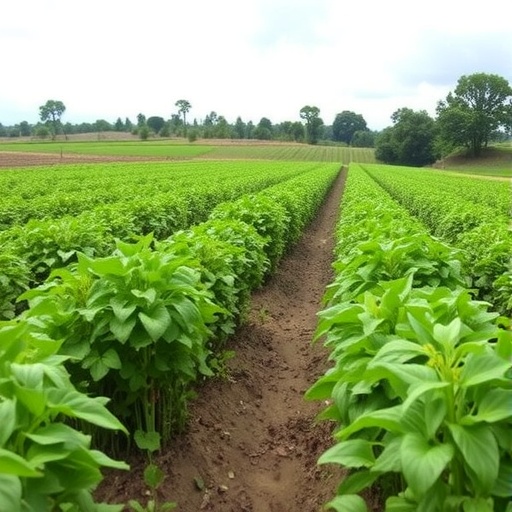
Science, technological innovation, and farmer ingenuity could, in principle, reshape food systems faster than ever. Yet real-world change often stalls because powerful technological pathways become “locked in,” steering investments, skills, and infrastructure toward incremental upgrades rather than redesign. A new study argues that this inertia—combined with weak coordination across disciplines and overly reductionist problem solving—keeps today’s food practices degrading shared environmental assets. The result is a widening gap between what is possible and what is implemented.

Researchers frame agroecological transformation as a systems challenge rather than a single-tech fix. They identify six “leverage points” that, when targeted together, can create cascading effects across farming, markets, policy, and ecological processes. The approach emphasizes feedback loops: how soils, biodiversity, water, and farm decisions interact over time. By treating food systems as coupled human–natural systems, the work aims to guide interventions that remain effective under real constraints.

A central theme is the need to break techno-regime dependence. Locked-in systems typically favor standardized inputs, uniform management, and narrow performance metrics. The study highlights how these choices can crowd out diversified strategies that support resilience, such as habitat enhancement, nutrient cycling, and landscape-level biodiversity. Without changing the underlying incentives and knowledge structures, innovations risk being absorbed into the existing regime rather than transforming it.

The authors also stress inter- and transdisciplinary research as a lever in its own right. Agroecology requires integration: agronomy must connect with ecology, economics, governance, and social learning. The paper argues that research designs should incorporate farmer knowledge and system-level outcomes, not only yield figures from controlled experiments. This orientation supports solutions that scale beyond experiment plots and persist in diverse agroecological contexts.

Reductionism is treated as another barrier. When problems are sliced into isolated components—such as nutrient deficiency, pest pressure, or market volatility—interactions are lost. The study’s systems-thinking lens instead focuses on how interventions alter multiple pathways simultaneously, reducing unintended consequences. For example, strategies that strengthen biological regulation can also change labor needs, input demand, and downstream environmental impacts.

By outlining six leverage points, the research provides a practical roadmap for forward momentum. The goal is to keep current food systems from degrading the global commons while ensuring that transformations benefit people, nature, and the planet. In doing so, it reframes agroecology not as an alternative niche, but as a structured pathway for whole-system redesign.

In the end, the message is explicit: progress requires more than new tools. It requires coordinated shifts in how technological choices, knowledge generation, and governance interact—so that innovation supports agroecological transitions rather than reinforcing the status quo.

Subject of Research: Agroecological systems-level transformations to prevent food systems from degrading global commons.

Article Title: An agroecological perspective on systems-level transformations to keep current food systems from degrading the global commons.

Article References: Wyckhuys, K.A.G., Barrios, E. & Fonte, S.J. An agroecological perspective on systems-level transformations to keep current food systems from degrading the global commons. Nat Food (2026). https://doi.org/10.1038/s43016-026-01386-1

Image Credits: AI Generated

DOI: https://doi.org/10.1038/s43016-026-01386-1

Keywords: Agroecology; food systems; systems thinking; technological lock-in; leverage points; global commons

Tags: Agroecological transformationagroecology and climate resiliencebiodiversity conservation in agriculturecoupled human-natural systemsenvironmental shared assetsfeedback loops in farmingfood system sustainabilityleverage points in food systemspolicy and ecological interconnectionsresilient farming practicessystems approach to agriculturetechno-regime dependence
Share26Tweet16
Previous Post

Atoco Inc. Launches Reticular Science Prize for Emerging Scholars and Innovators

Next Post

Indian Street Dog Crisis Raises New Questions on Tropical Urban Multispecies Coexistence

Related Posts

Avocado Oil Chips Might Not Use Pure Avocado Oil
Technology and Engineering

Avocado Oil Chips Might Not Use Pure Avocado Oil

July 15, 2026
Local Neural Operators Enable Equation-Free Analysis of Complex Systems
Technology and Engineering

Local Neural Operators Enable Equation-Free Analysis of Complex Systems

July 15, 2026
Spontaneous Creation and Optical Control of Woven Domain Patterns in Ferroelectrics
Technology and Engineering

Spontaneous Creation and Optical Control of Woven Domain Patterns in Ferroelectrics

July 15, 2026
Background-Free Adaptive Optics Phase Imaging Using Surface Plasmon Holographic Microscopy
Technology and Engineering

Background-Free Adaptive Optics Phase Imaging Using Surface Plasmon Holographic Microscopy

July 15, 2026
Biodiversity boosts productivity most during extreme drought in dry grasslands
Technology and Engineering

Biodiversity boosts productivity most during extreme drought in dry grasslands

July 15, 2026
Optical Singularity Protractor Enables Rotating Metrology with Neuromorphic Sensors
Technology and Engineering

Optical Singularity Protractor Enables Rotating Metrology with Neuromorphic Sensors

July 15, 2026
Next Post
Indian Street Dog Crisis Raises New Questions on Tropical Urban Multispecies Coexistence

Indian Street Dog Crisis Raises New Questions on Tropical Urban Multispecies Coexistence

  • Mothers who receive childcare support from maternal grandparents show more

    Mothers who receive childcare support from maternal grandparents show more parental warmth, finds NTU Singapore study

    27656 shares
    Share 11059 Tweet 6912
  • University of Seville Breaks 120-Year-Old Mystery, Revises a Key Einstein Concept

    1061 shares
    Share 424 Tweet 265
  • Bee body mass, pathogens and local climate influence heat tolerance

    682 shares
    Share 273 Tweet 171
  • Researchers record first-ever images and data of a shark experiencing a boat strike

    546 shares
    Share 218 Tweet 137
  • Groundbreaking Clinical Trial Reveals Lubiprostone Enhances Kidney Function

    531 shares
    Share 212 Tweet 133
Science

Embark on a thrilling journey of discovery with Scienmag.com—your ultimate source for cutting-edge breakthroughs. Immerse yourself in a world where curiosity knows no limits and tomorrow’s possibilities become today’s reality!

RECENT NEWS

  • Faintest Earth-imaged planet found after decade-long cosmic search and pursuit
  • Avocado Oil Chips Might Not Use Pure Avocado Oil
  • ADLM 2026 to Highlight Diabetes Milestones, Space Diagnostics, and Cancer Biomarkers
  • Rapid Mass Spectrometry Maps Traditional Chinese Medicine Beyond the Laboratory

Categories

  • Agriculture
  • Anthropology
  • Archaeology
  • Athmospheric
  • Biology
  • Biotechnology
  • Blog
  • Bussines
  • Cancer
  • Chemistry
  • Climate
  • Earth Science
  • Editorial Policy
  • Marine
  • Mathematics
  • Medicine
  • Pediatry
  • Policy
  • Psychology & Psychiatry
  • Science Education
  • Social Science
  • Space
  • Technology and Engineering

Subscribe to Blog via Email

Enter your email address to subscribe to this blog and receive notifications of new posts by email.

Join 5,146 other subscribers

© 2025 Scienmag - Science Magazine

Welcome Back!

Login to your account below

Forgotten Password?

Retrieve your password

Please enter your username or email address to reset your password.

Log In
No Result
View All Result
  • HOME
  • SCIENCE NEWS
  • CONTACT US

© 2025 Scienmag - Science Magazine

Discover more from Science

Subscribe now to keep reading and get access to the full archive.

Continue reading
