

Friday, September 4, 2026
Science
No Result
View All Result
  • Login
  • HOME
  • SCIENCE NEWS
  • CONTACT US
  • HOME
  • SCIENCE NEWS
  • CONTACT US
No Result
View All Result
Scienmag
No Result
View All Result
Home Science News Chemistry

Study Maps Photogenerated Hole Evolution During Separation and Transfer in Photocatalysis

July 15, 2026
in Chemistry
Gavin Prescott
By Gavin Prescott Scienmag Editorial Profile - Ecology and Ecosystem Dynamics
Reading Time: 2 mins read
0
Study Maps Photogenerated Hole Evolution During Separation and Transfer in Photocatalysis

Study Maps Photogenerated Hole Evolution During Separation and Transfer in Photocatalysis

65
SHARES
587
VIEWS
Share on FacebookShare on Twitter
ADVERTISEMENT

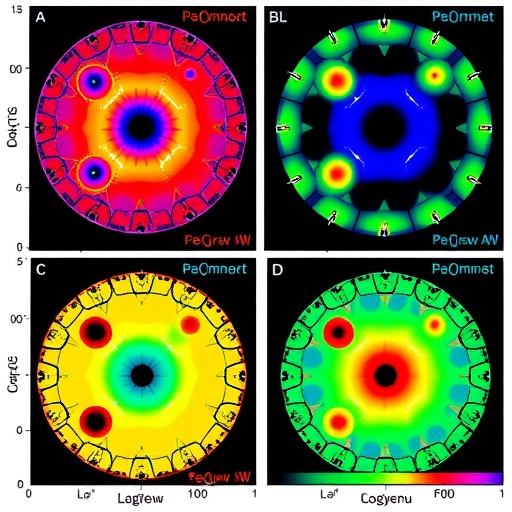
A team has mapped, in real time and with nanoscale precision, how photogenerated holes travel and react inside a facet-engineered bismuth vanadate photocatalyst. Using a home-built in-situ transient reflection microscope (TRM), the researchers visualized the full spatiotemporal pathway of these charge carriers at the solid–liquid interface—where photocatalysis often succeeds or fails.

The study tackles a central bottleneck in artificial photosynthesis: after light absorption, carriers must be separated, transported, and transferred to reactive sites. In many photocatalysts, these steps are slowed or rerouted by trapping at defects and by interfacial energy losses, ultimately reducing overall conversion efficiency.

While semiconductor carrier behavior has been widely investigated, directly tracking charge evolution on individual photocatalyst crystals under realistic reaction conditions has remained extremely difficult. By combining facet engineering with an optical measurement strategy tailored to transient carrier dynamics, the team overcame this challenge and followed holes as they evolved from formation to interfacial transfer.

Their observations reveal a three-stage sequence for photogenerated holes. First, charge separation occurs within about 5 picoseconds, setting the initial conditions for subsequent transport. Second, the holes become captured by defect states, with a characteristic trapping time of roughly 1.5 nanoseconds.

Third, the trapped holes are rapidly transferred to the interface with a time constant near 19 picoseconds. This interfacial step is mediated by oxygen-related defect structures, which act as functional conduits between the semiconductor interior and the surrounding liquid environment.

Crucially, the in-situ visualization clarifies what trapped holes actually do—rather than treating trapping as a purely harmful process. The results indicate that defect states can be integral to efficient oxidation by enabling timely hole availability at reactive interfaces.

Beyond shedding light on the fundamental mechanism, the work provides a framework for rational photocatalyst design. It suggests that defect engineering—optimizing both trapping and transfer pathways—can be a direct route to higher photocatalytic performance.

The findings were reported in a recent article in National Science Review, offering viral-science impact by converting a long-standing “black box” of carrier dynamics into a measurable, controllable sequence.

Keywords

Catalysis; photocatalysis; carrier dynamics; transient reflection microscopy; defect engineering; charge separation; interfacial transfer; bismuth vanadate

Subject of Research: Not applicable
Article Title: Unraveling the evolution of photogenerated holes from charge separation to interfacial transfer in photocatalysis
News Publication Date: 18-Jun-2026
Web References: https://doi.org/10.1093/nsr/nwag379
References: 10.1093/nsr/nwag379
Image Credits: DICP

Article Title: Study Maps Photogenerated Hole Evolution During Separation and Transfer in Photocatalysis

Article References: Original research article

Image Credits: AI Generated

DOI: Not provided

Keywords: charge separation and transfer mechanisms, charge trapping and transfer timescales, defect trapping in semiconductor photocatalysts, facet-engineered bismuth vanadate photocatalyst, in-situ transient reflection microscopy, interfacial energy losses in artificial photosynthesis, nanoscale real-time charge carrier mapping, nanoscale visualization of charge carrier pathways, optimization of photocatalyst efficiency, photogenerated hole dynamics in photocatalysis, photogenerated hole evolution at solid-liquid interface, ultrafast charge separation processes

Cite Scienmag News

Gavin Prescott. (July 15, 2026). Study Maps Photogenerated Hole Evolution During Separation and Transfer in Photocatalysis. Scienmag. https://scienmag.com/study-maps-photogenerated-hole-evolution-during-separation-and-transfer-in-photocatalysis/


Gavin Prescott. "Study Maps Photogenerated Hole Evolution During Separation and Transfer in Photocatalysis." Scienmag, 15 July 2026, https://scienmag.com/study-maps-photogenerated-hole-evolution-during-separation-and-transfer-in-photocatalysis/. Accessed 4 September 2026.

Gavin Prescott. "Study Maps Photogenerated Hole Evolution During Separation and Transfer in Photocatalysis." Scienmag. July 15, 2026. https://scienmag.com/study-maps-photogenerated-hole-evolution-during-separation-and-transfer-in-photocatalysis/

Tags: charge separation and transfer mechanismscharge trapping and transfer timescalesdefect trapping in semiconductor photocatalystsfacet-engineered bismuth vanadate photocatalystin-situ transient reflection microscopyinterfacial energy losses in artificial photosynthesisnanoscale real-time charge carrier mappingnanoscale visualization of charge carrier pathwaysoptimization of photocatalyst efficiencyphotogenerated hole dynamics in photocatalysisphotogenerated hole evolution at solid-liquid interfaceultrafast charge separation processes
Share26Tweet16
Previous Post

Hydrology Professor Creates Simple Outdoor Flood Alarm to Save Lives

Next Post

Insilico Medicine, Bora Pharmaceuticals partner on AI drug discovery and development

Related Posts

Plant polyphenol extracts boost surimi gel quality and prevent oxidation
Chemistry

Plant polyphenol extracts boost surimi gel quality and prevent oxidation

September 4, 2026
Brazilian cigarette brands classified by fused chemical and isotope data
Chemistry

Brazilian cigarette brands classified by fused chemical and isotope data

September 4, 2026
MXene hydrogel destroys biofilms and reprograms immune metabolism to reverse periodontitis bone loss
Chemistry

MXene hydrogel destroys biofilms and reprograms immune metabolism to reverse periodontitis bone loss

September 4, 2026
Partially covalent desolvated cations boost electrochemical CO2 conversion
Chemistry

Partially covalent desolvated cations boost electrochemical CO2 conversion

September 4, 2026
Ferricyanide enables peptide hydrazide ligation in neutral water
Chemistry

Ferricyanide enables peptide hydrazide ligation in neutral water

September 4, 2026
How microplastics may weaken the human immune system
Chemistry

How microplastics may weaken the human immune system

September 4, 2026
Next Post
Insilico Medicine, Bora Pharmaceuticals partner on AI drug discovery and development

Insilico Medicine, Bora Pharmaceuticals partner on AI drug discovery and development

  • Mothers who receive childcare support from maternal grandparents show more optimized

    Mothers who receive childcare support from maternal grandparents show more parental warmth, finds NTU Singapore study

    27656 shares
    Share 11059 Tweet 6912
  • University of Seville Breaks 120-Year-Old Mystery, Revises a Key Einstein Concept

    1061 shares
    Share 424 Tweet 265
  • Bee body mass, pathogens and local climate influence heat tolerance

    682 shares
    Share 273 Tweet 171
  • Researchers record first-ever images and data of a shark experiencing a boat strike

    546 shares
    Share 218 Tweet 137
  • Groundbreaking Clinical Trial Reveals Lubiprostone Enhances Kidney Function

    531 shares
    Share 212 Tweet 133
Science

Embark on a thrilling journey of discovery with Scienmag.com—your ultimate source for cutting-edge breakthroughs. Immerse yourself in a world where curiosity knows no limits and tomorrow’s possibilities become today’s reality!

RECENT NEWS

  • Methyl jasmonate metabolomic biomarkers reveal heat stress tolerance in mustard
  • Emission factors for pollutants identified from key fuelwood species in northern South Africa
  • Dual-geotaxis bioassay detects sublethal pesticide effects in mosquito larvae
  • Polylactic Acid Microplastics with Sulfamethoxazole Damage Oyster DNA

Categories

  • Agriculture
  • Anthropology
  • Archaeology
  • Athmospheric
  • Biology
  • Biotechnology
  • Blog
  • Bussines
  • Cancer
  • Chemistry
  • Climate
  • Earth Science
  • Editorial Policy
  • Marine
  • Mathematics
  • Medicine
  • Pediatry
  • Policy
  • Psychology & Psychiatry
  • Science Education
  • Social Science
  • Space
  • Technology and Engineering

Subscribe to Blog via Email

Enter your email address to subscribe to this blog and receive notifications of new posts by email.

Join 5,151 other subscribers

© 2025 Scienmag - Science Magazine

Welcome Back!

Login to your account below

Forgotten Password?

Retrieve your password

Please enter your username or email address to reset your password.

Log In
No Result
View All Result
  • HOME
  • SCIENCE NEWS
  • CONTACT US

© 2025 Scienmag - Science Magazine

Discover more from Science

Subscribe now to keep reading and get access to the full archive.

Continue reading