

Saturday, July 11, 2026
Science
No Result
View All Result
  • Login
  • HOME
  • SCIENCE NEWS
  • CONTACT US
  • HOME
  • SCIENCE NEWS
  • CONTACT US
No Result
View All Result
Scienmag
No Result
View All Result
Home Science News Medicine

Physical Activity Lowers Frailty Risk in Older Adults: Review and Analysis

July 11, 2026
in Medicine
Reading Time: 2 mins read
0
Physical Activity Lowers Frailty Risk in Older Adults: Review and Analysis

Physical Activity Lowers Frailty Risk in Older Adults: Review and Analysis

65
SHARES
587
VIEWS
Share on FacebookShare on Twitter
ADVERTISEMENT

A groundbreaking new study delves into the critical issue of frailty among older adults, highlighting the transformative potential of physical activity interventions. Researchers Fayolle, Ollier, Hupin, and colleagues have conducted an extensive scoping review combined with meta-analysis and meta-regression, bringing fresh insights to the complex relationship between frailty assessment and exercise in aging populations. Published in BMC Geriatrics in 2026, this work represents one of the most comprehensive syntheses of evidence available to date.

Frailty is a multidimensional clinical syndrome characterized by diminished strength, endurance, and physiological function, which increases vulnerability to dependency and mortality. Despite its increasing prevalence due to demographic shifts toward longer lifespans, standardized assessment has remained elusive. The study advances the field by systematically evaluating existing frailty measures, underscoring the nuances in their clinical application and predictive quality.

The researchers meticulously analyzed a broad array of interventional studies targeting physical activity among seniors identified as frail or at risk. By integrating data from diverse methodologies, including randomized controlled trials and observational studies, they quantified the effectiveness of exercise protocols in mitigating frailty symptoms. The meta-analysis revealed significant improvements in muscle strength, gait speed, and overall functional independence attributable to tailored physical regimens.

Moreover, through meta-regression techniques, the authors dissected key moderators influencing intervention outcomes, such as intensity, duration, and type of exercise. These nuanced findings suggest that resistance training combined with moderate aerobic activities yields optimal benefits in reversing or delaying frailty progression. Importantly, the analysis also pointed to the critical role of early intervention, advocating for routine frailty screening in geriatric practice.

The implications extend beyond clinical settings, advocating for public health policies that integrate structured physical activity programs within community and residential care environments. Such initiatives could substantially reduce healthcare burdens by preventing falls, hospitalizations, and the cascade of complications associated with frailty. The study’s rigor and scope provide robust evidence supporting exercise as a cornerstone therapy for aging populations.

Innovatively, the research sheds light on the interplay between frailty and comorbidities, illustrating how physical activity not only improves physical parameters but also modulates inflammatory pathways and metabolic profiles linked to frailty syndromes. This holistic perspective paves the way for personalized medicine approaches that incorporate biological markers alongside functional assessments.

As the world’s population ages, understanding and combating frailty is a pressing medical and social challenge. This study catalyzes a paradigm shift, emphasizing prevention and rehabilitation through scientifically validated exercise protocols. Researchers and healthcare providers now have a compelling roadmap to enhance the quality of life for millions worldwide by harnessing the power of physical activity.

In sum, this landmark synthesis by Fayolle et al. elevates the discourse on aging and physical health, merging methodological rigor with actionable insights. It is a clarion call for integrating systematic frailty assessments and evidence-based exercise interventions at all levels of elder care, heralding a new era in geriatric medicine.


Subject of Research: Frailty assessment and effects of physical activity interventions in older adults

Article Title: Frailty assessment and effect of physical activity interventions in older adults: a scoping review, meta-analysis, and meta-regression

Article References: Fayolle, E., Ollier, E., Hupin, D. et al. Frailty assessment and effect of physical activity interventions in older adults: a scoping review, meta-analysis, and meta-regression. BMC Geriatr (2026). https://doi.org/10.1186/s12877-026-07969-8

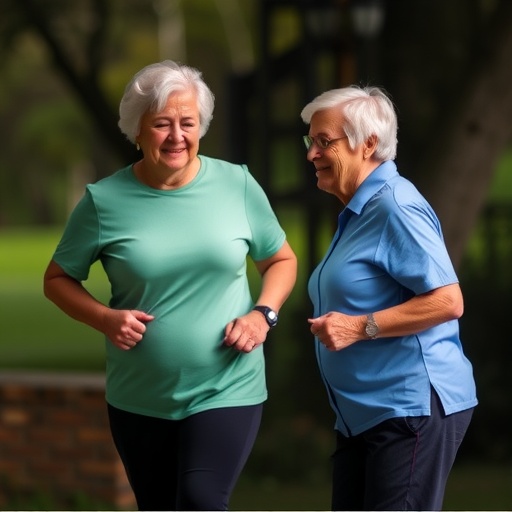
Image Credits: AI Generated

Tags: aging and vulnerability to dependencycomprehensive frailty assessment toolsfrailty prevention in older adultsimpact of exercise on aging populationslong-term benefits of exercise in older adultsmeta-analysis of exercise efficacy in elderlymultidimensional frailty syndromephysical activity and functional independence in seniorsphysical activity interventions for senior healthpredictive value of frailty measures in clinical practicesystematic review of frailty mitigation strategiestailored physical activity programs for frailty reduction
Share26Tweet16
Previous Post

Han directs new $15M NIH center for organ-on-chip technology

Next Post

HMGA Proteins Linked to Brain Tumors and Neurodegenerative Diseases

Related Posts

Study Finds Dopamine System Damage in Long COVID Patients’ Brains
Medicine

Study Finds Dopamine System Damage in Long COVID Patients’ Brains

July 11, 2026
HMGA Proteins Linked to Brain Tumors and Neurodegenerative Diseases
Medicine

HMGA Proteins Linked to Brain Tumors and Neurodegenerative Diseases

July 11, 2026
FMR1 Gene Therapy Rescues Fragile X Syndrome Traits in Mice
Medicine

FMR1 Gene Therapy Rescues Fragile X Syndrome Traits in Mice

July 10, 2026
BioVenture eLab Wins $1.5M Grant to Expand Weill Cornell Startup Hub
Medicine

BioVenture eLab Wins $1.5M Grant to Expand Weill Cornell Startup Hub

July 10, 2026
Journal of Nuclear Medicine Early Release Highlights July 10, 2026
Medicine

Journal of Nuclear Medicine Early Release Highlights July 10, 2026

July 10, 2026
Polyvinyl chloride boosts liver cancer radioresistance by blocking CD8⁺ T cells
Medicine

Polyvinyl chloride boosts liver cancer radioresistance by blocking CD8⁺ T cells

July 10, 2026
Next Post
HMGA Proteins Linked to Brain Tumors and Neurodegenerative Diseases

HMGA Proteins Linked to Brain Tumors and Neurodegenerative Diseases

  • Mothers who receive childcare support from maternal grandparents show more

    Mothers who receive childcare support from maternal grandparents show more parental warmth, finds NTU Singapore study

    27656 shares
    Share 11059 Tweet 6912
  • University of Seville Breaks 120-Year-Old Mystery, Revises a Key Einstein Concept

    1061 shares
    Share 424 Tweet 265
  • Bee body mass, pathogens and local climate influence heat tolerance

    682 shares
    Share 273 Tweet 171
  • Researchers record first-ever images and data of a shark experiencing a boat strike

    546 shares
    Share 218 Tweet 137
  • Groundbreaking Clinical Trial Reveals Lubiprostone Enhances Kidney Function

    531 shares
    Share 212 Tweet 133
Science

Embark on a thrilling journey of discovery with Scienmag.com—your ultimate source for cutting-edge breakthroughs. Immerse yourself in a world where curiosity knows no limits and tomorrow’s possibilities become today’s reality!

RECENT NEWS

  • Study Finds Dopamine System Damage in Long COVID Patients’ Brains
  • HMGA Proteins Linked to Brain Tumors and Neurodegenerative Diseases
  • Physical Activity Lowers Frailty Risk in Older Adults: Review and Analysis
  • Han directs new $15M NIH center for organ-on-chip technology

Categories

  • Agriculture
  • Anthropology
  • Archaeology
  • Athmospheric
  • Biology
  • Biotechnology
  • Blog
  • Bussines
  • Cancer
  • Chemistry
  • Climate
  • Earth Science
  • Editorial Policy
  • Marine
  • Mathematics
  • Medicine
  • Pediatry
  • Policy
  • Psychology & Psychiatry
  • Science Education
  • Social Science
  • Space
  • Technology and Engineering

Subscribe to Blog via Email

Enter your email address to subscribe to this blog and receive notifications of new posts by email.

Join 5,146 other subscribers

© 2025 Scienmag - Science Magazine

Welcome Back!

Login to your account below

Forgotten Password?

Retrieve your password

Please enter your username or email address to reset your password.

Log In
No Result
View All Result
  • HOME
  • SCIENCE NEWS
  • CONTACT US

© 2025 Scienmag - Science Magazine

Discover more from Science

Subscribe now to keep reading and get access to the full archive.

Continue reading
