

Friday, July 10, 2026
Science
No Result
View All Result
  • Login
  • HOME
  • SCIENCE NEWS
  • CONTACT US
  • HOME
  • SCIENCE NEWS
  • CONTACT US
No Result
View All Result
Scienmag
No Result
View All Result
Home Science News Technology and Engineering

Enhancing Neural Network Quantum Monte Carlo Using Local Pseudopotentials

July 10, 2026
in Technology and Engineering
Reading Time: 2 mins read
0
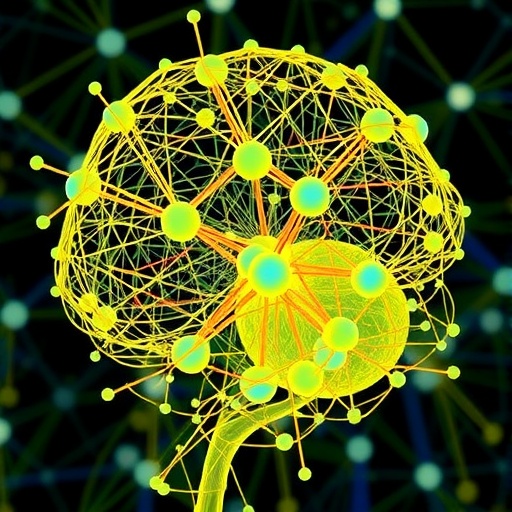
Enhancing Neural Network Quantum Monte Carlo Using Local Pseudopotentials

Enhancing Neural Network Quantum Monte Carlo Using Local Pseudopotentials

65
SHARES
587
VIEWS
Share on FacebookShare on Twitter
ADVERTISEMENT

Neural network-based quantum Monte Carlo (NNQMC) methods have recently emerged as a transformative approach for simulating many-body quantum systems with unprecedented accuracy. However, these methods have remained largely confined to small systems due to their intensive computational demands. A groundbreaking study now reveals a novel strategy that significantly extends the reach of NNQMC by integrating local pseudopotentials, thereby enhancing both computational efficiency and scalability.

Traditionally, NNQMC faces steep challenges when applied to large quantum systems because of the enormous number of electrons that neural networks must explicitly handle. The innovative approach introduced by Fu, Fujimaru, Li, and colleagues circumvents this bottleneck by employing local pseudopotentials. These pseudopotentials effectively replace the complex interactions of core electrons with simpler, local potentials, dramatically reducing the explicit electron count that neural networks process.

Remarkably, this simplification does not come at the cost of accuracy. Contrary to expectations, the team demonstrated that using local pseudopotentials not only maintains but improves the relative energy accuracy compared to conventional all-electron NNQMC calculations. This counterintuitive result stems from the unique characteristics of the NNQMC framework, which cleverly leverages the locality and smoothness of pseudopotentials to enhance variational representations and reduce noise during sampling.

Another key advantage of this method lies in the elimination of expensive integral calculations commonly required in semilocal pseudopotential approaches. By focusing on strictly local potentials, the computational overhead is substantially cut, leading to faster and more scalable NNQMC simulations. This positions the method as a superior alternative, particularly for studying complex systems where computational resources are a limiting factor.

The practical implications are profound. The research team successfully applied their technique to a challenging system—the iron–sulfur cluster Fe₄S₄(SCH₃)₄—known for its intricate electronic structure and relevance in biological and catalytic processes. Their results highlight the method’s capability to tackle large, realistic quantum systems with reliable accuracy, a feat previously unattainable with neural network quantum Monte Carlo.

This advancement paves the way for broadening the applicability of NNQMC techniques well beyond toy models and small molecules. By mitigating computational hurdles, it promises new insights into materials science, quantum chemistry, and condensed matter physics through first-principles simulations with neural networks.

Furthermore, the synergy between NNQMC and local pseudopotentials highlights promising future research directions, including the development of tailored pseudopotentials for specific classes of materials and the refinement of neural network architectures optimized for these potentials.

Overall, the integration of local pseudopotentials represents a pivotal step forward in the quest for accurate, efficient, and scalable quantum simulations. It may soon become a foundational tool for scientists aiming to unravel complex quantum phenomena across diverse scientific disciplines.

Subject of Research:
Article Title:
Article References:

Fu, W., Fujimaru, R., Li, R. et al. Empowering neural network-based quantum Monte Carlo with local pseudopotentials.
Nat Comput Sci (2026). https://doi.org/10.1038/s43588-026-01008-7

Image Credits: AI Generated
DOI: https://doi.org/10.1038/s43588-026-01008-7
Keywords: Neural network quantum Monte Carlo, local pseudopotentials, many-body quantum systems, computational chemistry, quantum simulations, iron–sulfur clusters

Tags: accuracy preservation in simplified modelsall-electron vs pseudopotential approachesefficiency improvements in NNQMClarge-scale quantum system simulationslocal pseudopotentials in quantum simulationsNeural network quantum Monte Carlonoise reduction in neural network samplingpseudopotential-based electron interaction modelingquantum Monte Carlo computational advancementsscalable quantum many-body methodstransformative quantum computational techniquesvariational wavefunction enhancement
Share26Tweet16
Previous Post

Soil Microbes’ Heterotrophic Respiration in a Changing Climate

Next Post

Inappropriate Prescribing Linked to Drug Interactions in Elderly Patients

Related Posts

New Integrated Device Synthesizes and Analyzes Photonic Polarization
Technology and Engineering

New Integrated Device Synthesizes and Analyzes Photonic Polarization

July 10, 2026
Bionic Cooling Skin Accelerates Healing of Infected Wounds
Technology and Engineering

Bionic Cooling Skin Accelerates Healing of Infected Wounds

July 10, 2026
EU Tariffs on Chinese EVs Affect Prices Across Europe
Technology and Engineering

EU Tariffs on Chinese EVs Affect Prices Across Europe

July 10, 2026
Offshoring Skews Perceptions of True Energy Decarbonization Progress
Technology and Engineering

Offshoring Skews Perceptions of True Energy Decarbonization Progress

July 10, 2026
Definitions and Factors of Extrauterine Growth Restriction in Colombian Preterm Infants
Technology and Engineering

Definitions and Factors of Extrauterine Growth Restriction in Colombian Preterm Infants

July 10, 2026
Atomically Thin Semiconductors Enable Tunable Resonant Metasurfaces
Technology and Engineering

Atomically Thin Semiconductors Enable Tunable Resonant Metasurfaces

July 10, 2026
Next Post
Inappropriate Prescribing Linked to Drug Interactions in Elderly Patients

Inappropriate Prescribing Linked to Drug Interactions in Elderly Patients

  • Mothers who receive childcare support from maternal grandparents show more

    Mothers who receive childcare support from maternal grandparents show more parental warmth, finds NTU Singapore study

    27656 shares
    Share 11059 Tweet 6912
  • University of Seville Breaks 120-Year-Old Mystery, Revises a Key Einstein Concept

    1061 shares
    Share 424 Tweet 265
  • Bee body mass, pathogens and local climate influence heat tolerance

    682 shares
    Share 273 Tweet 171
  • Researchers record first-ever images and data of a shark experiencing a boat strike

    546 shares
    Share 218 Tweet 137
  • Groundbreaking Clinical Trial Reveals Lubiprostone Enhances Kidney Function

    531 shares
    Share 212 Tweet 133
Science

Embark on a thrilling journey of discovery with Scienmag.com—your ultimate source for cutting-edge breakthroughs. Immerse yourself in a world where curiosity knows no limits and tomorrow’s possibilities become today’s reality!

RECENT NEWS

  • Exercise-Induced Microbial Metabolites Protect Against Muscle Loss in Female Mice
  • New Integrated Device Synthesizes and Analyzes Photonic Polarization
  • Genetic Risk Links Suicide Attempts and Alcohol Use Disorder Outcomes
  • Iron oxide melts transform structurally under Earth’s outer-core pressures

Categories

  • Agriculture
  • Anthropology
  • Archaeology
  • Athmospheric
  • Biology
  • Biotechnology
  • Blog
  • Bussines
  • Cancer
  • Chemistry
  • Climate
  • Earth Science
  • Editorial Policy
  • Marine
  • Mathematics
  • Medicine
  • Pediatry
  • Policy
  • Psychology & Psychiatry
  • Science Education
  • Social Science
  • Space
  • Technology and Engineering

Subscribe to Blog via Email

Enter your email address to subscribe to this blog and receive notifications of new posts by email.

Join 5,146 other subscribers

© 2025 Scienmag - Science Magazine

Welcome Back!

Login to your account below

Forgotten Password?

Retrieve your password

Please enter your username or email address to reset your password.

Log In
No Result
View All Result
  • HOME
  • SCIENCE NEWS
  • CONTACT US

© 2025 Scienmag - Science Magazine

Discover more from Science

Subscribe now to keep reading and get access to the full archive.

Continue reading
