

Thursday, September 3, 2026
Science
No Result
View All Result
  • Login
  • HOME
  • SCIENCE NEWS
  • CONTACT US
  • HOME
  • SCIENCE NEWS
  • CONTACT US
No Result
View All Result
Scienmag
No Result
View All Result
Home Science News Chemistry

Scientists Quantify Substances Extracted by Cupping Therapy from Skin

July 9, 2026
in Chemistry
Bethany Barker
By Bethany Barker Scienmag Editorial Profile - Catalysis
Reading Time: 2 mins read
0
Scientists Quantify Substances Extracted by Cupping Therapy from Skin

Scientists Quantify Substances Extracted by Cupping Therapy from Skin

65
SHARES
587
VIEWS
Share on FacebookShare on Twitter
ADVERTISEMENT

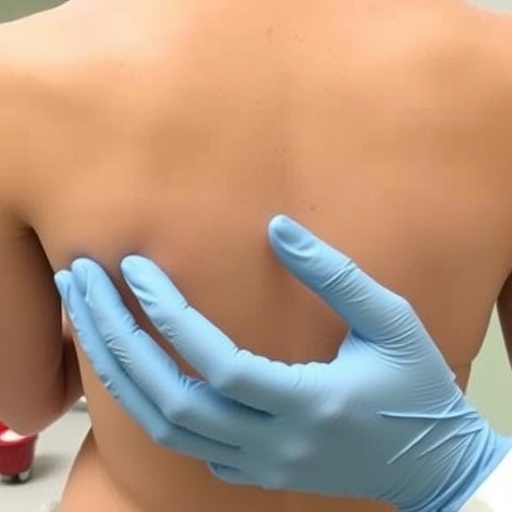
Cupping therapy, a traditional Chinese medicine practice known for treating chronic pain and aiding muscle recovery, operates by creating suction on the skin, thereby enhancing blood flow. However, until recently, the specific biochemical compounds released from the skin during the procedure remained largely unexplored. A breakthrough study published in ACS Omega reveals a novel noninvasive method to capture and analyze these skin-derived molecules, marking a significant advance in understanding the metabolic effects of cupping therapy.

The research team, led by Renato Zenobi and colleagues, devised an innovative approach that employs polymer-coated membranes to adsorb volatile compounds emanating from the skin during cupping. These membranes, placed inside cupping jars, collect airborne molecules which are then thermally released and analyzed via mass spectrometry, allowing precise identification and quantification. This method provides direct sampling at the source, a significant improvement over prior studies which focused on metabolites found only in blood or urine.

Initially validated using pig skin treated with compounds common to human skin, the technique demonstrated successful capture and detection of all test substances, confirming its efficacy. Subsequently, the researchers conducted a pilot study involving 12 healthy volunteers. Cups fitted with the specialized membranes were applied to participants’ backs and waists for ten minutes, reflecting typical treatment durations.

Comparative analysis of air collected from cupping jars with and without vacuum suction highlighted substantial differences in the concentrations of 13 metabolites and volatile compounds. This diverse group included aldehydes, ketones, alcohols, terpenes, and organic acids—many of which showed variations in levels post-treatment. The findings suggest that cupping triggers complex metabolic changes at the skin level, underscoring the therapy’s physiological impact beyond superficial effects.

Zenobi emphasizes that these results showcase the potential of modern analytical chemistry to deepen our understanding of traditional Chinese medicine modalities, historically underexplored in scientific literature. Nonetheless, he advises caution, noting that the current data are preliminary and require validation through expanded clinical studies involving larger cohorts and control groups.

Looking ahead, the research team plans to collaborate with local hospitals specializing in traditional Chinese medicine to investigate the therapy’s effects on individuals with chronic pain compared to healthy controls. Such studies could elucidate how cupping influences biochemical pathways and inform evidence-based practices in integrative medicine.

This pioneering work bridges a crucial knowledge gap, combining traditional therapeutic approaches with state-of-the-art chemical analysis. As more data emerge, the scientific community may uncover new biomarkers of treatment efficacy and deepen insights into the biochemical interplay between skin and health facilitated by cupping therapy.

Keywords

Cupping Therapy, Volatile Compounds, Skin Metabolites, Mass Spectrometry, Traditional Chinese Medicine, Polymer-Coated Membranes, Analytical Chemistry, Metabolic Profiling

Subject of Research: Cupping Therapy and Skin-Derived Volatile Compounds

Article Title: Scientists Quantify Substances Extracted by Cupping Therapy from Skin

Article References: Original research article

Image Credits: AI Generated

DOI: Not provided

Keywords: analysis of skin-derived molecules, biochemical analysis of skin suction, biochemical compounds released during cupping, capturing airborne molecules during cupping, cupping therapy, innovative methods in Chinese medicine, mass spectrometry in traditional medicine, metabolic effects of cupping therapy, noninvasive sampling techniques, pilot study on cupping therapy effects, polymer-coated membranes for molecule capture, volatile skin compounds identification

Cite Scienmag News

Bethany Barker. (July 9, 2026). Scientists Quantify Substances Extracted by Cupping Therapy from Skin. Scienmag. https://scienmag.com/scientists-quantify-substances-extracted-by-cupping-therapy-from-skin/

Bethany Barker. "Scientists Quantify Substances Extracted by Cupping Therapy from Skin." Scienmag, 9 July 2026, https://scienmag.com/scientists-quantify-substances-extracted-by-cupping-therapy-from-skin/. Accessed 3 September 2026.

Bethany Barker. "Scientists Quantify Substances Extracted by Cupping Therapy from Skin." Scienmag. July 9, 2026. https://scienmag.com/scientists-quantify-substances-extracted-by-cupping-therapy-from-skin/


Tags: analysis of skin-derived moleculesbiochemical analysis of skin suctionbiochemical compounds released during cuppingcapturing airborne molecules during cuppingcupping therapyinnovative methods in Chinese medicinemass spectrometry in traditional medicinemetabolic effects of cupping therapynoninvasive sampling techniquespilot study on cupping therapy effectspolymer-coated membranes for molecule capturevolatile skin compounds identification
Share26Tweet16
Previous Post

Insilico Medicine Reports First Half 2026 Positive Profit Alert

Next Post

Cement Production Linked to Microplastic Pollution in Groundwater, Study Finds

Related Posts

Layered double hydroxides in sustained antibiotic delivery: a bibliometric review
Chemistry

Layered double hydroxides in sustained antibiotic delivery: a bibliometric review

September 3, 2026
Catalysts Turn Biorefinery Waste Into Tomorrow’s Fertilisers
Chemistry

Catalysts Turn Biorefinery Waste Into Tomorrow’s Fertilisers

September 3, 2026
Yeast strains differ in dough gas cell stability and bread crumb structure
Chemistry

Yeast strains differ in dough gas cell stability and bread crumb structure

September 3, 2026
Waste Palm Seed Extract Yields Powerful Supercapacitor Electrode Material
Chemistry

Waste Palm Seed Extract Yields Powerful Supercapacitor Electrode Material

September 3, 2026
Benzophenone-Grafted Acrylic Adhesives Quadruple Shear Strength Through Post-Polymerization Modification
Chemistry

Benzophenone-Grafted Acrylic Adhesives Quadruple Shear Strength Through Post-Polymerization Modification

September 3, 2026
Acacia Gum and Bentonite Give Starch Bioplastics a Major Strength Boost
Chemistry

Acacia Gum and Bentonite Give Starch Bioplastics a Major Strength Boost

September 3, 2026
Next Post
Cement Production Linked to Microplastic Pollution in Groundwater, Study Finds

Cement Production Linked to Microplastic Pollution in Groundwater, Study Finds

  • Mothers who receive childcare support from maternal grandparents show more optimized

    Mothers who receive childcare support from maternal grandparents show more parental warmth, finds NTU Singapore study

    27656 shares
    Share 11059 Tweet 6912
  • University of Seville Breaks 120-Year-Old Mystery, Revises a Key Einstein Concept

    1061 shares
    Share 424 Tweet 265
  • Bee body mass, pathogens and local climate influence heat tolerance

    682 shares
    Share 273 Tweet 171
  • Researchers record first-ever images and data of a shark experiencing a boat strike

    546 shares
    Share 218 Tweet 137
  • Groundbreaking Clinical Trial Reveals Lubiprostone Enhances Kidney Function

    531 shares
    Share 212 Tweet 133
Science

Embark on a thrilling journey of discovery with Scienmag.com—your ultimate source for cutting-edge breakthroughs. Immerse yourself in a world where curiosity knows no limits and tomorrow’s possibilities become today’s reality!

RECENT NEWS

  • Spin-coated surface-eroding implants enable automated multi-pulse drug delivery
  • Depth-graded W/Si multilayers boost silicon pore optics for WXPT mission
  • Velocity surfaces method speeds analysis of Earth–Moon transfer orbit controllable sets
  • Mindfulness Program Quality Key to Teen Mental and Metabolic Health

Categories

  • Agriculture
  • Anthropology
  • Archaeology
  • Athmospheric
  • Biology
  • Biotechnology
  • Blog
  • Bussines
  • Cancer
  • Chemistry
  • Climate
  • Earth Science
  • Editorial Policy
  • Marine
  • Mathematics
  • Medicine
  • Pediatry
  • Policy
  • Psychology & Psychiatry
  • Science Education
  • Social Science
  • Space
  • Technology and Engineering

Subscribe to Blog via Email

Enter your email address to subscribe to this blog and receive notifications of new posts by email.

Join 5,151 other subscribers

© 2025 Scienmag - Science Magazine

Welcome Back!

Login to your account below

Forgotten Password?

Retrieve your password

Please enter your username or email address to reset your password.

Log In
No Result
View All Result
  • HOME
  • SCIENCE NEWS
  • CONTACT US

© 2025 Scienmag - Science Magazine

Discover more from Science

Subscribe now to keep reading and get access to the full archive.

Continue reading