


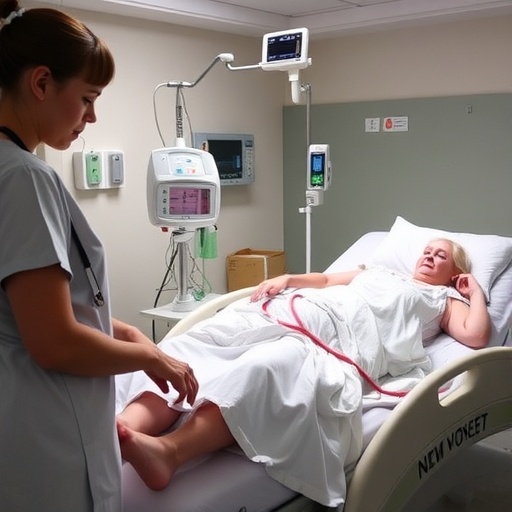
A groundbreaking study reveals that 40 percent of women with ovarian cancer are first diagnosed following an emergency hospital admission, a route associated with poorer outcomes and advanced disease stages. Conducted by Professor Agnieszka Michael at the University of Surrey as part of the National Ovarian Cancer Audit, researchers analyzed data from over 28,000 women diagnosed between 2017 and 2021 to explore patient and tumor characteristics linked to emergency diagnoses.
Ovarian cancer remains the eighth most common cancer in women globally, responsible for nearly 200,000 deaths annually. Despite its prevalence, survival rates remain dismally low, largely due to delayed diagnoses. The disease’s subtle and often vague symptoms are frequently overlooked, complicating early detection. Moreover, the absence of an effective screening program exacerbates challenges in timely diagnosis, allowing the cancer to progress unchecked in many cases.
The study highlights that women diagnosed after emergency admissions tend to present with more advanced ovarian cancer. Only 14 percent of these cases were detected at early stages (stage 1 or 2), compared to higher detection rates through other clinical pathways. Importantly, the one-year survival rate for these patients was significantly lower at 50 percent, in contrast to 83.3 percent for women diagnosed via non-emergency routes.
Additionally, tumors identified after emergency admissions were more likely to be aggressive and fast-growing. Patients diagnosed through this pathway were three times less likely to have slow-progressing tumors, suggesting rapid disease advancement before hospital presentation. Demographic analysis revealed that younger women aged 18 to 29 and elderly women over 80 were disproportionately affected by emergency diagnoses, with 43 and 54.9 percent respectively presenting this way. Furthermore, socioeconomic disparities were evident, as women from deprived backgrounds were 10 percent more likely to receive diagnoses during emergency admissions than those from affluent areas.
Professor Michael emphasized the urgent need for improved diagnostic strategies, stating that the current pathway for ovarian cancer detection is ineffective and demand a transformation. The ambiguity of ovarian cancer symptoms does not justify complacency, she argued, urging clinicians and patients alike to maintain high vigilance for potential warning signs. Targeted awareness campaigns and diagnostic interventions focusing on high-risk groups could be pivotal in shifting diagnoses to earlier, more treatable stages.
This pioneering research published in BMJ Oncology underscores the critical intersection of clinical presentation, tumor biology, and health inequalities in ovarian cancer outcomes. By illuminating the factors contributing to late diagnoses, it offers valuable insights for healthcare policymakers and medical professionals aimed at enhancing early detection and reducing mortality rates from this often fatal disease.
Cite Scienmag News
Nathaniel Bowman. (July 9, 2026). Many Women Diagnosed with Ovarian Cancer Following Emergency Hospital Admission. Scienmag. https://scienmag.com/many-women-diagnosed-with-ovarian-cancer-following-emergency-hospital-admission/
Nathaniel Bowman. "Many Women Diagnosed with Ovarian Cancer Following Emergency Hospital Admission." Scienmag, 9 July 2026, https://scienmag.com/many-women-diagnosed-with-ovarian-cancer-following-emergency-hospital-admission/. Accessed 4 September 2026.
Nathaniel Bowman. "Many Women Diagnosed with Ovarian Cancer Following Emergency Hospital Admission." Scienmag. July 9, 2026. https://scienmag.com/many-women-diagnosed-with-ovarian-cancer-following-emergency-hospital-admission/


