


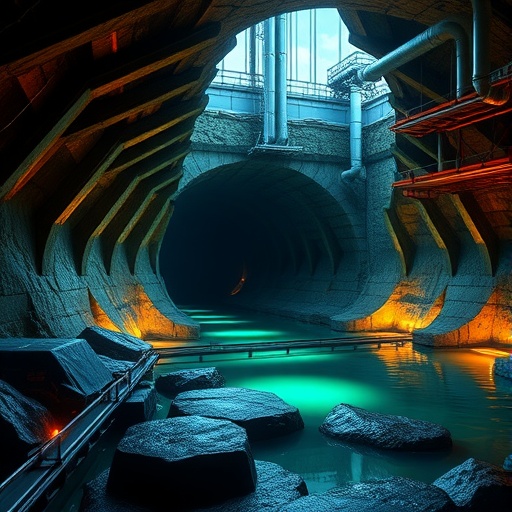
In the rapidly advancing world of artificial intelligence, data centers have become the backbone of digital infrastructure, relentlessly fueling innovation and connectivity. However, these powerful facilities bring a hidden environmental burden: the immense energy and water consumption required to keep their systems from overheating. A groundbreaking approach pioneered by researchers at the University of Illinois Urbana-Champaign is set to revolutionize how we cool data centers by harnessing an ancient and abundant natural resource beneath our feet—groundwater—through aquifer thermal energy storage (ATES).
For decades, data centers have grappled with cooling challenges, often relying on energy-intensive technologies that increase electrical demand and deplete precious water supplies. Studies reveal that cooling alone can account for 10 to 40 percent of the total energy consumption in such centers, a significant portion considering the already staggering power requirements of these digital hubs. Traditional cooling approaches sometimes rely on evaporative methods that lead to large volumes of water loss, exacerbating local environmental stress, especially in water-scarce regions.
The concept of aquifer thermal energy storage brings a new paradigm by using natural geological formations—aquifers—as vast underground thermal batteries. These systems exploit the Earth’s relatively constant subsurface temperature to provide efficient heat exchange capacities. Researchers led by Yu-Feng Lin, Andrew Stumpf, and Upasana Pandey from the Illinois State Geological Survey propose that aquifers can absorb excess heat from data centers in summer and store cold thermal energy during winter months, enabling a seasonal thermal transfer cycle that significantly cuts electricity consumption for cooling.
At its core, ATES technology involves pumping groundwater from an aquifer through a network of subsurface pipes into a data center’s heat exchanger. The cool water absorbs heat generated by the servers, and the warmed water is then injected back into the aquifer, storing thermal energy underground. During colder seasons, this stored heat can be retrieved to aid in warming needs, while cool groundwater preserved during winter serves for summer cooling demands, essentially turning the aquifer into a rechargeable natural air conditioner.
Illinois emerges as a prime candidate for ATES implementation due to its distinctive geological and climatic characteristics. The state experiences wide seasonal temperature swings—hot summers with highs near 90°F and frigid winters plunging down to minus 10°F—creating an ideal environment for thermal energy storage. Moreover, Illinois boasts prolific and easily accessible aquifers with favorable thermal conduction properties, particularly in regions with glacial deposits where water saturation enhances the efficiency of heat transfer processes. These conditions collectively optimize the performance and sustainability of ATES systems.
An important aspect of this technology is its compatibility with non-potable groundwater sources. The researchers emphasize that ATES does not demand the use of drinking water, pointing instead to often overlooked resources such as deep saline aquifers, briny groundwater bodies exceeding seawater salinity, contaminated waters, and even flooded abandoned mines. This expands the feasibility of ATES deployment by mitigating concerns over potable water consumption and environmental preservation.
While technically compelling, the main barriers to widespread ATES adoption are economic rather than scientific. The initial capital investment for drilling and installation is higher compared to conventional cooling infrastructure. However, ATES promises lower operational costs and remarkable energy savings over the long lifespan of data centers, which typically operate across decades. Unfortunately, many project evaluations center on short-term financial returns, neglecting the cumulative benefits emerging beyond a 10-year horizon. Encouragingly, existing drilling expertise from the oil, gas, and water well sectors can be leveraged, accelerating the workforce readiness for ATES deployment.
The environmental implications of incorporating aquifer thermal energy storage extend beyond mere energy efficiency. The water-energy nexus—a complex interplay where reducing energy use often increases water demand, and vice versa—is central to modern sustainability challenges. Through ATES, groundwater’s exceptional heat capacity is harnessed without substantial consumption, offering a rare synergy. This thermodynamic advantage facilitates efficient energy storage and transfer, minimizing resource wastage and preserving ecological balance.
Researchers emphasize the potential for data centers situated in temperate regions with pronounced seasonal variation to make the most of ATES systems. By mitigating the need for mechanical cooling that must constantly adjust to extreme ambient temperatures, ATES stabilizes operational heat management. For instance, instead of struggling to cool from 90°F down to an ideal 70°F in summer, the system optimizes cooling closer to a steady 55°F baseline, drastically reducing the energy required for temperature regulation.
Beyond data centers, the principles of aquifer thermal energy storage hold promise for broader applications in urban heating and cooling, renewable energy integration, and climate adaptation strategies. The ability to seasonally shift thermal energy offers resilience against fluctuating energy demands and supports long-term sustainability goals. Yet, the integration of ATES must align with local hydrogeological assessments to rule out any adverse environmental consequences, a factor previous studies indicate will not be significant with proper management.
The innovative approach explored by the Illinois team sheds light on a pathway toward greener, more sustainable digital infrastructure. As the digital economy expands, balancing technological growth with environmental stewardship becomes imperative. ATES represents a symbiotic blend of technology and nature, unlocking the Earth’s latent capacity to serve as a dynamic heat reservoir and enabling data centers to operate with unprecedented eco-efficiency.
Ultimately, the success of aquifer thermal energy storage in cooling data centers hinges on a confluence of technical feasibility, policy support, and forward-looking investment strategies. With expanding AI workloads and escalating data demands driving exponential increases in energy consumption, solutions like ATES are not just desirable but necessary. This research heralds a future where underground water reserves silently transform the way we power and cool the essential engines of the digital age.
As adoption grows, comprehensive monitoring and adaptive management will be critical to ensure aquifer integrity and thermal balance, fostering trust in this transformative technology. The vision of leveraging deep Earth systems to relieve aboveground environmental pressures foregrounds a new era in sustainable engineering—one where subterranean resources play an active role in safeguarding our climate and water security.
News Publication Date: 26-May-2026
Web References:
- Aquifer thermal energy storage study
- University of Illinois Urbana-Champaign Prairie Research Institute
- Illinois State Geological Survey
References:
Lin, Y.-F., Stumpf, A., Pandey, U. (2026). Aquifer thermal energy storage: groundwater for efficient data center cooling in the United States. Groundwater. DOI: 10.1111/gwat.70084
Cite Scienmag News
Courtney Benton. (June 30, 2026). Team Explores Underground ‘Thermal Batteries’ to Cool AI Data Centers and Conserve Water. Scienmag. https://scienmag.com/team-explores-underground-thermal-batteries-to-cool-ai-data-centers-and-conserve-water/
Courtney Benton. "Team Explores Underground ‘Thermal Batteries’ to Cool AI Data Centers and Conserve Water." Scienmag, 30 June 2026, https://scienmag.com/team-explores-underground-thermal-batteries-to-cool-ai-data-centers-and-conserve-water/. Accessed 31 August 2026.
Courtney Benton. "Team Explores Underground ‘Thermal Batteries’ to Cool AI Data Centers and Conserve Water." Scienmag. June 30, 2026. https://scienmag.com/team-explores-underground-thermal-batteries-to-cool-ai-data-centers-and-conserve-water/


