


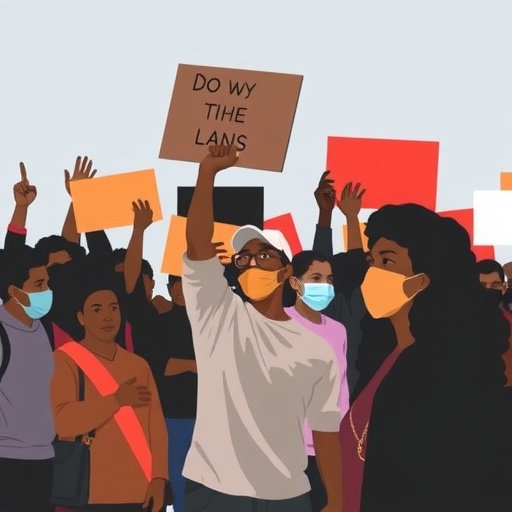
In the evolving landscape of labor movements post-COVID-19, a distinctive wave of unionization efforts has emerged, markedly shaped by the complexities of workers’ social identities rather than just traditional economic grievances. This paradigm shift is vividly exemplified in a groundbreaking study conducted by John Kallas, a labor and employment relations professor at the University of Illinois Urbana-Champaign. His research delves into how union activists at Starbucks have harnessed their experiences as members of marginalized communities to galvanize what is now termed “intersectional organizing.” Rather than focusing solely on conventional bread-and-butter issues like wages and working conditions, these activists unify under shared identities related to race, sexual orientation, and disability, weaving these facets into the fabric of their labor campaigns.
Kallas’ observational study sampled in-depth interviews with 53 union activists affiliated with Starbucks Workers United, illustrating that the organizing momentum was not merely about workplace rights as employees but intimately connected to broader identity-based experiences of marginalization. This intersectionality reframes labor activism by suggesting that workers’ struggles cannot be fully understood without acknowledging the simultaneous impacts of their social identities. The study reveals how this has catalyzed new forms of resistance, especially amid perceptions of corporate dissonance between public virtue-signaling on progressive social issues and actual workplace policies.
Starbucks, known for projecting a progressive brand image particularly supportive of LGBTQIA+ communities, inadvertently sowed the seeds for union strife by failing to meet employees’ expectations of authentic adherence to these values. Workers who identified as marginalized felt a sense of betrayal, especially as the company’s responses during the pandemic and subsequent policy changes appeared incongruous with its previously championed inclusive ethos. This perception heightened tensions between management and labor, spawning a collective response that merged identity politics and traditional labor disputes.
This blend of grievance types underscores how Starbucks chose its workforce in ways that attracted individuals who often felt unsafe or invisible in more conservative employment settings. By courting a diverse base of employees who identified strongly with progressive social identities, the company created conditions ripe for conflict when its managerial practices seemed to contradict the company’s purported social justice stances. The study reveals that such a contradiction did not merely erode trust but mobilized workers to undertake collective organizing efforts that challenge prevailing paradigms of union activism.
Importantly, Kallas’ research situates this phenomenon within a historical continuum of labor movements rooted in identity politics. Past labor actions, such as Latino janitorial strikes in the 1980s and Black automobile plant strikes in the 1970s, similarly blurred the lines between economic and social demands. This study revives those narratives, highlighting how contemporary intersectional organizing is experiencing a resurgence in prominence and efficacy, particularly as it expands beyond class-based solidarities to incorporate facets of race, gender, and sexuality within labor frameworks.
The research further grapples with the formidable challenges of sustaining this type of identity-driven labor activism in industries characterized by low wages and high employee turnover, such as the coffee retail sector. Despite the initial surge in union campaigning, Starbucks workers have struggled even after five years to secure a first binding contract, revealing structural impediments inherent in the American labor landscape. The transient nature of the workforce coupled with limited legal mechanisms for enforcing employer compliance poses ongoing obstacles to long-term labor success.
Kallas emphasizes that U.S. labor law lacks provisions for mandatory contract enforcement by third parties, which deeply hampers union power in protracted negotiations. Companies like Starbucks, with vast resources, exploit procedural delays and legal appeals effectively, diminishing the bargaining power of unions even when labor boards rule in their favor. This legal inertia dilutes the practical impact of union victories, augmenting worker frustration and undermining sustained activism.
The study also highlights the limited efficacy of conventional strike tactics against corporate behemoths with thousands of operational locations nationwide. Kallas notes that labor stoppages affecting hundreds of stores constitute only a fraction of Starbucks’ footprint, allowing the corporation to endure disruptions with diminished financial pain. This asymmetry challenges workers’ capacity to leverage strike actions meaningfully, necessitating novel strategies to compel management engagement.
Potential reforms, such as the Faster Labor Contracts Act recently passed by the U.S. House, could introduce mechanisms to expedite contract negotiations and potentially empower unions. However, Kallas acknowledges the significant obstacles the bill faces in the Senate and the entrenched resistance of powerful corporate actors. Without robust legal reforms, identity-based labor organizing at firms like Starbucks may continue to navigate a labyrinth of structural and legal complexities.
This study’s findings illuminate not only the evolving contours of labor activism but also the symbiotic relationship between corporate identity branding and worker expectations. The disjunction between external corporate posturing and internal labor realities forms a crucible for labor activism that integrates social identity with economic justice. As workers increasingly harness intersectionality to articulate their grievances, the traditional labor movement must reckon with the nuanced layers of discrimination, representation, and solidarity within the workforce.
Published in the ILR Review, Kallas’ research offers a compelling contribution to the social sciences discourse, demonstrating how contemporary union campaigns at Starbucks embody a sophisticated and multifaceted resistance strategy. By bridging identity and class, these campaigns challenge established labor organizing models and propose a richer understanding of worker empowerment in a progressively complex social and economic environment.
Ultimately, this emerging form of union organizing exemplifies the profound transformations underway in labor relations, where the convergence of social justice and labor rights is reshaping the dynamics of workplace resistance. The Starbucks case acts as a microcosm of broader societal changes, suggesting that future labor movements may increasingly navigate the intersections of identity politics and economic demands to forge more inclusive and potent forms of collective action.
Cite Scienmag News
Celia Amberley. (June 24, 2026). New Study Explores the Rise of Identity-Based Labor Organizing. Scienmag. https://scienmag.com/new-study-explores-the-rise-of-identity-based-labor-organizing/
Celia Amberley. "New Study Explores the Rise of Identity-Based Labor Organizing." Scienmag, 24 June 2026, https://scienmag.com/new-study-explores-the-rise-of-identity-based-labor-organizing/. Accessed 28 August 2026.
Celia Amberley. "New Study Explores the Rise of Identity-Based Labor Organizing." Scienmag. June 24, 2026. https://scienmag.com/new-study-explores-the-rise-of-identity-based-labor-organizing/


